Rumen and liver fluke: A recent article by the Irish Farmers Journal vet in the winter indoor management Focus covered advice on treating liver and rumen fluke. Liver fluke remains the main threat this winter, but there is also much more talk about rumen fluke, given the flooding last winter/spring and higher than normal rainfall levels in many parts of the country throughout the year. Some farmers have asked the question if a treatment that covers both liver fluke and rumen fluke is the best approach to cover all the bases and give optimum protection.
Veterinary advice does not advise this route, as products containing the active ingredient oxycloazanide – which are not licensed for but treat rumen fluke – only target mature liver fluke. At this stage of the year, the greatest threat is from acute liver fluke and therefore a product is required that ideally treats early immature and immature stages of the liver fluke parasite and at a minimum immature liver fluke. Veterinary advice also recommends farmers not to use oxycloazanide-based products if they are not required, as it will increase the risk of resistance occurring. This is particularly the case in the combination Levafasc products and Pharmazan C, which also pose a risk of increasing resistance to levamisole, the ingredient active against worms. One area where a targeted treatment with Zanil or the products listed above, for example, may work is where sheep have been housed for a couple of months and any liver fluke parasites present are in the mature stage.
Soil fertility: This week’s sheep pages (page 40 and 41) cover advice on autumn grassland management from recent Teagasc farm walks. Galway-based adviser John Kilboyle told farmers that only one in 10 farms soil sampled are farming at the optimum grassland pH of 6.3 to 6.5. The stark fall in pH levels stems from a move away from regular lime applications. John says applications have fallen from 1.8m tonnes in the 1980s to 700,000t in recent years and just 500,000t in 2015. He says spreading lime on lands with a deficit pH will currently give the best return of all farm investments, with a natural release of 80kg nitrogen per hectare available from increasing the soil pH to the optimum level. This can only be achieved by knowing the fertility status of the soil through soil samples. John advises farmers to get samples taken this winter, with one sample covering 10 acres of similar type ground at a cost of €2.50/acre over five years or just 50c/acre.
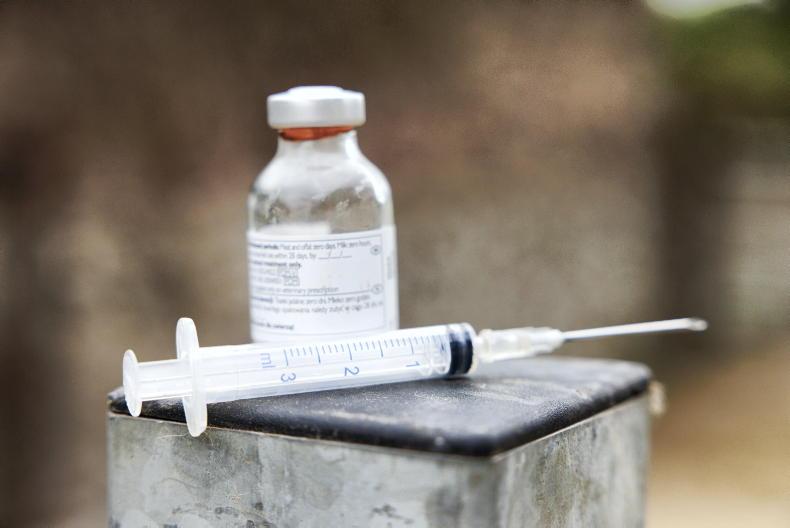
Injection sites: While not widespread, many producers administer a significant level of injections at this time of year, with clostridial diseases and external parasites just two that are common. Factory agents continue to link incorrect techniques, dirty needles and unfavourable injection sites as a contributor to carcase/hide damage and the development of abscesses. The loss in value is greatest where abscesses develop in high-value areas, such as the hip/leg area. Administering injections in this area should be avoided. Best practice recommendations are to administer subcutaneous (under the skin) injections into loose skin areas in the neck or behind the shoulder with intramuscular injection sites best advised to deliver into the muscle area in the neck. Using the correct gauge needle and ensuring needles are clean are other important considerations.
Rumen and liver fluke: A recent article by the Irish Farmers Journal vet in the winter indoor management Focus covered advice on treating liver and rumen fluke. Liver fluke remains the main threat this winter, but there is also much more talk about rumen fluke, given the flooding last winter/spring and higher than normal rainfall levels in many parts of the country throughout the year. Some farmers have asked the question if a treatment that covers both liver fluke and rumen fluke is the best approach to cover all the bases and give optimum protection.
Veterinary advice does not advise this route, as products containing the active ingredient oxycloazanide – which are not licensed for but treat rumen fluke – only target mature liver fluke. At this stage of the year, the greatest threat is from acute liver fluke and therefore a product is required that ideally treats early immature and immature stages of the liver fluke parasite and at a minimum immature liver fluke. Veterinary advice also recommends farmers not to use oxycloazanide-based products if they are not required, as it will increase the risk of resistance occurring. This is particularly the case in the combination Levafasc products and Pharmazan C, which also pose a risk of increasing resistance to levamisole, the ingredient active against worms. One area where a targeted treatment with Zanil or the products listed above, for example, may work is where sheep have been housed for a couple of months and any liver fluke parasites present are in the mature stage.
Soil fertility: This week’s sheep pages (page 40 and 41) cover advice on autumn grassland management from recent Teagasc farm walks. Galway-based adviser John Kilboyle told farmers that only one in 10 farms soil sampled are farming at the optimum grassland pH of 6.3 to 6.5. The stark fall in pH levels stems from a move away from regular lime applications. John says applications have fallen from 1.8m tonnes in the 1980s to 700,000t in recent years and just 500,000t in 2015. He says spreading lime on lands with a deficit pH will currently give the best return of all farm investments, with a natural release of 80kg nitrogen per hectare available from increasing the soil pH to the optimum level. This can only be achieved by knowing the fertility status of the soil through soil samples. John advises farmers to get samples taken this winter, with one sample covering 10 acres of similar type ground at a cost of €2.50/acre over five years or just 50c/acre.
Injection sites: While not widespread, many producers administer a significant level of injections at this time of year, with clostridial diseases and external parasites just two that are common. Factory agents continue to link incorrect techniques, dirty needles and unfavourable injection sites as a contributor to carcase/hide damage and the development of abscesses. The loss in value is greatest where abscesses develop in high-value areas, such as the hip/leg area. Administering injections in this area should be avoided. Best practice recommendations are to administer subcutaneous (under the skin) injections into loose skin areas in the neck or behind the shoulder with intramuscular injection sites best advised to deliver into the muscle area in the neck. Using the correct gauge needle and ensuring needles are clean are other important considerations.







SHARING OPTIONS