



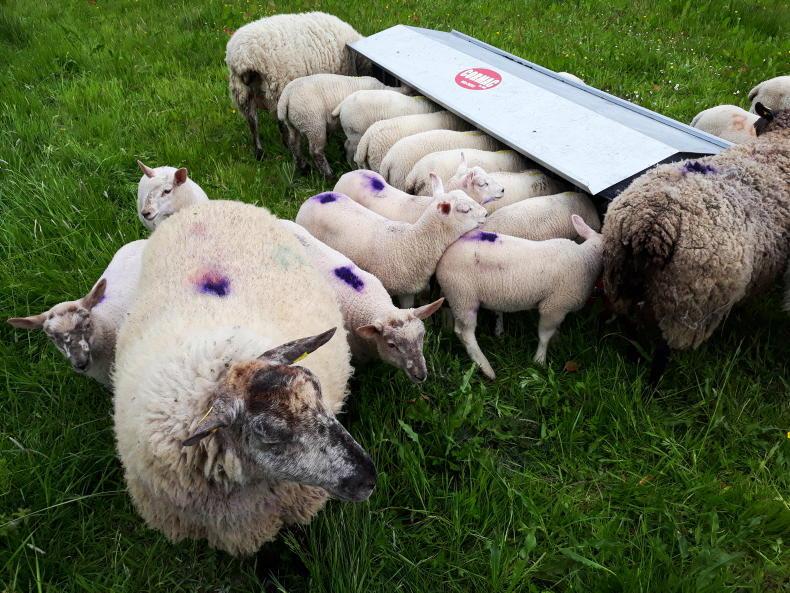
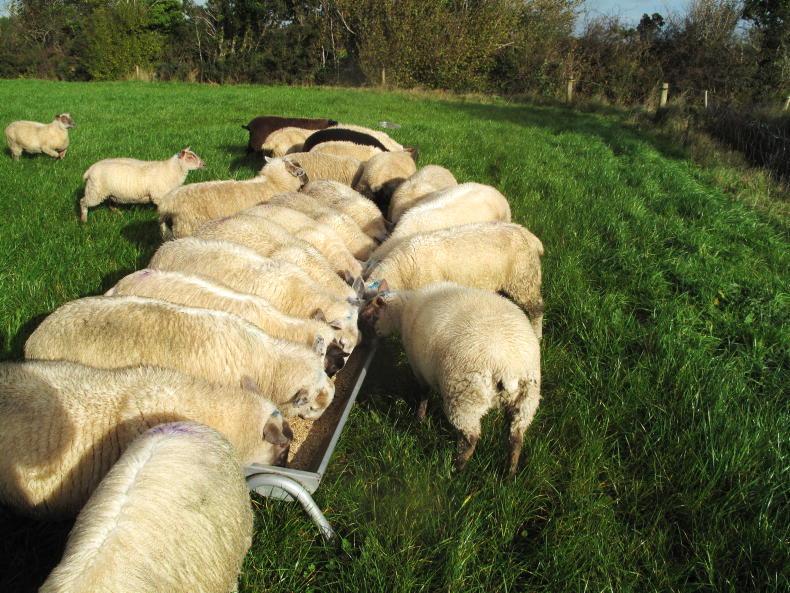
Creep feeding: This week’s sheep feature discusses fertiliser use and capitalising on peak grass growth rates in May.
Reports indicate there is also some farmers looking at the option of creep feeding lambs to get them out of the system faster and to take pressure off grass demand later in the year. Every system has to review and make decisions that best work for the farming system as a whole.
It is worth noting that free access to creep feed will represent a significant cost to the system.
Extensive research has been carried out on creep feeding in Teagasc investigating the effect of varying levels of concentrate feeding (300g and 600g offered daily) and grass availability (5cm and 6cm) on lamb performance.
Creep feeding increased weaning weights across both sward heights. Performance was higher where lambs were grazed on swards with an average pre-grazing sward height of 6cm versus 5cm, while the volume of feed consumed was also significantly lower.
There was over 20% more lambs drafted at a feeding level of 300g daily at a sward height of 6cm, reducing to 11% more drafted at a feeding level of 600g daily.
This highlights the importance of still focusing on grassland management and ensuring ewes and lambs are entering swards at recommended pre-grazing sward heights.
Other studies looking at creep feeding ad lib show intake levels rising by anywhere from 50% to 100% of the levels detailed in Table 1.
Where weighing up a proportion of lambs to feed then lambs suckling yearling hoggets or ewes experiencing problems and possible single born lambs that have a better chance of being drafted at higher prices may be the best option.
Age of hoggets: I have heard some stories in the last week of heavy hoggets being checked to see if they had permanent teeth set and possible deductions being imposed on sheep which had and were also deemed to kill at excessive carcase weights. It is worth checking if hoggets have teeth set before sending for slaughter and confirming any possible cuts on both age and carcase weights before delivery.
Factories are also highlighting that poor-quality tail end hoggets presenting with an inadequate flesh cover will also be deducted in price.



SHARING OPTIONS