



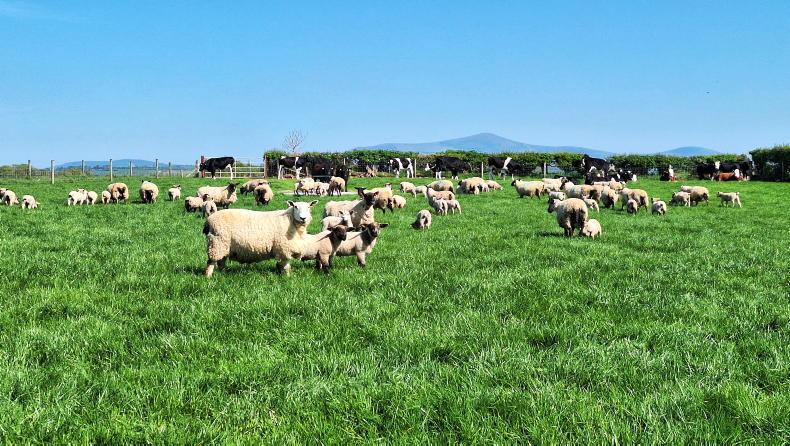
After a very slow start to the year with extremely challenging weather, grass growth rates are finally getting back on track but still shy of normal peak May growth.
It is predicted that growth will kick on this week but there is a concern on many sheep and drystock farms that swards will not be in a position to capitalise on this spike in growth rates.
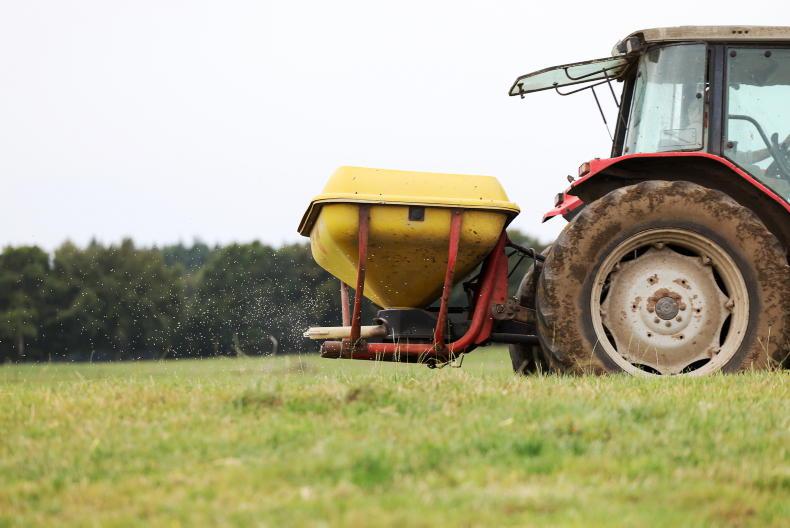
This is due to lower volumes of fertiliser being applied to date due to bad weather and a significant jump in fertiliser prices.
Protected urea costs have increased by upwards of 50%, CAN has risen by upwards of 30% and other compound fertiliser increasing in price by 20% to 40%, plus since the conflict in the Middle East began.
The last time fertiliser prices jumped applications on sheep farms more than halved with spending on concentrates increasing sharply.
While these increases have a direct effect on farm expenditure and potential margins, Ciaran Lynch, Teagasc sheep specialist highlights that the cost per kilo of nitrogen (kg N) should be considered in the context of the value of feed produced.
Ciaran says that the response per kg N should have been in the region of 20kg grass dry matter (DM) since mid-April. This response will increase to 30kg to 40kg grass DM /kg N on productive grassland in May.
If we take protected urea costing approximately €800/t this equates to a cost per kilo of nitrogen of approximately €1.74. If this applied nitrogen underpins growth of 30kg to 40kg of grass dry matter it translates to a cost per kg of feed provided to 4.5c to 6c.
If we look at a cost for CAN of about €560/t this equates to a cost per kilo of nitrogen of approximately €2.08 and at the above growth rates listed equates to a cost of 5c to 7c per kilo of feed produced.
This is based on productive swards but even taking swards with half the response rate the cost is still relatively low compared to the cost of purchasing a kilo of concentrate (35c to 40c per kilo of DM feed).
The other important point to consider is that peak grass growth rates tend to coincide with peak demand on a high percentage of farms.
The grass intake of a ewe rearing two lambs peaks at about six to seven weeks of lactation and begins to gradually decline thereafter in line with a reduction in milk yield.
However there is no overall reduction in grass intake as an increase in demand from growing lambs, which are consuming higher quantities of grass, ensures intake remains high up until weaning. Add in to the mix that ground also needs to be closed up for silage and this puts more pressure on grass demand.
The level of pressure is directly influenced by stocking rate with highly stocked farms running at 10 to 12 ewes per hectare having little option but to apply fertiliser to keep grass ahead of stock. Table 1 details suggested nitrogen application rates by stocking rate and approximate application dates for the first half of the year.
It is likely that a high percentage of farms will not have been in a position to get fertiliser applied in March with this application pushing forward to April and the April application pushed forward to May. Ciaran says that where fertiliser budgets are particularly tight then a little and often approach to application is recommended rather than cutting out applications.
He recommends that where possible applying two thirds of the recommended application rate will support a reasonable level of grass growth.
Ciaran is encouraging farmers to complete a fertiliser and cashflow budget so that farmers are in a position to explore credit lines and available cashflow. He says that it is best to focus on long-term cost benefits of applying fertiliser rather than short-term reductions in input use.
Focus should also be placed on ensuring fertiliser is applied where the best response can be achieved. Reseeded and younger swards are a priority due to the higher response rate and also importance of nitrogen in promoting sward persistency.
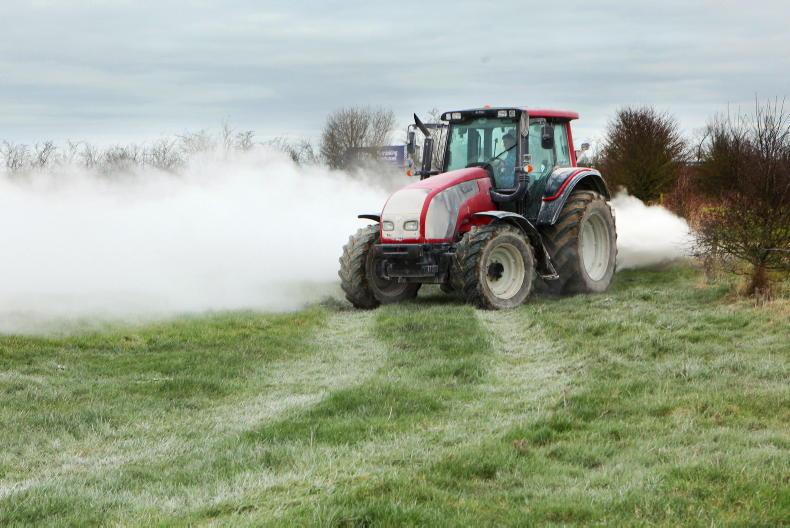
There will also be a greater response from soils at the optimum pH and farmers should weigh up the benefits of applying lime when deciding on the volume of fertiliser to purchase.
It may be more cost-beneficial in some cases to apportion available funds to purchasing lime as correcting soil pH will also lead to the release of nitrogen, phosphorus and potassium that may be currently locked up in the soil.
The experience of recent years has cast a spotlight on input costs at farm level. Teagasc are currently carrying out research exploring the role of clover in sheep systems and its potential in reducing chemical nitrogen use.
A review of the most appropriate stocking rates would also be worthwhile given costs of production have spiked on a number of occasions in recent years. For now there is a number of key decisions farmers need to take to get them through the coming months with some of these summarised below.



SHARING OPTIONS