



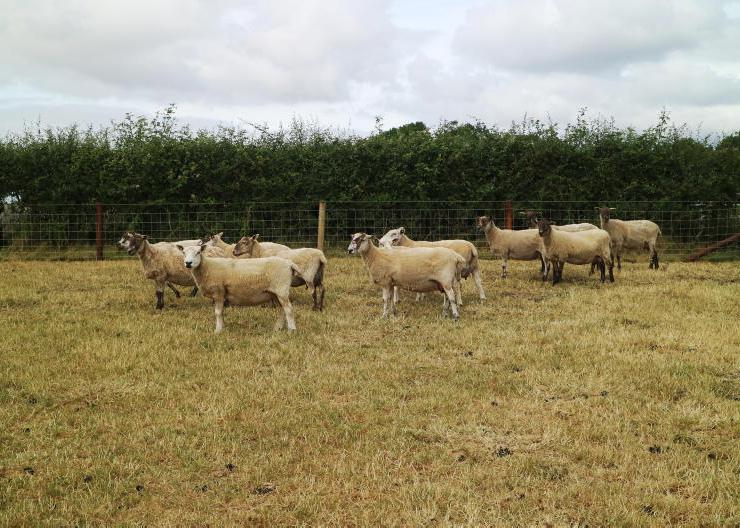
There continues to be an east-west divide when it comes to discussions on drought. Farms along the western seaboard and in the northern half of the country may be experiencing lower grass growth rates but in general drought-like conditions have yet to hit with the exception of those farming on sandy or limestone soils.
In contrast grass growth on drier farms in the east and south east has come to a standstill with swards burning up.
The potential to implement meaningful changes will be strongly influenced by taking swift action. Failing to take action until grass supplies have been depleted will cut down on the range of options available and delay recovery once rain arrives. Below are some options that may be taken to help.
1 Assess the current situation
It is important to establish the current situation regarding grass supplies and demand.
Establishing how much grass is available is the starting point in allocating supplies to different groups of stock in the coming weeks. The target under normal circumstances is to have 15 to 17 days grass ahead of stock – this should be extended to over 25 to 30 days in current conditions with steps taken to slow down the rotation.
2 Wean if not already complete
Weaning should be carried out immediately if not already complete. The demand of lowland ewes reduces from approximately 2.3kg DM/day in week 13 or 14 of lactation to about 1kg DM/day post-weaning. Grass demand from lambs jumps from about 0.8kg DM in week 12 of lactation to 1kg in week 13 and 1.2kg DM/day in week 14.
3 Identify priority stock for grass
The priority in most mid-season lambing flocks is lambs for the moment, but once ewes are weaned those falling below target condition score will need to be added to the priority group so that next year’s lamb crop is not compromised. For lambs the highest priority is forward lambs that can be finished off the farm quickly and ewe lamb replacements that will be bred in their first season.
4 Assess the weight of lambs
Teagasc targets for a mid-season flock is to have 20% to 25% of lambs over 35kg liveweight at weaning with another 25% weight from 30kg to 35kg.
The remaining 50% of lambs should be over 25kg liveweight with ideally a very small percentage of lambs less than 25kg liveweight. Determining this information will inform decisions on whether to finish lambs on farm or possibly sell as stores.
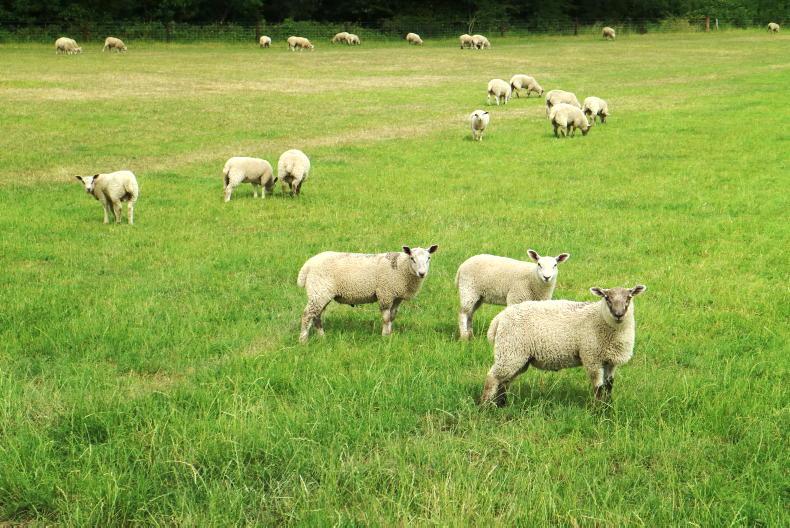
With access to good-quality grass lambs should gain in the region of 1.2kg to 1.5kg liveweight weekly during July and August, reducing to 1kg in September.
5 Consider establishing finishing groups
The most economical response to concentrate feeding is where concentrates are fed in a restricted manner and targeted to the lambs that will achieve good food conversion efficiency.
Feeding high volumes of meal to light lambs can quickly accumulate to significant costs and as such finishing groups are best established for lambs weighing upwards of 37kg to 38kg liveweight.
Under normal circumstances Teagasc advise that feeding 300g/head/day can reduce slaughter age by one month and ensure lambs are drafted with optimum fat cover.
Where there is an average supply of grass this will need to be increased to 500g to 750g/head daily.
While where grass supplies are depleted entirely then ad lib feeding may be the most appropriate action for ram lambs.
Even with current concentrate costs there will still be a margin to be attained in finishing homebred ram lambs which may not realise the top prices paid for store lambs.
6 Consider the store trade
Lower grass growth rates have tempered demand in some areas for store lambs but mart managers report that there is still relatively good demand for stores. For some farms it may be a better option to sell lighter lambs and retain lambs that can receive concentrate supplementation to bring to slaughter weights. Lambs should be marketed in uniform batches on gender, type and weight with a maximum range in liveweight of about 5kg from the heaviest to the lightest lamb.
7 Sell cull ewes
Cull ewes are an obvious category of stock to reduce demand. There may be an appetite to retain ewes to add value by replenishing condition but if grass supplies are tight this is a poor use of feed resources. With store lambs a lively trade there is also an appetite for store ewes and as such the live market is a better option with some factories penalising light carcase ewes with inadequate fat cover.
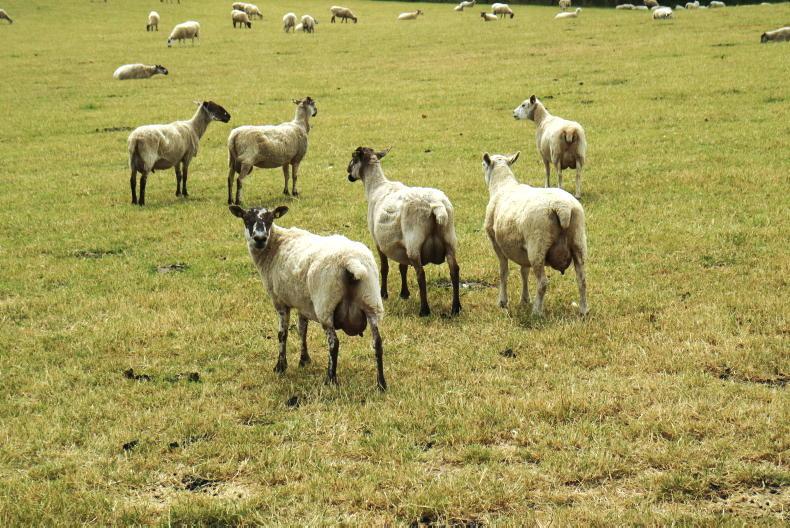
Remember to account for scheme reference payable numbers in the Sheep Improvement Scheme and the National Sheep Welfare Scheme.
8 Supplement ewes at grass
Weaned ewes in good condition will take relatively little to maintain. They can be used to graze out strong paddocks where any remaining grass supplies are available.
If not then supplementation will be required in the form of hay or silage while feeds such as oats or three- or- four-way mixes can be used to good effect to fill a nutritional deficit.
9 Prioritise early lambing ewes
Early lambing ewes are a different proposition to mid-season lambing ewes. Such ewes should be maintained on a good plane of nutrition for at least the first month of pregnancy to reduce the risk of early embryonic loss.
Ensure ewes have access to plenty of water.
10 Don’t forget rams
Rams are often forgotten until it is too late to address any deficit in condition. Check body condition and ideally have rams on a rising plane of nutrition ahead of mating.


SHARING OPTIONS