



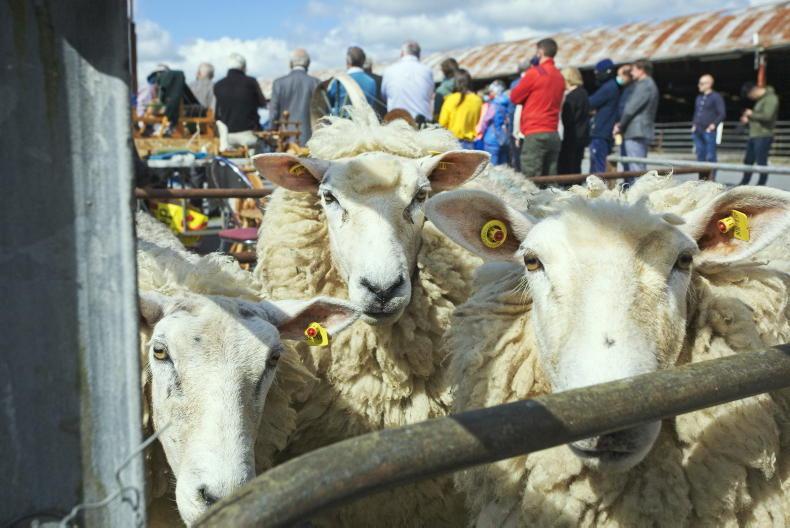
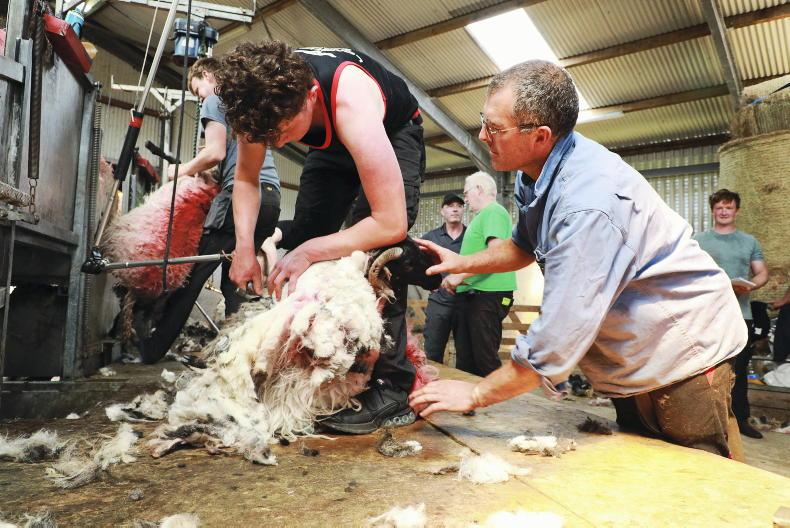
The year’s Galway Wool Co-op fifth annual meitheal event to mark the collection of this year’s wool clip was boosted by the news of the price of wool remaining at €2.50/kg and a link-up with a new wool buyer.
The event, which took place recently in Athenry Mart, celebrated the wool co-op entering into business with Avoca Woolen Mills, one of Ireland’s longest-established producers of blankets and apparels.
A spokesperson for the co-op also reported positive findings on a pilot project investigating how best to process Galway wool.
“Following the successful pilot project completed last year, the Galway Wool Co-op discovered that not only micron count, but, crucially, the processing method plays a central role in how Irish wool is transformed into yarn.
"These findings revealed that with more careful handling, the wool can achieve significantly greater softness, a smoother finish and improved handle - making it far more suitable for wearables, tweed, blankets and fine textiles.”
It explained that for the last four years, their wool clip had been supported by Donegal Yarns, which spun the wool into durable yarns best suited for carpets and floor rugs.
“Now, with enhanced worsted spinning techniques and greater attention to detail, our rare breed native Irish yarn can be used in a much wider range of applications. This opens exciting new possibilities for clothing, accessories, tweed and interior textiles, making the 2025 harvest one of the most promising and versatile to date.”
Native breed
The Galway breed of sheep is officially recognised as an Irish native breed, with the society dating back 103 years.
The breed has been kept alive by the efforts of a small dedicated group of breeders and, in recent years, has benefited from initiatives supporting its rare breed status, such as possession of Galway sheep securing tier one access to the Agri-Climate Rural Environment Scheme.
The co-op stated: “They (the breeders) began maintaining the breed’s flock book at a time when many of Ireland’s weaving and spinning mills were producing world-renowned Aran sweaters from this unique Báinín yarn.
"That was before they shifted towards imported Merino wool from as far afield as China and South Africa.
"Against the odds, these farmers - supported by the Department of Agriculture have grown their breed society into one of the largest in the country.”


SHARING OPTIONS