The figures on the number of dog attacks on livestock contained in the Department of Agriculture’s dog control statistics for 2024 reflect the growing plight faced by farmers.
The figure of 2,077 animals, including sheep, cattle and pigs, involved in dog worrying statistics is stark but is surpassed by an even more concerning figure of 618 farm animals killed or maimed by dogs in 2024.
Adrian Gallagher, IFA sheep chair, says the figures are a starting point at putting into context the escalating issue of dog worrying faced not only by sheep farmers but all livestock farmers.
“When you break it down it is a figure of almost 10 sheep maimed or killed by dogs on average every week,” he said.
“This is a frightening statistic but one that I think does not fully cover the extent of the problem as we know that many incidents are not reported.”
Adrian comments that the reason that many farmers tell him they did not report a dog attack is that they believe nothing is being done and that it is an added task that will not deliver any benefit.
It is hard to condemn this thinking when the Irish Farmers Journal’s Rachel Donovan also reported last week that 66% of the 1,763 fines handed out in 2024 were not paid by the offending dog owners.
Vital statistics
However, Adrian is encouraging all farmers to report dog attacks explaining that the more information that is available the better the chances will be of putting increased pressure on the relevant authorities to take action.
He said that the reason given by the Department of Agriculture of high legal costs being a barrier for non-payment of fines is unacceptable and that more needs to be done to deter inadequate control of dogs.
“Only 66% of fines paid in 2024 sends out the wrong message that if you fail to control your dog you may not face any consequences.
“There needs to be a strong message that deters this behaviour.”
Adrian added that in the past dog control falling between a number of State organisations was not ideal adding that he hopes that the Department of Agriculture taking control of dog control will bring about meaningful change.
He said that a report by the stakeholder group on dog control, which was formed in March 2024, is nearing completion and will be presented in the first quarter of 2026.
In the meantime, Adrian is urging all farmers that encounter incidents of dog worrying to report it so that a clearer picture on the extent of problems present will be fully realised. A 10-point plan on the optimum procedures to follow is listed on the right.
IFA 10-step protocol for reporting dog attacks
1. Stop the dogs
On encountering a dog attack on sheep, the first priority must be to stop the attack immediately, apprehend and shoot the marauding dog or dogs and look after the welfare of the sheep.
2. Follow the law
It is very important that sheep farmers are aware of, and follow the law, in the context of protecting their sheep flock against marauding dogs.
Under the 1984 Control of Dogs Act it states under the section – Defence in action for damages for shooting a dog:
(1) It shall be a defence to any action for damages against a person for the shooting of a dog, or to any charge arising out of the shooting of a dog, if the defendant proves that:(a) the dog was shot when it was worrying, or was about to worry, livestock and that there were no other reasonable means of ending or preventing the worrying; or(b) (i) the dog was a stray dog which was in the vicinity of a place where livestock had been injured or killed, and (ii) the defendant reasonably believed that the dog had been involved in the injury or killing, and (iii) there were no practicable means of seizing the dog or ascertaining to whom it belonged; and(c) he was the person in charge of the livestock; and(d) he notified within 48 hours the member in charge at the nearest garda station to the place where the dog was shot of the incident.(2) The provisions of subsection (1) (a) and subsection (1) (b) (i) and (iii) of this section shall be deemed to have been satisfied if the defendant believed that those provisions had been satisfied and he had reasonable grounds for that belief.3. Inform the gardaí
It is very important that a sheep farmer would notify the gardaí of any dog attack on their sheep.
If a dog is shot following or threatening a sheep flock, the person who shot the dog must notify the member in charge at the nearest garda station to the place where the dog was shot, within 48 hours.
It is important that the owner of the sheep would report the incident in full, make an official complaint and request that a full investigation is undertaken and report filed. The farmer should also request a site visit from the gardaí.
4. Ring the dog warden
Immediate contact should be made with the local dog warden of any sheep attack and the full details reported, with a request for a site visit and a full report to be filed.
5. Contact the IFA
All dog attacks should be notified to the local IFA Regional office or National Sheep committee representative for the county.
6. Ring the vet
To look after any injured sheep and protect the welfare of the flock, a vet should be contacted and asked to visit and inspect the flock.
The farmer should ask the vet to write a brief report recording the important statistics, such as the numbers dead, severely injured and treated. This report is vital evidence on the case.
7. Keep the evidence / take a picture
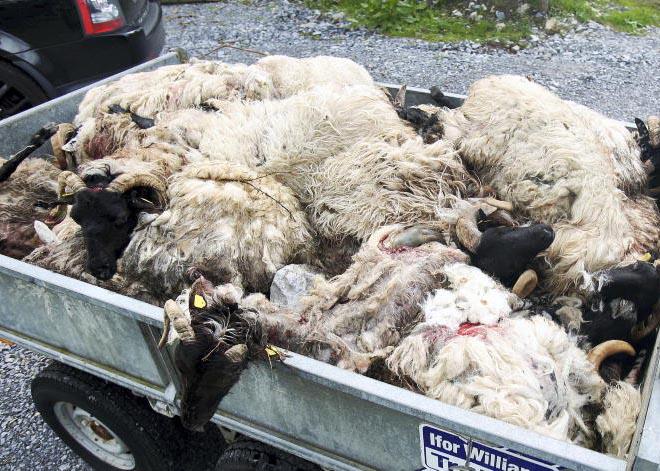
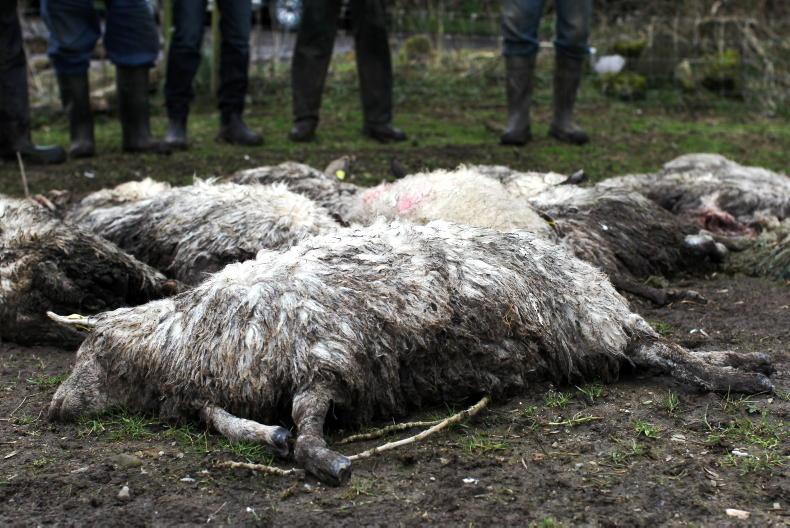
Pictures of dead sheep, injured sheep, dead dogs, etc, should be taken on the spot with a smartphone, etc, as this again can prove to be vitally important in terms of evidence. Dispose of any dead sheep to a knackery and record this movement.
8. Get a valuation of losses
Contact a local auctioneer or valuer and have any dead sheep valued on the spot and any other losses documented.
9. Inform your insurance company
It is very important to inform your insurance company of any dog attack as soon as possible after the incident occurs. Likewise, it is very important to establish the insurance company of the dog owner (home and/or farm insurance).
10. Spread the word with your neighbours
It is very important that other sheep farmers in the local area are aware of any dog attack in their vicinity, particularly if the dogs are not apprehended. Utilise the local community alert or text messaging facility if available.
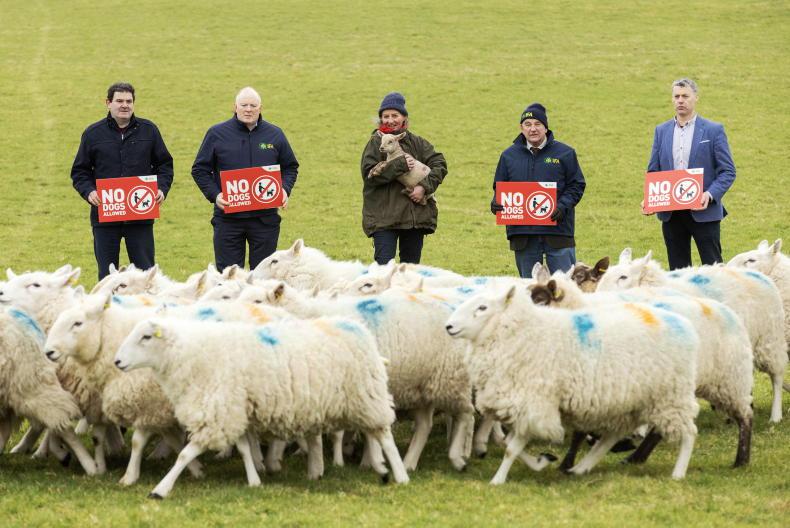
Launching IFA’s 2025 ‘No Dogs Allowed’ campaign were Peter Behan, Wicklow IFA hill farming chair, IFA President Francie Gorman, Selena McKenzie, and Tom Byrne, Wicklow IFA and Adrian Gallagher, IFA sheep chair. \ Finbarr O'Rourke
The figures on the number of dog attacks on livestock contained in the Department of Agriculture’s dog control statistics for 2024 reflect the growing plight faced by farmers.
The figure of 2,077 animals, including sheep, cattle and pigs, involved in dog worrying statistics is stark but is surpassed by an even more concerning figure of 618 farm animals killed or maimed by dogs in 2024.
Adrian Gallagher, IFA sheep chair, says the figures are a starting point at putting into context the escalating issue of dog worrying faced not only by sheep farmers but all livestock farmers.
“When you break it down it is a figure of almost 10 sheep maimed or killed by dogs on average every week,” he said.
“This is a frightening statistic but one that I think does not fully cover the extent of the problem as we know that many incidents are not reported.”
Adrian comments that the reason that many farmers tell him they did not report a dog attack is that they believe nothing is being done and that it is an added task that will not deliver any benefit.
It is hard to condemn this thinking when the Irish Farmers Journal’s Rachel Donovan also reported last week that 66% of the 1,763 fines handed out in 2024 were not paid by the offending dog owners.
Vital statistics
However, Adrian is encouraging all farmers to report dog attacks explaining that the more information that is available the better the chances will be of putting increased pressure on the relevant authorities to take action.
He said that the reason given by the Department of Agriculture of high legal costs being a barrier for non-payment of fines is unacceptable and that more needs to be done to deter inadequate control of dogs.
“Only 66% of fines paid in 2024 sends out the wrong message that if you fail to control your dog you may not face any consequences.
“There needs to be a strong message that deters this behaviour.”
Adrian added that in the past dog control falling between a number of State organisations was not ideal adding that he hopes that the Department of Agriculture taking control of dog control will bring about meaningful change.
He said that a report by the stakeholder group on dog control, which was formed in March 2024, is nearing completion and will be presented in the first quarter of 2026.
In the meantime, Adrian is urging all farmers that encounter incidents of dog worrying to report it so that a clearer picture on the extent of problems present will be fully realised. A 10-point plan on the optimum procedures to follow is listed on the right.
IFA 10-step protocol for reporting dog attacks
1. Stop the dogs
On encountering a dog attack on sheep, the first priority must be to stop the attack immediately, apprehend and shoot the marauding dog or dogs and look after the welfare of the sheep.
2. Follow the law
It is very important that sheep farmers are aware of, and follow the law, in the context of protecting their sheep flock against marauding dogs.
Under the 1984 Control of Dogs Act it states under the section – Defence in action for damages for shooting a dog:
(1) It shall be a defence to any action for damages against a person for the shooting of a dog, or to any charge arising out of the shooting of a dog, if the defendant proves that:(a) the dog was shot when it was worrying, or was about to worry, livestock and that there were no other reasonable means of ending or preventing the worrying; or(b) (i) the dog was a stray dog which was in the vicinity of a place where livestock had been injured or killed, and (ii) the defendant reasonably believed that the dog had been involved in the injury or killing, and (iii) there were no practicable means of seizing the dog or ascertaining to whom it belonged; and(c) he was the person in charge of the livestock; and(d) he notified within 48 hours the member in charge at the nearest garda station to the place where the dog was shot of the incident.(2) The provisions of subsection (1) (a) and subsection (1) (b) (i) and (iii) of this section shall be deemed to have been satisfied if the defendant believed that those provisions had been satisfied and he had reasonable grounds for that belief.3. Inform the gardaí
It is very important that a sheep farmer would notify the gardaí of any dog attack on their sheep.
If a dog is shot following or threatening a sheep flock, the person who shot the dog must notify the member in charge at the nearest garda station to the place where the dog was shot, within 48 hours.
It is important that the owner of the sheep would report the incident in full, make an official complaint and request that a full investigation is undertaken and report filed. The farmer should also request a site visit from the gardaí.
4. Ring the dog warden
Immediate contact should be made with the local dog warden of any sheep attack and the full details reported, with a request for a site visit and a full report to be filed.
5. Contact the IFA
All dog attacks should be notified to the local IFA Regional office or National Sheep committee representative for the county.
6. Ring the vet
To look after any injured sheep and protect the welfare of the flock, a vet should be contacted and asked to visit and inspect the flock.
The farmer should ask the vet to write a brief report recording the important statistics, such as the numbers dead, severely injured and treated. This report is vital evidence on the case.
7. Keep the evidence / take a picture
Pictures of dead sheep, injured sheep, dead dogs, etc, should be taken on the spot with a smartphone, etc, as this again can prove to be vitally important in terms of evidence. Dispose of any dead sheep to a knackery and record this movement.
8. Get a valuation of losses
Contact a local auctioneer or valuer and have any dead sheep valued on the spot and any other losses documented.
9. Inform your insurance company
It is very important to inform your insurance company of any dog attack as soon as possible after the incident occurs. Likewise, it is very important to establish the insurance company of the dog owner (home and/or farm insurance).
10. Spread the word with your neighbours
It is very important that other sheep farmers in the local area are aware of any dog attack in their vicinity, particularly if the dogs are not apprehended. Utilise the local community alert or text messaging facility if available.
Launching IFA’s 2025 ‘No Dogs Allowed’ campaign were Peter Behan, Wicklow IFA hill farming chair, IFA President Francie Gorman, Selena McKenzie, and Tom Byrne, Wicklow IFA and Adrian Gallagher, IFA sheep chair. \ Finbarr O'Rourke







SHARING OPTIONS