


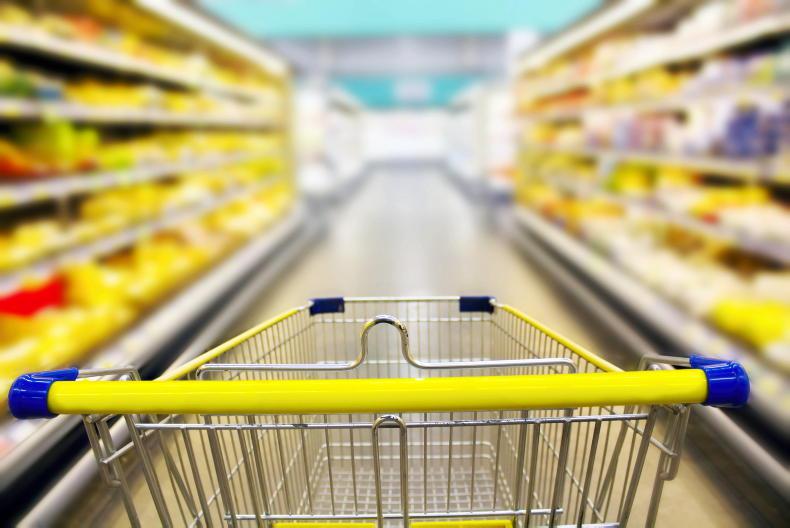
There was some slightly-improved data on the consumer prices front this week, when Kantar’s grocery inflation number came in at the lowest level of the year so far. Unfortunately, that number still pointed to 14.7% inflation from a year ago.
The European Central Bank, which is making its latest interest rate decision this week, has a target for inflation of 2%. The latest data for the euro-area as a whole reflects the moves in Kantar’s own index, with headline annual inflation dropping to 5.5%, the lowest level of the year.
There is an argument to say that the central bank should not do anything else, as the moves it has already made are working. However, as always with such things, the devil is in the detail of the data.
Much of the rapid rise in inflation last year was driven by fuel prices. The price of energy has fallen so much from it’s 2022 peak that last month it was in negative inflation, dragging the overall inflation rate down by 0.6 percentage points.
Cost of services
The bad news is that other parts of the inflation puzzle are becoming more entrenched, and even growing at a faster pace.
This is particularly clear in the “services” component of inflation. This is, basically, a measure of everything you spend money on that is not an actual thing. And in June it hit the highest level on record.
The cost of services is not directly an imported cost for Europe like energy is. This makes the hitting of a record high even more worrying for the European Central Bank.
There is also concern as services inflation can quickly become entrenched. Service providers are forced to increase prices because other service providers are putting up prices. Which then forces more to raise prices, etc, etc. It can quickly become a vicious circle.
It will be this that the central bank will have in mind when it hikes rates today (Thursday) and gives an indication as to whether it will raise them again before the end of the year.





SHARING OPTIONS