
Ger Collins operates a closed herd, one of the key principles for maximising animal health and minimising biosecurity risk. As part of the system, Ger and his sons breed replacements from his top-performing cows using sexed semen technology. A Limousin and traditional white-head bull is then used on the remainder of the herd. In today’s market, selecting quality beef sires benefits the overall business, given the strong demand and high calf prices in recent times.
From the outset, Ger and his sons place a strong emphasis on early calf nutrition, using Triple AAA Golden Maverick Milk Replacer as a key part of his feeding programme to drive performance and thrive, with calves reaching approximately 80kg at just 5-6 weeks of age.
Calving and calf management
Ensuring correct animal health across the herd starts with the calf, but many important management decisions are made before the calf is born. Managing the herd in the lead-up to calving ultimately affects the success of the calving season. Having the cow in good body condition score, receiving the correct minerals, and managing her correctly around calving will all affect how the calf performs.
Correct colostrum management is the main priority. The 3-2-1 rule is the industry standard: three litres of colostrum delivered within the first two hours of life, using the cow’s first milk. On the Collins' farm, Ger and his sons allow the calf to suckle the cow directly for 4-6 hours, ensuring it receives that critical first milk.
“We allow the calf to suck the cow naturally, but we keep a close eye on things to ensure each calf gets up and sucks. If we’re unsure, we’ll go in and feed the calf three litres of colostrum, so they get a good start,” said Ger.
The quality of colostrum is just as important as the timing. Good quality colostrum is rich in immunoglobulins (antibodies), energy, and essential nutrients. These are the building blocks a newborn calf needs to develop a strong immune system.
Ger also pays close attention to cow health around calving, recognising its direct impact on both cow recovery and calf performance. All cows receive a 20-litre feed of electrolytes immediately after calving, using the new FFG Electrolyte product (500g of powder in 20 litres of water).
“We find it works very well. It really encourages cows to drink straight after calving and helps support recovery at a critical time,” says Ger. This approach helps to restore fluid balance, support energy levels, and promote quicker recovery in freshly calved cows, setting them up for a strong start to lactation.
After colostrum intake, calves are moved into small groups and placed on whole milk, with a gradual transition to Triple AAA Golden Maverick Milk Replacer.
This transition period is important because a calf’s digestive system needs time to adapt from whole milk to milk replacer. Rushing this process can lead to digestive upset and a check in performance. Carefully managing this transition helps set the calf up to get the most from the milk replacer, right from the start.
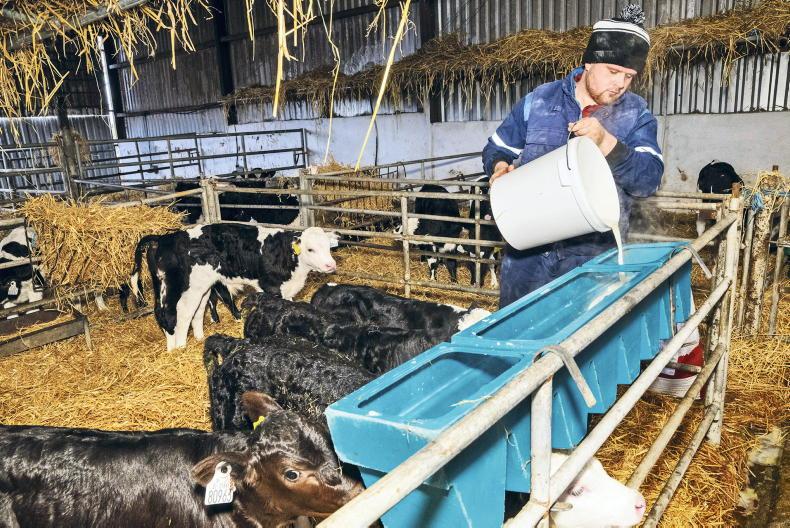
Charlie Collins feeding Triple AAA Golden Maverick Milk Replacer to his calves.
Milk Replacer Driving Performance
Once calves are ready, Ger moves them onto Triple AAA Golden Maverick Milk Replacer, feeding 10 litres per calf per day. Calves receive five litres of milk morning and evening, using a teat feeder. This level of nutrition is key to achieving the strong early growth rates seen on the farm, with calves consistently reaching around 80kg by 37 to 40 days.
Triple AAA Golden Maverick has a strong nutritional profile with 23% protein and 20% fat. It also contains two key unique ingredients for calf development. Immunopro is an additive that supports early immune function, while Gardion includes high levels of the amino acid leucine, which is important for muscle development and liveweight gain in calves.
For the Collins family, Triple AAA Golden Maverick has been delivering top-level performance across both replacement heifers and beef-sired calves.
Ger typically sells his beef-sired calves through the mart at 37 to 40 days of age, weighing approximately 80kg.
“The calves that have gone to the mart performed very well this year with excellent liveweight gain. I know feeding Triple AAA pays off, especially given the strong prices for calves this year,” says Ger.
Weaning without setbacks
Weaning calves requires time and management to prevent stunting of growth and unwanted stress. To support this, calves should reach the target weight and be consuming at least 1kg of concentrate per head per day for four to five days before weaning.
Before milk is withdrawn, ensuring they have the frame and condition to continue growing without any check in performance post-weaning is very important on the Collins farm, with the transition managed carefully across the team.
Ger plans to wean his calves at 70-75 days of age, but notes that planning for this starts well in advance.
“We gradually reduce the milk replacer feeding rate as per guidelines to minimise stress. As calves are weaned, they are turned out to grass in a paddock close to the shed where they can take shelter. Along with that, calves continue to be supplemented with concentrates and have access to fresh straw and water,” said Ger.
Performance that pays
With over 30 years of experience, Ger and his sons know what works for his system. By combining sound management practices with quality nutrition from Triple AAA Golden Maverick, they are consistently producing strong, healthy calves that deliver at sale.
Úna Hickey, national sales manager for Feed For Growth Ireland, emphasises the importance of aligning management and nutrition.
“Getting calves off to the right start is about combining good management with the right nutritional support. The results being achieved here show what’s possible when both elements are aligned, particularly in terms of early liveweight gain and long-term performance.”
For Ger, investing in early nutrition is a key driver of success.
“We’ve seen excellent thrive and weight gain in calves, and that’s what ultimately drives sale value. Getting them performing from the start makes all the difference.”
Ger Collins operates a closed herd, one of the key principles for maximising animal health and minimising biosecurity risk. As part of the system, Ger and his sons breed replacements from his top-performing cows using sexed semen technology. A Limousin and traditional white-head bull is then used on the remainder of the herd. In today’s market, selecting quality beef sires benefits the overall business, given the strong demand and high calf prices in recent times.
From the outset, Ger and his sons place a strong emphasis on early calf nutrition, using Triple AAA Golden Maverick Milk Replacer as a key part of his feeding programme to drive performance and thrive, with calves reaching approximately 80kg at just 5-6 weeks of age.
Calving and calf management
Ensuring correct animal health across the herd starts with the calf, but many important management decisions are made before the calf is born. Managing the herd in the lead-up to calving ultimately affects the success of the calving season. Having the cow in good body condition score, receiving the correct minerals, and managing her correctly around calving will all affect how the calf performs.
Correct colostrum management is the main priority. The 3-2-1 rule is the industry standard: three litres of colostrum delivered within the first two hours of life, using the cow’s first milk. On the Collins' farm, Ger and his sons allow the calf to suckle the cow directly for 4-6 hours, ensuring it receives that critical first milk.
“We allow the calf to suck the cow naturally, but we keep a close eye on things to ensure each calf gets up and sucks. If we’re unsure, we’ll go in and feed the calf three litres of colostrum, so they get a good start,” said Ger.
The quality of colostrum is just as important as the timing. Good quality colostrum is rich in immunoglobulins (antibodies), energy, and essential nutrients. These are the building blocks a newborn calf needs to develop a strong immune system.
Ger also pays close attention to cow health around calving, recognising its direct impact on both cow recovery and calf performance. All cows receive a 20-litre feed of electrolytes immediately after calving, using the new FFG Electrolyte product (500g of powder in 20 litres of water).
“We find it works very well. It really encourages cows to drink straight after calving and helps support recovery at a critical time,” says Ger. This approach helps to restore fluid balance, support energy levels, and promote quicker recovery in freshly calved cows, setting them up for a strong start to lactation.
After colostrum intake, calves are moved into small groups and placed on whole milk, with a gradual transition to Triple AAA Golden Maverick Milk Replacer.
This transition period is important because a calf’s digestive system needs time to adapt from whole milk to milk replacer. Rushing this process can lead to digestive upset and a check in performance. Carefully managing this transition helps set the calf up to get the most from the milk replacer, right from the start.
Charlie Collins feeding Triple AAA Golden Maverick Milk Replacer to his calves.
Milk Replacer Driving Performance
Once calves are ready, Ger moves them onto Triple AAA Golden Maverick Milk Replacer, feeding 10 litres per calf per day. Calves receive five litres of milk morning and evening, using a teat feeder. This level of nutrition is key to achieving the strong early growth rates seen on the farm, with calves consistently reaching around 80kg by 37 to 40 days.
Triple AAA Golden Maverick has a strong nutritional profile with 23% protein and 20% fat. It also contains two key unique ingredients for calf development. Immunopro is an additive that supports early immune function, while Gardion includes high levels of the amino acid leucine, which is important for muscle development and liveweight gain in calves.
For the Collins family, Triple AAA Golden Maverick has been delivering top-level performance across both replacement heifers and beef-sired calves.
Ger typically sells his beef-sired calves through the mart at 37 to 40 days of age, weighing approximately 80kg.
“The calves that have gone to the mart performed very well this year with excellent liveweight gain. I know feeding Triple AAA pays off, especially given the strong prices for calves this year,” says Ger.
Weaning without setbacks
Weaning calves requires time and management to prevent stunting of growth and unwanted stress. To support this, calves should reach the target weight and be consuming at least 1kg of concentrate per head per day for four to five days before weaning.
Before milk is withdrawn, ensuring they have the frame and condition to continue growing without any check in performance post-weaning is very important on the Collins farm, with the transition managed carefully across the team.
Ger plans to wean his calves at 70-75 days of age, but notes that planning for this starts well in advance.
“We gradually reduce the milk replacer feeding rate as per guidelines to minimise stress. As calves are weaned, they are turned out to grass in a paddock close to the shed where they can take shelter. Along with that, calves continue to be supplemented with concentrates and have access to fresh straw and water,” said Ger.
Performance that pays
With over 30 years of experience, Ger and his sons know what works for his system. By combining sound management practices with quality nutrition from Triple AAA Golden Maverick, they are consistently producing strong, healthy calves that deliver at sale.
Úna Hickey, national sales manager for Feed For Growth Ireland, emphasises the importance of aligning management and nutrition.
“Getting calves off to the right start is about combining good management with the right nutritional support. The results being achieved here show what’s possible when both elements are aligned, particularly in terms of early liveweight gain and long-term performance.”
For Ger, investing in early nutrition is a key driver of success.
“We’ve seen excellent thrive and weight gain in calves, and that’s what ultimately drives sale value. Getting them performing from the start makes all the difference.”







SHARING OPTIONS