


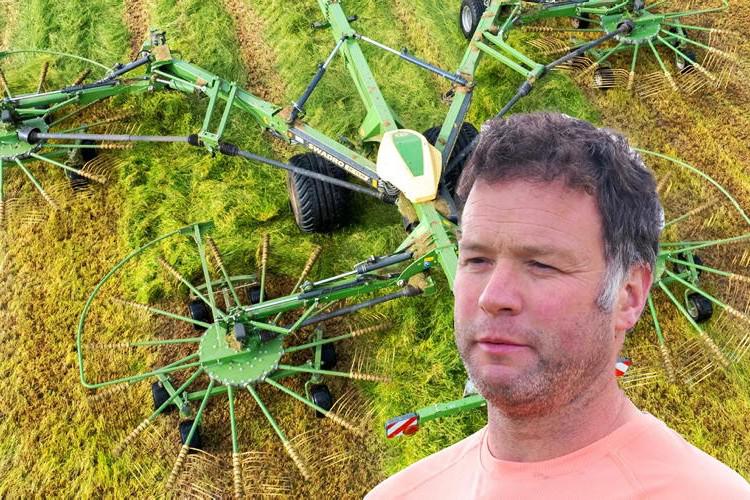
“We were working with a neighbour and it was just taking too long with the trailed harvester we were using,” Michael explains, “I got more efficient, putting in our own silage and then had more time to cut grass and I bought bigger machinery and that's why I've always bought bigger rakes.”
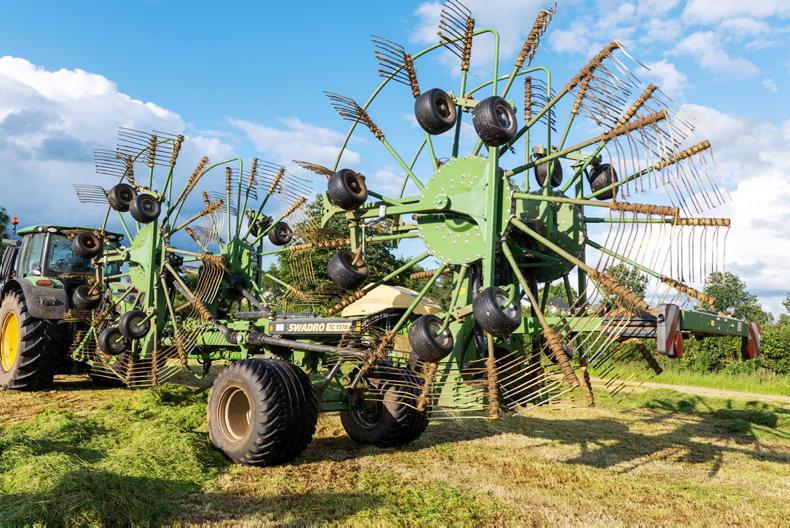
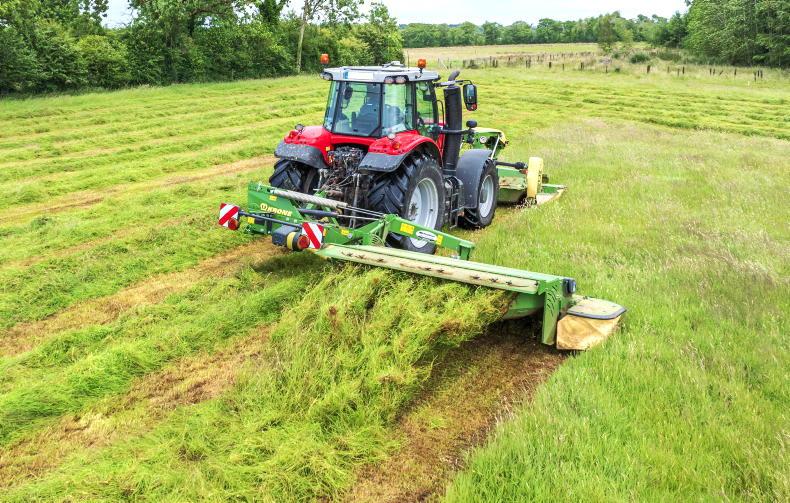
“Bigger rakes mean less ground compaction, you drive around the field in less time,” Michael explains, “like if you go around with that big rake there, you'll have half your field away in the first two laps nearly.”
“This is my first Krone rake, I did look at other rakes but I just thought the Krone was stronger built and more versatile.” Michael explains, “I got it from Craig McCullough Farm Machinery. Whenever I'm buying anything, it needs to be that you phone the man. He answers the phone and you have good backup.”
Cathal is Michael’s cousin, “I’ve been sort of around the farm since I was a toddler,” Cathal explains, “I’ve a massive interest in it but went down the line of teaching so I kind of try and help out as much as I can with Paddy and Michael. Love coming up here. Love the work. Love the machinery.”
“From as far back as I can remember Paddy built the farm up,” Cathal explains, “He was one of the biggest farmers in the area at that time and then Michael has come along and worked with his father and has even pushed the farm on to another level after that, as the amount of acres went up and the amount of cows increased at the farm there was a necessity to get things done quicker faster.
"So there was a harvester introduced on the farm and then slowly we've got on now to these bigger rakes trying to get grass done quicker and better quality.”
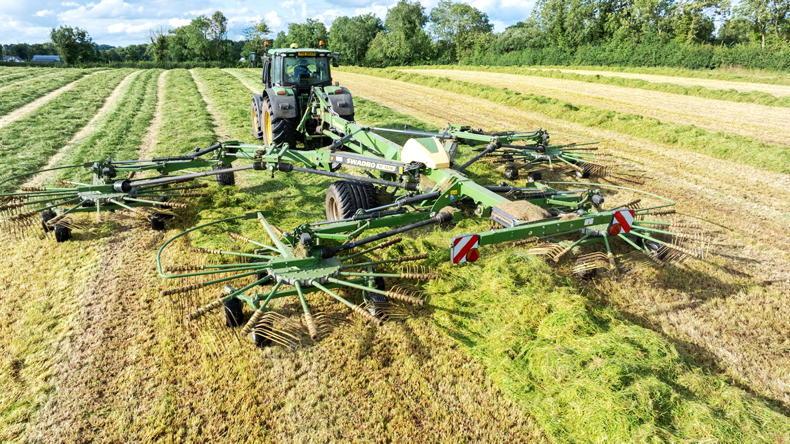
“Looking at the 1570 here, one of the big things I notice when I’m using it – and something the lads mentioned straight away – is the idle wheels,” Cathal adds.
“The machine is very steady. She’s not coming down with a bang, and that protects your tines. It’s a much nicer machine to use. When it landed on the farm first, it was a bit daunting. We were thinking, ‘How are we going to get on with this?’ But she’s doing 100% of what we need.”
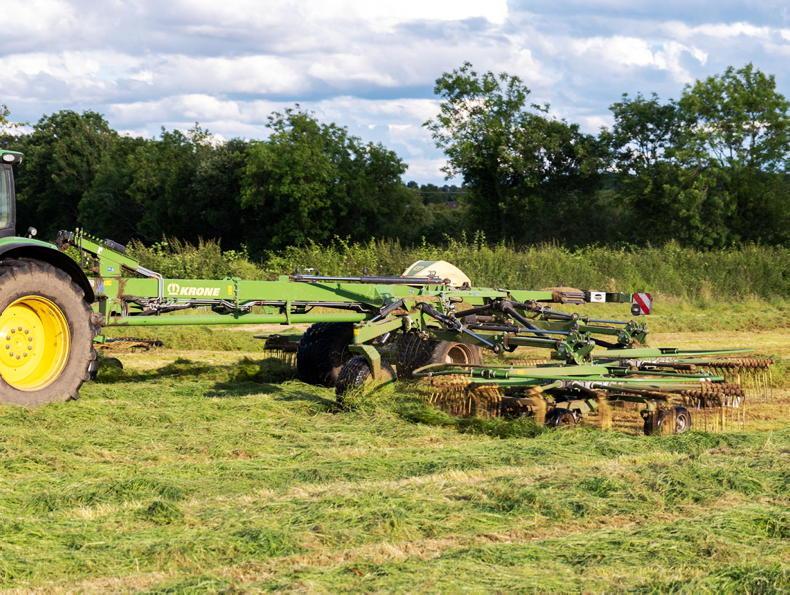
That steadiness comes from the way the Swadro TC1570 is laid out, with the rotors carried on a V shaped frame and supported by leading jockey wheels. This setup allows the rake to follow ground contours naturally helping to keep the rotors running smoothly and therefore preventing sudden contact with the ground. The result is a quieter machine in work, less shock through the rake, and better protection for both the tines and the sward.
Electro hydraulic suspension and controlled rotor lowering further add to the comfort and confidence when operating the machine. By taking the weight off the rotors as they touch down, the rake can better work on uneven ground.
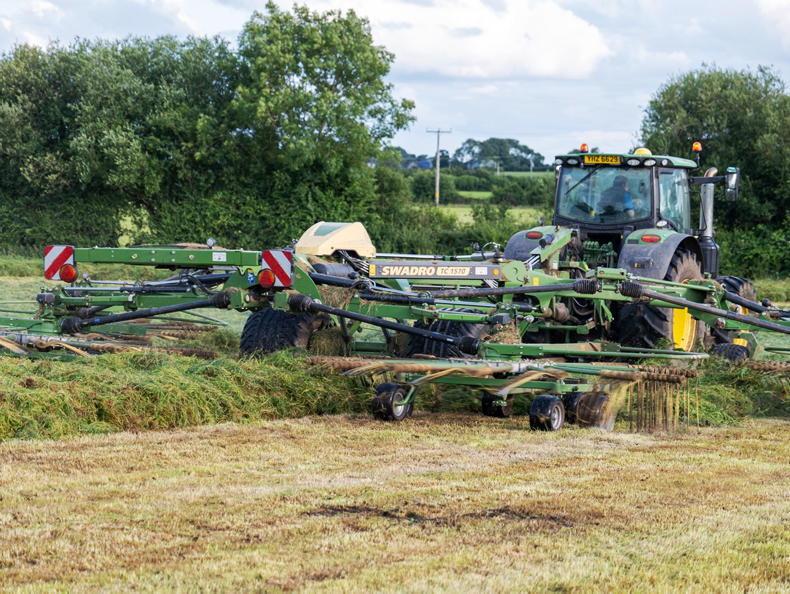
“You can adjust the working width straight from the cab,” he explains. “Maximum is 15.7 metres – nearly 16 metres – and you can bring that right in. On the Fendt 516, everything is run through ISOBUS and the joystick, which makes it dead simple and very user friendly.” Cathal added.
“When you’re coming into an awkward headland, with the touch of a button you can lift individual rotors – front, back, left or right – without even having to look around. That’s all about user comfort and making the job easier.”
“We’ve two screens set up in the tractor. The GPS is down by the window, handy for any implement, and the second screen is focused fully on the rake. All your options are right there in front of you,” he added.
“If we’re reseeding or moving into tricky ground, rotor depth can be adjusted through the screen too,” Cathal explains. “There’s no getting out and winding anything up or down like with the previous rake. You can see the exact depth, and we’ve even saved preset measurements. With one selection, all the rotors lift up, meaning you’re not raking stones into the swath and you’re protecting the blades and the harvester.”
The Swadro TC1570 is fully ISOBUS compatible, allowing all key functions to be controlled directly through the tractor terminal. Rotor lift height, working width and ground pressure can be adjusted on the move, with individual rotors operated independently where required.
Preset working heights can also be saved, making it easier to adapt quickly to changing conditions such as reseeds, uneven ground or lighter crops.
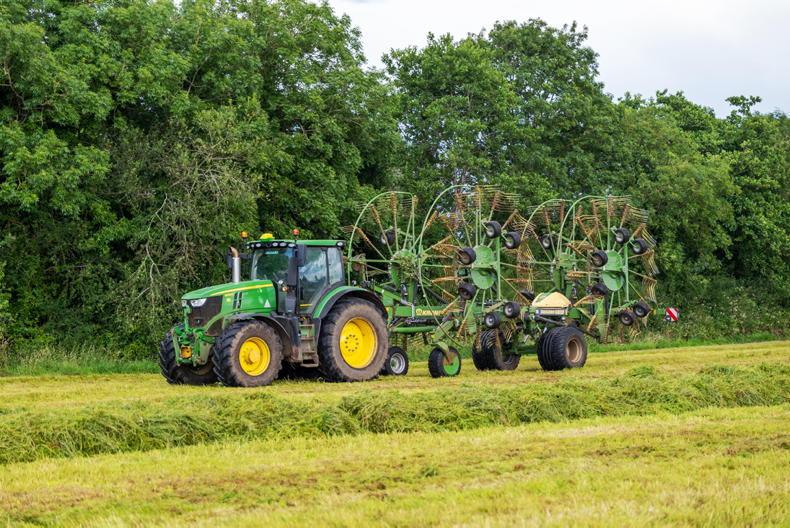
“For a four year old rake that we traded in, it just wasn’t performing near as well as this,” he adds. “I never thought a rake of this size would suit a farm like ours, but it has exceeded every expectation.”
“Just because it’s bigger doesn’t mean it’s any harder to travel on the road or get into tight gateways,” Cathal says. “Ideally, I’d be on it 24/7, but that’s not realistic. There are times when someone else has to jump in, and it’s important that the machine is easy to understand and quick to operate for anyone.”
“If I was to give advice to anyone considering it, I’d say try one out,” Cathal concludes. “It’s easy to look at a machine like this and think it wouldn’t suit your farm, but you don’t know the benefits until you actually use it. Get a demo from Farmhand or your local dealer – it’s well worth it”.
“It’s a big investment, and farmers think very carefully about these decisions,” he adds, “but from what we’ve seen here, it’s worth it. It’s the perfect choice for the farm right now – reliable, easy to use, and enjoyable to operate.” “Work life balance is massive as well. You want to get the job done properly and still be able to go home at the end of the day. This rake gives you that opportunity,” he concludes.


SHARING OPTIONS