Few farmers need a reminder of the past summer. July was one of the driest on record; grass growth in parts of the south and east fell well below normal and, by August, many farmers were feeding winter fodder.
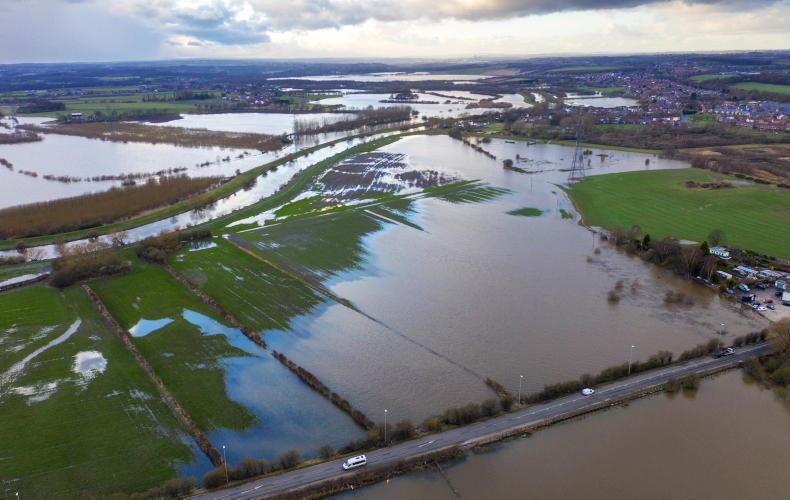
This came only months after storm Chandra, which wreaked havoc on parts of Ireland, including the River Slaney bursting its banks and flooding Enniscorthy and Bunclody. Eight years earlier, the 2018 drought left farmers scrambling for fodder.
These weather events are becoming more common and have also gripped continental Europe, as seen in increased heatwaves and fires. This strain is felt well beyond the farm gate and reminds many how a changing climate affects our food production system at home and abroad.
Professor Conor Murphy has spent his career studying these extremes. Based at Maynooth University, he works within the department of geography and its ICARUS Climate Research Centre and he specialises in hydroclimatology.
Hydroclimatology studies how changes in our climate affect water, from floods to droughts. For Prof Murphy, that’s where the real story for Ireland lies.
“Water is at the centre of this, whether it’s too much water in winter or soil moisture deficits in summer,” he says. “It’s water that is at the heart of the climate question for Ireland.”
Wetter winters, heavier rain
From his time in academia, the change has been clear over the years.
“Over my lifetime, born towards the end of the 1970s, every single decade has consecutively been warmer,” he says.
Rainfall patterns have also shifted. Annual rainfall totals are rising, with the biggest increases in winter: “When it’s raining, it’s raining heavier.”
Summer rainfall totals haven’t changed much, but the rain is falling differently, in heavier bursts, broken up by longer dry spells. None of this will surprise farmers, but this shift in weather patterns makes farming much harder to manage.
A human cause
What’s driving this shift in weather patterns? At Maynooth, Prof Murphy and his team research event attribution. They take a past flood, drought or heatwave event and ask how much greenhouse gas emissions from human activity contributed to it.
They have examined events such as the 2018 drought, the Midleton floods and the Wexford floods earlier this year. In each of those cases, human influence was clear.
According to Prof Murphy, a warmer atmosphere holds more moisture: “For every one degree rise in temperature, we expect heavy rainfall events to increase by approximately 7%,” he says. “That’s exactly what we’re seeing in the long-term records.”
Varied impact – west v southeast
The impact of this changing climate varies from one side of the country to the other.
“The west of Ireland can expect wetter winters,” says Prof Murphy. “For the more freely drained soils in the southeast, it becomes prolonged drought conditions, particularly in spring and summer.”
This variance across the country has a significant impact within critical windows for grass and crop production. With the drought just gone, the west of Ireland grew close to normal levels of grass, while parts of the south and east managed only a fraction of normal levels.
Future changes
If emissions continue, the trends we’re already seeing will continue: wetter winters, drier summers, heavier downpours and longer droughts.
“Our current hottest summer on record will become a rare cool event by the end of the century if we continue emitting greenhouse gases as we are,” he warns.
How far it goes, he adds, depends on how successful the world is at cutting emissions.
How science can help
Science is already enabling better on-farm decisions and farmers are actively working to become more sustainable.
Tools such as grass measuring, along with smart farming tools, help farmers see what’s happening in their fields and make quick, data-driven decisions.
Weather forecasting is also improving and is one technology Prof Murphy sees as critical to help farmers in a changing climate.
“With the advent of new technologies, we have a better understanding and an ability to make skillful seasonal forecasts, which are beneficial for farmers,” he says.
Further research into sward composition and more resilient livestock genetic traits is also adding to the toolkit to aid farmers, Prof Murphy added. But science is only half the picture.
“Learning from people on the ground in terms of how they cope with past extreme events is also very important.”
Building resilience
So what does resilience look like on the farm? For Prof Murphy, it means additional storage, diversifying and being open to changing systems.
“There is no one silver bullet,” he says. “It’s more about thinking long term and having the capacity to deal with extremes and recover.”
An important factor for farmers – and for farmers wondering what difference their own actions can make – is that every step counts from the individual farm up to the international level.
To see what’s happening during Science Week near you, and find out how to get involved, visit www.scienceweek.ie.