



For a dairy cow, the transition period is one of the most challenging times they face, as they deal with tremendous physiological, hormonal and dietary changes. Successfully managing this period to achieve high feed intakes during early lactation, will help capitalise on initial milk yield potential, while maintaining key fertility targets.
The transition period spans the time three weeks pre-calving and three to four weeks post-calving. The major challenges during this period can be broken down into three categories:
In particular, the change from a forage-rich diet to a high-concentrate milking ration presents a challenge for the cow’s digestive system. In the rumen, passage rate is increased, fermentation and pH profiles are altered, and in turn the rumen wall is also affected.
The shift in diet and changes to feed intake pattern that occur around calving also impact rumen microbiota populations, which play a key role in regulating feed intake, rumen function and overall digestive health. Most significantly, the fibrolytic populations – which belong to a functional family that can degrade carbohydrates – are particularly sensitive to low pH environments.
This means that their numbers decrease after a shift to high-energy diets, such as in the transition period. The effect of fibrolytic populations decreasing mean that cows are less able to digest and absorb nutrients.
With all this in mind, transition diets need to be specifically tailored to suit the nutritional requirements of the cow. Any practices or dietary supplements that promote healthy rumen function and increase dry matter intake immediately post calving should be prioritised.
If transition feeding is managed properly, producers will be rewarded with high yields, reduced risk of metabolic disorders, better fertility and improved longevity of cows within the herd.
Spotting a potential problem
There are a number of simple observations during the transition period which can help indicate issues with rumen function.
Monitoring and scoring rumen fill is a simple but very important tool to help achieve a successful transition. A rumen fill score of four during the dry period indicates good rumen function and will ensure adequate dry matter intake (DMI) pre-calving, which in turn, will help to maximise DMI post-calving.

A sub-optimal body condition score (BCS) is a key risk factor when it comes to issues post-calving related to a negative energy balance. The aim is to have cows at a BCS of 3-3.25 at drying off, maintaining this throughout the transition period.
Carry out weekly scoring from drying-off to ensure cows are maintaining and not gaining or losing weight.
If issues are seen with rumen fill and BCS, there are management practices which can be looked at to help improve cow performance and increase her ability to recover post-calving. In terms of physical herd management, try to reduce unnecessary social stress by limiting pen moves.
Also ensure there is adequate feed barrier space to help maximise DMI and reduce competition between cows. Provide 1m per cow feed space during the dry period and at least 75cm per cow in the fresh group.
In terms of nutritional management, both close-up and fresh cow diets need to be monitored closely, alongside feed and water intakes, to ensure optimum performance.
 Fine-tuning the ration during these periods will aid rumen adaptation and limit the risk of acidosis. This will increase nutrient digestibility and absorption through the rumen wall, helping to reduce the likelihood of metabolic disorders such as ketosis.
Research has shown significant benefits to rumen function when specific live yeasts is included in transition diets.
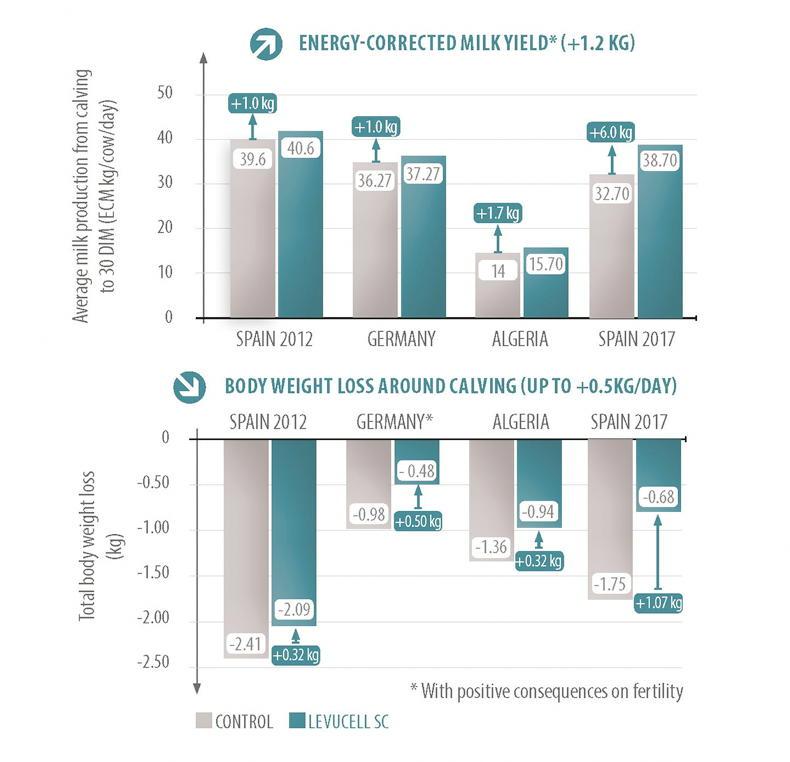
The rumen-specific live yeast, Saccharomyces cerevisiae CNCM I-1077 (commercially known as Levucell SC) helps to stabilise rumen pH and stimulate the growth of beneficial microflora, which improves fibre digestion and feed utilisation.
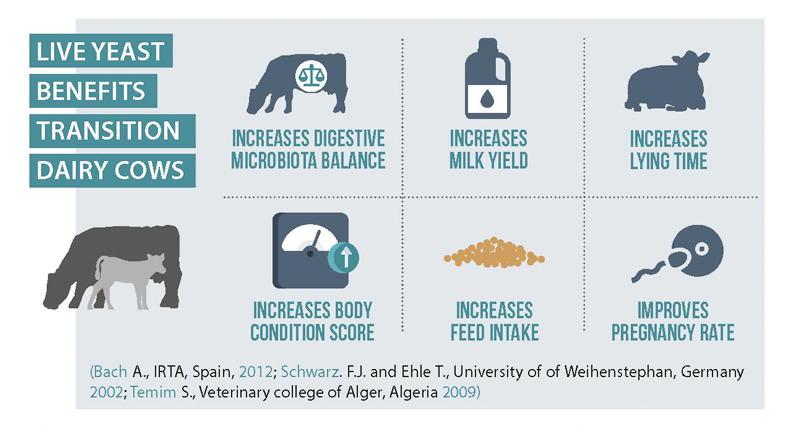
This can be especially useful when transitioning from a high fibre dry cow diet to a high concentrate early lactation diet, as it can help prepare the rumen microbiota for this substantial dietary change.
 Trials have shown that adding Levucell SC to the diet can increase the average rumen pH by up to 0.5 units reducing the risk of acidosis.
Levucell SC can also directly support the rumen and help mitigate some of the specific challenges caused by calving.
A study carried out in 2018 found that when this specific live yeast was fed prior to calving, the rumen wall was better prepared, increasing its integrity and reducing inflammation associated with stress around calving.
Trials have shown that feeding Levucell SC 30 days pre-calving as part of a daily ration, supports high feed consumption in early lactation with an average effect of an extra 1.5kg of dry matter intake (DMI).






SHARING OPTIONS