




It’s really been an exceptional start to spring with regard to weather and ground conditions, and it’s great to see farmers utilising the good weather to get slurry tanks emptied and stock turned out.
A lot of dairy farmers have been able to turn cows out as they have calved, with the weather settled since mid-January.
Growth over the winter period seems to have been average or slightly above, meaning farms have opened at good covers. The issue now will be to try to get through grass, as we are unlikely to see grazing conditions remain as good as they have been.
We’ve had some showers of rain earlier this week with more likely to hit at some point in the next few weeks, which will turn ground wet relatively quickly.
The mantra for all farmers should be to graze as much as they can while conditions allow.
Getting through ground in stickier conditions will require the usual methods to get grass grazed whilst limiting sward damage. The simplest and best way to ensure grass is utilised is to have cows going to paddocks with an appetite.
When they are turned out with an appetite, the heads go down and they eat, as opposed to walking grass in to the ground.
Try to balance silage so that cows have finished by morning milking, or prevent them putting their head through the barrier.
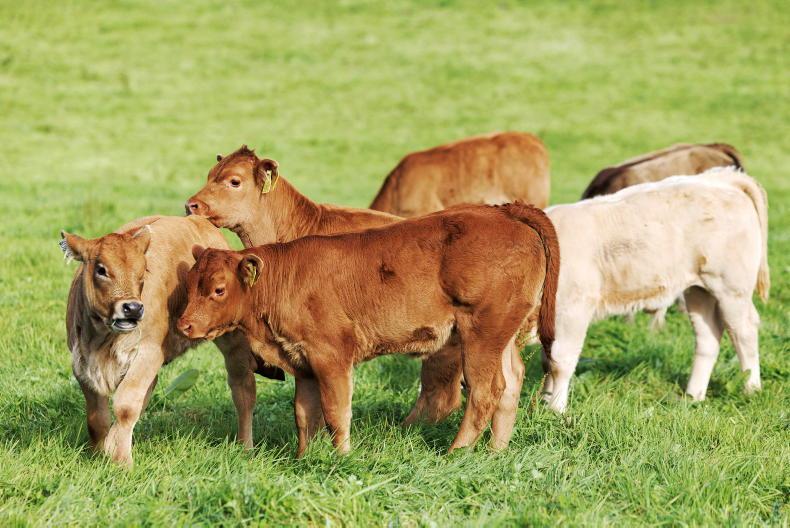
On beef farms, yearlings or lighter stores should be the first group to be turned out. These cattle will take a number of weeks of grazing before they begin thriving again, and they will do the least damage to swards.
Chris Tuffy – Doonally, Co Sligo
Grazing conditions have really been exceptional for us for this time of the year.
We started on 6 February grazing by day and then went to grazing day and night. So far, we have 80 cows calved and have 8% of the milking platform grazed.
We are using a Batt latch for each grazing, giving cows four hours in the paddocks before they have access back to the shed.
We are allocating 9kg of grass between the two grazings, along with 2-3 kg of silage. One third of the farm received 2,500 gallons/acre of watery slurry using the umbilical and dribble bar, while the rest will receive 20 units of urea towards the weekend.
Stocking Rate (cows/ha) 1.42
Growth Rate (kg/day) 6
Average Farm Cover (kg/ha) 800
Yield (l/cow) 22
Fat % 4.56
Protein% 3.95
Milk Solids (kg/cow) 1.92
Supplement fed (kg/cow/day) 3
Brian Rushe – Kildare, Co Kildare
Grazing conditions have been so good we are allocating 24-hour breaks to cows. They have been out day and night since the 7 February, and we now have roughly 13% of the milking platform grazed.
We are not expecting the good weather to last, so we are using the good conditions while they are here and grazing hard. Fifty per cent of the herd is calved.
Anything that has been grazed has received 2,500 gallons of slurry/acre and we will be going with some urea on the remaining ground in the next week or so.
We are putting magnesium through the water to prevent against tetany, as well as through the meal.
Stocking Rate (cows/ha) 1.5
Growth Rate (kg/day) 6
Average Farm Cover (kg/ha) 950
Yield (l/cow) 21
Fat % 5.15
Protein% 3.98
Milk Solids (kg/cow) 1.97
Supplement fed (kg/cow/day) 4
Caroline O’Sullivan – Teagasc Curtins, Co Cork
We have been out grazing day and night since ground conditions have been so good.
Our average farm cover is lower than we would like, but we are happy to feed some silage in March if it’s required.
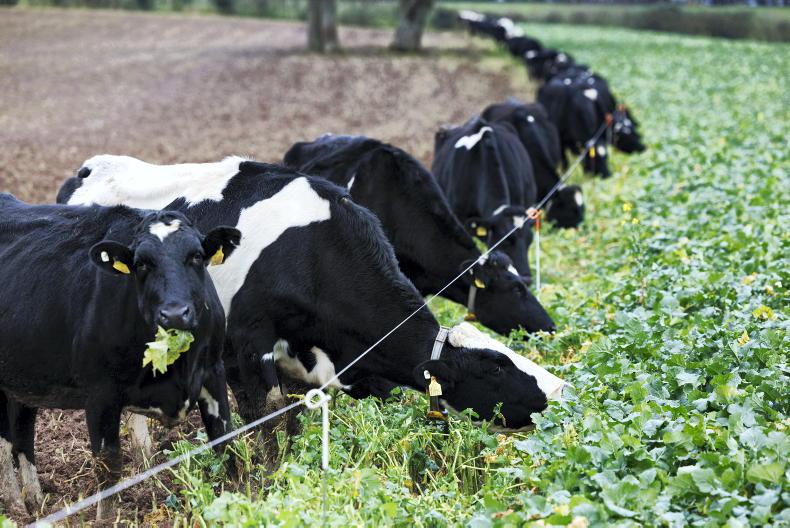
We are strip grazing, giving 12-hour allocations to cows and we’re seeing very little damage.
We are grazing covers of 1,000-1,200 kg DM/ha, as a lot of our lower covers received slurry.
Half the herd is calved, and with a lot of these calved since the third week in January their appetite is improving well. We are allocating 11kg of grass between the two grazings.
Stocking Rate (cows/ha) 1.45
Growth Rate (kg/day) 9
Average Farm Cover (kg/ha) 814
Yield (l/cow) 24
Fat % 5.27
Protein% 3.72
Milk Solids (kg/cow) 2.22
Supplement fed (kg/cow/day) 4



SHARING OPTIONS