



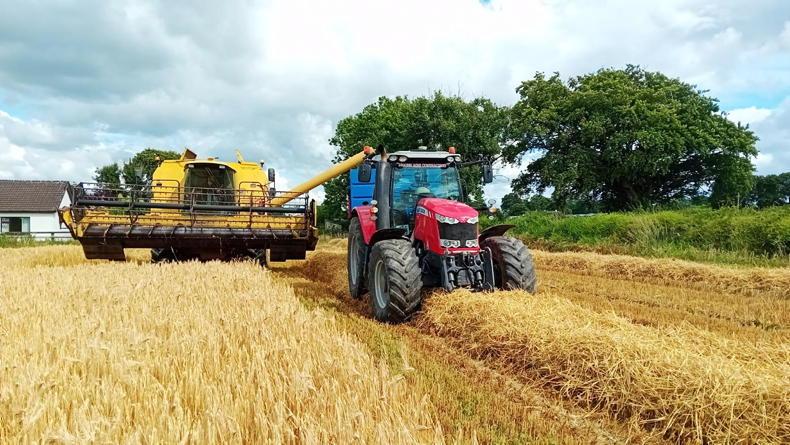
Conall Moore, Ballygar, Co Galway
The weather has been horrendous in Galway since the beginning of the harvest.
Conall says heavier land is now saturated – and even starting to flood in some places. Every opportunity is being taken to get two or three hours of cutting done.
Conall started harvesting on 2 July. LG Casting was first up and yielded 3.55t/ac at 16% moisture.
This crop had received two fungicides. It has been baled and yielded eight 4x4 bales/ac, which is quite low due to issues with the combine header leading to a lot of stubble remaining behind.
Conall then moved onto KWS Joyau. This variety received three fungicides and two growth regulators. The biggest field yielded 4.1t/ac at 18% moisture, while the rest averaged between 3.6 and 3.8t/ac.
Conall is a fan of six-row winter barley, with it proving to produce higher yields on his land.
Conall has about 30ac of winter barley left to cut, and this is beginning to break down very quickly. It will also be difficult to bale straw now.
Some straw had been tossed three times last week before a heavy shower arrived, just as it was to be baled on Thursday.
The winter oats are ready to be cut when the weather improves too. Conall will be chopping this oaten straw under the Straw Incorporation Measure.
Chocolate spot
The spring beans look quite good. However, they are now full of chocolate spot. Despite this, the pods seem to have filled quite well, so it should not cause many issues.
The spring barley was looking promising, but started to lodge in the heavy rain two weeks ago. The poor weather last weekend has made this problem much worse. Conall notes that any spring barley that received Terpal before the flag leaf emerged is still standing, while other crops have gone down.
He expects to begin harvesting spring barley around 15 August.
Neill Patterson, Seaforde, Co Down
Harvesting conditions have not been favourable in Down so far. This year has shown Neill the benefits that come with owning your own combine, as he purchased one for the first time last year.
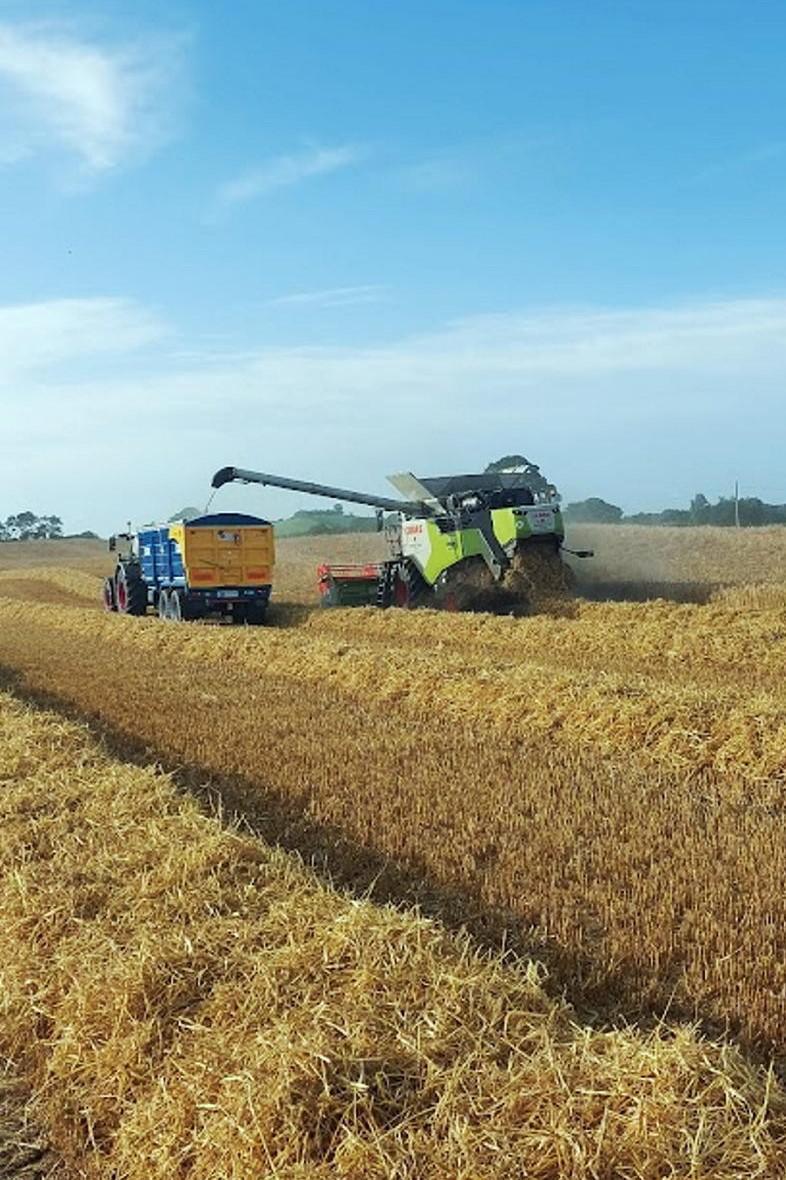
Neill has been able to cut for one or two hours at a time between the showers to get as much barley harvested as possible.
He started cutting winter barley on 8 July and had 80% finished by last Thursday. He had hoped to finish the barley in the early days of this week; he is quite pleased with the barley so far. It yielded 3.8t/ac, with a moisture of 14.4%.
The barley that remained to be cut when talking to Neill on Monday has a lot of ears on the ground, due to the wind and rain. Neill estimates that this will reduce the yield to 3.5t/ac.
Drought
The drought has definitely had an effect on grain fill on Neill’s land. A small proportion has been baled so far, yielding 10 to 12 round bales/ac.
He will not touch the remaining straw until there have been a couple of good drying days.
The winter wheat is turning quite quickly now.
It did receive rain at just the right time, which should help to fill the grains out. There is minimal lodging and Neill predicts that it is two or three weeks away from harvest.
The spring beans look very good. There are a lot of pods and they are filling well.
There is a small bit of chocolate spot in the crop, but Neill is happy with his decision to only apply one fungicide.
This has been a great growing year for maize, as it has been enjoying the warm and damp weather so far. It is just starting to tassel.
Neill expects the maize harvest will be slightly earlier than usual, perhaps at the end of September.
John Dunne, Shanagarry, Co Cork
All spraying is now completed on John’s farm, with the row crop wheels being replaced with wider wheels in preparation for the harvest.
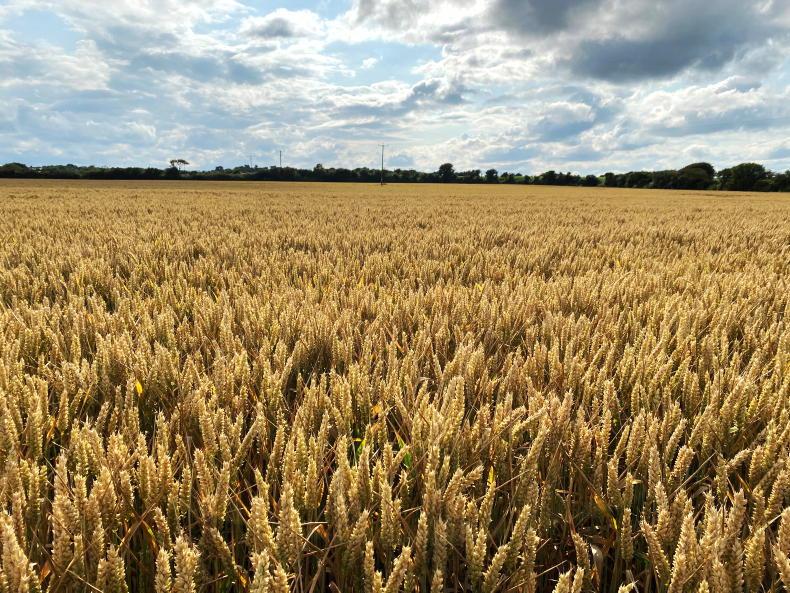
It has been very difficult to get one or two dry days in a row in Shanagarry, but John managed to get his 13ac of Integral winter barley cut on 3 July – two weeks earlier than usual.
Yield
With the crop having badly damaged headlands and suffering during the wet autumn and spring, John was surprised to see the crop yielding 3.7t/ac at 20% moisture, with a hectolitre weight of 66kph and screenings of 1.1 to 1.7%, which is very good for a 6-row variety.
The straw has not been touched yet. John says there is still some winter barley to be harvested in his area, and virtually no straw has been baled as of yet.
The winter oilseed rape was desiccated last week with Roundup Flex (2.25l/ha). John expects it to be ready to harvest at the beginning of August.
Seed size looks to be very good, which leads John to believe that there is good potential in the crop.
The winter wheat is still standing despite the heavy rain and strong wind. The October-planted wheat should be ready around 20 August, with the December-planted crop seven to 10 days later.
Grain quality looks very good and there is very little evidence of ear disease.
Lodging
There has been some lodging in the spring barley, especially after spring oilseed rape. John says there are virtually no spring barley crops in his area that have no lodging at all. Despite this, there has been good grain fill.
The spring beans have also been affected by the stormy weather. They are quite tossed and a few stems have snapped. However, yield potential still looks fantastic with great pod set and pod fill.
John is hoping that they do not receive any further rough weather.



SHARING OPTIONS