Ardfinnan, Co Tipperary
There has been plenty of rain in the past number of weeks in Tipperary, and while it was welcomed at the beginning, Pa would like to see a couple of dry weeks now.
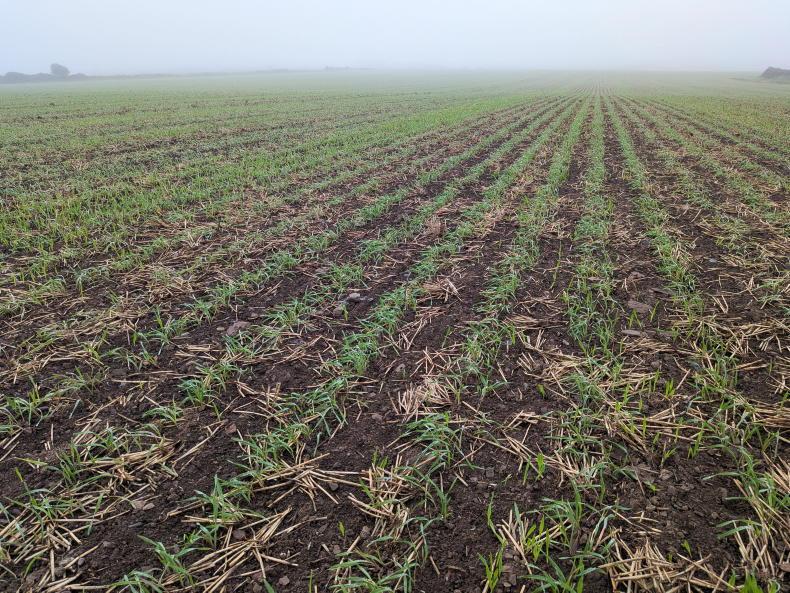
The rain helped the cover crops to germinate and motor on after they had struggled in the dry conditions. However, the recent cool weather has slowed growth and Pa thought they would be further ahead at this stage.
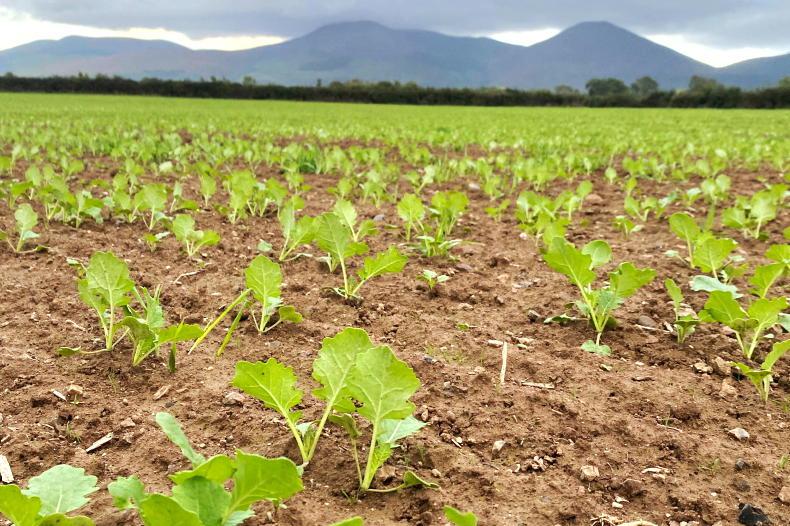
Pa did manage to plant his winter oilseed rape. The crop is now up and looks well. The variety is LG Armada and it was planted at 50 seeds/m².
The crop has not got any weed spray yet; Pa is waiting for the last few cereal volunteers to come through before using a graminicide. The crop received slurry before ploughing and some fertiliser was spread too, so Pa is hoping that there are good conditions for growth over the next month or two.
Pa was busy hedgecutting, spraying off ground for winter crops where required, and clearing the last of the bales in the past two weeks. He says there has been a lot more work with straw this year as it has not sold quite as well as usual and a lot of bales have been put in the shed.
Pa was hoping to get 85ac of winter rye planted earlier this week. This will be the first time he has grown the crop, and he managed to secure a market for it.
Once the rye is finished, Pa says he might start planting BYDV-tolerant winter barley. He will start in fields after oats, as this should reduce the risk of take-all too. He says that ploughing is slow, so he would like to get started early while the ground is in good condition. Pa’s winter cereal acreage is similar to last year, but with a bit less wheat because of the rye.
Tullamore Farm, Co Offaly
Ground conditions are holding up well in Tullamore despite the rain, except for a couple of heavier paddocks. Shaun says the dry weather this week was needed all the same, and there has been a couple of frosts in the past few days too.
The rain has been a great help to the forage rape. Shaun says that it struggled a lot after drilling because of the dry weather at the time. He applied a bag/acre of 18-6-12 at the start of September, and between this and the rainfall, the crop has taken off. It is about 9” tall at the moment and has a good cover over the ground.
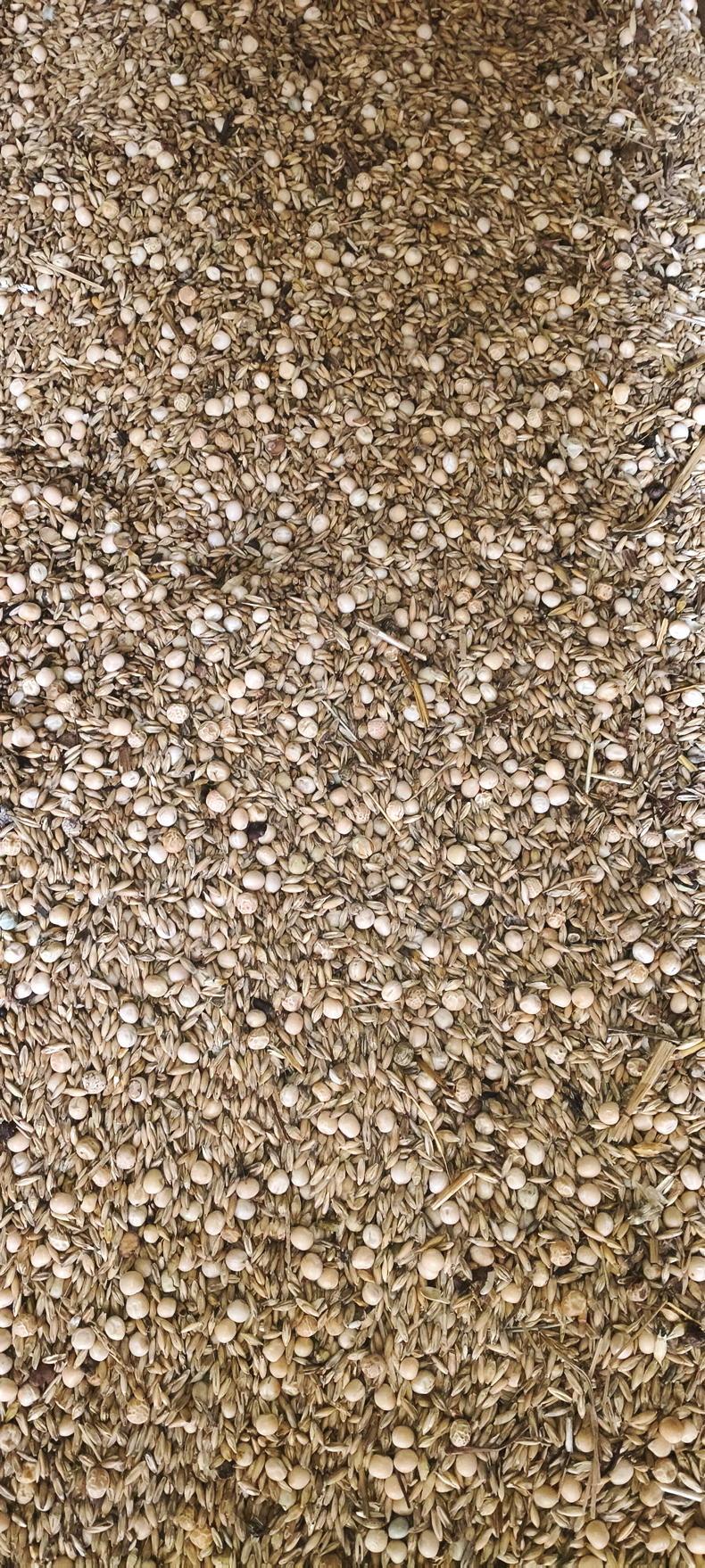
There are a good few volunteers in the 30’ rows that the combi-crop was mowed into, but Shaun is not too worried about them. They are pea and barley volunteers mostly, so they will provide some feeding when being grazed.
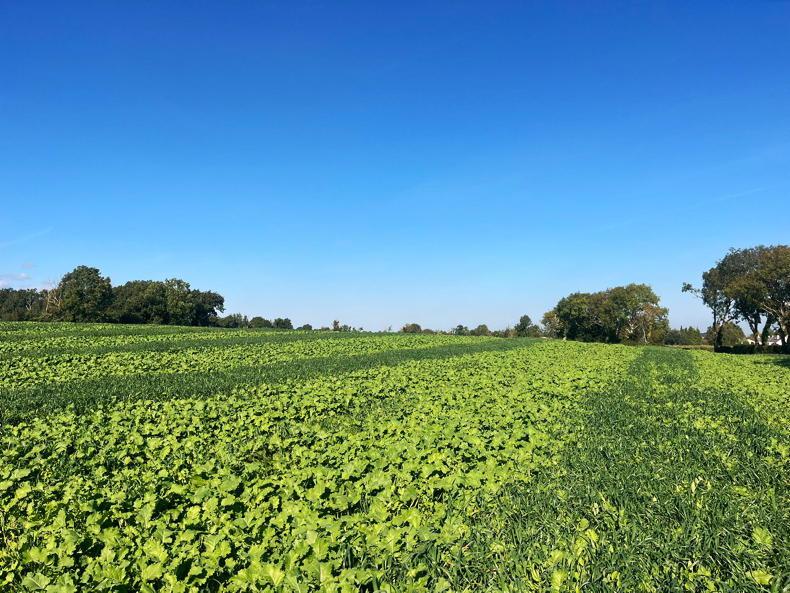
The forage rape on Tullamore Farm has some volunteers in it from the combi-crop swarths.
Shaun drilled forage rye after the spring barley on 5 September during a break in the weather. The ground was first allowed to green up as there was a good amount of weeds in the stubbles.
After being sprayed off, the ground was given a run of a disc harrow before sowing with a one-pass.
Unfortunately, Shaun did not manage to get the crop rolled as it began to rain shortly after sowing. This means the ground is a bit tender at the moment and is holding water.
However, the crop has not been affected and the rye is up nicely in its rows. He was also not able to get any fertiliser out on the crop before the application deadline in the middle of September.
He will apply some nitrogen in the spring if the crop ends up going for silage in April, and the rye should be OK until then as it is known as a great scavenger crop, mopping up any nutrients that are in the soil.
Clohamon,
Co Wexford
There has been 150mm of rain since the harvest ended in Wexford, which has Barty glad that the harvest was an early one.
The cover crops were slow to germinate in the dry soil but they’re greening up well now and are catching up to where they should be. All of Barty’s straw has been sold but he’s storing the bales in his sheds until they are collected.
Barty has stuck with the same winter barley variety this year, Orcade. It performed well for him so he was happy to go with it again. The seed has been ordered but the crop won’t be planted for another week or two.
Barty is currently deciding on the remainder of his cropping plan, and he says the prospects are frightening. He notes that the mood he has seen among tillage farmers has never been so low, despite a relatively easy harvest with decent yields. The farmers are being left in limbo for next year, and probably for 2027 too, he says. He notes that it is important that farmers do not start to crawl into their shells when the going gets tough.
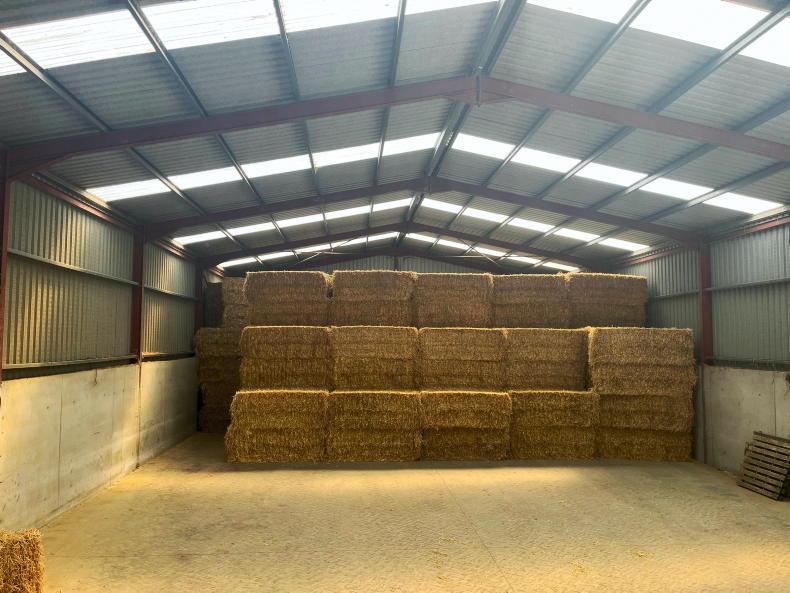
Barty's straw is all in the shed and awaiting collection.
With poor markets for oats and beans, Barty says it is becoming quite difficult to comply with the three-crop rule for next year. He wonders whether leaving a field or two fallow might actually be a viable option next year to comply with the regulations while margins are extremely tight.
One way that Barty will try to mitigate risk next year is by trying a new crop. Ballycarney Grain is trying to develop a milling wheat sector in Ireland, something that Barty says should be applauded.
He says that alternative crops should be supported, and that this sort of initiative is needed across the tillage sector, even if government and industry funding is required to make these projects work at a large scale.
Barty will try a spring milling wheat next year to see how the crop does.
Ardfinnan, Co Tipperary
There has been plenty of rain in the past number of weeks in Tipperary, and while it was welcomed at the beginning, Pa would like to see a couple of dry weeks now.
The rain helped the cover crops to germinate and motor on after they had struggled in the dry conditions. However, the recent cool weather has slowed growth and Pa thought they would be further ahead at this stage.
Pa did manage to plant his winter oilseed rape. The crop is now up and looks well. The variety is LG Armada and it was planted at 50 seeds/m².
The crop has not got any weed spray yet; Pa is waiting for the last few cereal volunteers to come through before using a graminicide. The crop received slurry before ploughing and some fertiliser was spread too, so Pa is hoping that there are good conditions for growth over the next month or two.
Pa was busy hedgecutting, spraying off ground for winter crops where required, and clearing the last of the bales in the past two weeks. He says there has been a lot more work with straw this year as it has not sold quite as well as usual and a lot of bales have been put in the shed.
Pa was hoping to get 85ac of winter rye planted earlier this week. This will be the first time he has grown the crop, and he managed to secure a market for it.
Once the rye is finished, Pa says he might start planting BYDV-tolerant winter barley. He will start in fields after oats, as this should reduce the risk of take-all too. He says that ploughing is slow, so he would like to get started early while the ground is in good condition. Pa’s winter cereal acreage is similar to last year, but with a bit less wheat because of the rye.
Tullamore Farm, Co Offaly
Ground conditions are holding up well in Tullamore despite the rain, except for a couple of heavier paddocks. Shaun says the dry weather this week was needed all the same, and there has been a couple of frosts in the past few days too.
The rain has been a great help to the forage rape. Shaun says that it struggled a lot after drilling because of the dry weather at the time. He applied a bag/acre of 18-6-12 at the start of September, and between this and the rainfall, the crop has taken off. It is about 9” tall at the moment and has a good cover over the ground.
There are a good few volunteers in the 30’ rows that the combi-crop was mowed into, but Shaun is not too worried about them. They are pea and barley volunteers mostly, so they will provide some feeding when being grazed.

The forage rape on Tullamore Farm has some volunteers in it from the combi-crop swarths.
Shaun drilled forage rye after the spring barley on 5 September during a break in the weather. The ground was first allowed to green up as there was a good amount of weeds in the stubbles.
After being sprayed off, the ground was given a run of a disc harrow before sowing with a one-pass.
Unfortunately, Shaun did not manage to get the crop rolled as it began to rain shortly after sowing. This means the ground is a bit tender at the moment and is holding water.
However, the crop has not been affected and the rye is up nicely in its rows. He was also not able to get any fertiliser out on the crop before the application deadline in the middle of September.
He will apply some nitrogen in the spring if the crop ends up going for silage in April, and the rye should be OK until then as it is known as a great scavenger crop, mopping up any nutrients that are in the soil.
Clohamon,
Co Wexford
There has been 150mm of rain since the harvest ended in Wexford, which has Barty glad that the harvest was an early one.
The cover crops were slow to germinate in the dry soil but they’re greening up well now and are catching up to where they should be. All of Barty’s straw has been sold but he’s storing the bales in his sheds until they are collected.
Barty has stuck with the same winter barley variety this year, Orcade. It performed well for him so he was happy to go with it again. The seed has been ordered but the crop won’t be planted for another week or two.
Barty is currently deciding on the remainder of his cropping plan, and he says the prospects are frightening. He notes that the mood he has seen among tillage farmers has never been so low, despite a relatively easy harvest with decent yields. The farmers are being left in limbo for next year, and probably for 2027 too, he says. He notes that it is important that farmers do not start to crawl into their shells when the going gets tough.

Barty's straw is all in the shed and awaiting collection.
With poor markets for oats and beans, Barty says it is becoming quite difficult to comply with the three-crop rule for next year. He wonders whether leaving a field or two fallow might actually be a viable option next year to comply with the regulations while margins are extremely tight.
One way that Barty will try to mitigate risk next year is by trying a new crop. Ballycarney Grain is trying to develop a milling wheat sector in Ireland, something that Barty says should be applauded.
He says that alternative crops should be supported, and that this sort of initiative is needed across the tillage sector, even if government and industry funding is required to make these projects work at a large scale.
Barty will try a spring milling wheat next year to see how the crop does.
SHARING OPTIONS