Pádraig Connery, Villierstown, Co Waterford
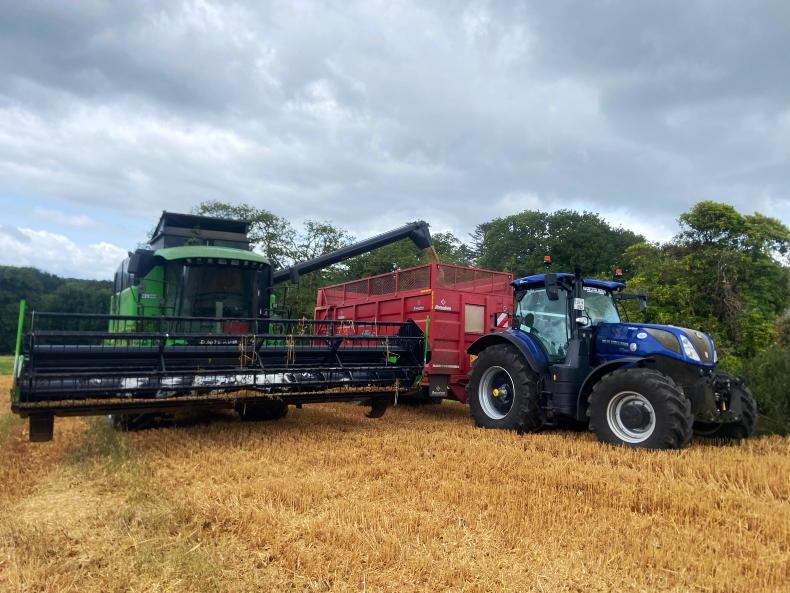
The cereal harvest was over in July for the first time ever for Pádraig as the spring barley was finished on 31 July. He then got everything baled by the bank holiday weekend. The good conditions allowed him to cut over 200ac in seven days.
The winter oats were harvested between 24 and 26 July. Pádraig was disappointed as they yielded 3.2t/ac at 16% moisture and a KPH of 56. As the grain quality was quite good, Pádraig is unsure why the crop did not yield too well but he did notice large variations in the height of the crop. The winter wheat yielded 4.1t/ac at 17% moisture and 74KPH. Pádraig was happy as it is a tough enough field. The straw was entered in the SIM but Pádraig withdrew it as there was a good demand for the straw.
The Hurler spring barley yielded 3.3t/ac at 65KPH and 17% moisture. The SY Amity for malting yielded 3t/ac at 16% moisture, 8.7% protein, and 68KPH.
However, the highlight of the harvest was the Laureate spring barley. It averaged 3.15t/ac, but one field was as high as 3.5t/ac with hectolitre weights of over 70 but averaging 68.5.
All of Pádraig’s malting barley passed this year. There was an average of eight round bales per acre on the barley.
The spring beans are all that is left to be harvested now. They have changed colour a lot in the past ten days, and Pádraig expects to cut them in August.
Pádraig has now turned his attention to planting cover crops.
He planted a brassica mix under the Farming for Water EIP where winter crops will be planted, but any fields going into spring crops are being planted with an eight-way mix. Pádraig’s agronomist suggested planting some winter oilseed rape this year given the early harvest. Pádraig has no experience with it and does not have a side knife or extension for the combine, but he will consider it over the next couple of weeks.
Stephen Wallace, Mountrath, Co Laois
It has been a busy week for Stephen between harvesting and exhibiting at the Tullamore Show with his family’s fencing business.
The winter oats were the first crop cut on the farm. It yielded 3.9t/ac at 16% moisture content and Stephen was pleased with the crop. There were over 11 bales/ac on the oats.
Only 4ac of winter wheat have been cut so far. This was a poor crop as the wheat had take-all due to the position in the rotation the field was in. It yielded just under 3t/ac. The remaining wheat looks quite good but it won’t be ripe for another 10 days, something Stephen is taking as a good sign.
There are only 10ac of spring barley left to cut, which Stephen thinks is the best of the crop. The crop has yielded 2.8t/ac so far at 16% moisture. There is an average of eight to nine bales/ac on the barley too. Stephen is happy enough with the crop overall as it was grown with a reduced level of chemical fertiliser due to the use of slurries.
The winter beans are ripening in but it will still be near the end of August by the time they are harvested. They look better than what Stephen expected earlier in the year with the dry spells of weather. The spring beans are about a fortnight behind and have a good bit of green left when compared to the winter beans. Stephen is hopeful of a good yield.
The very late-sown spring oats are starting to turn, but they will be the last crop to be harvested. Considering the May planting date and the field the crop is in, Stephen says it actually looks like quite a nice crop.
Stephen has planted some cover crops of leafy turnip and forage rape under the Farming for Water EIP. They should get a good start with some recent rain and warm temperatures.
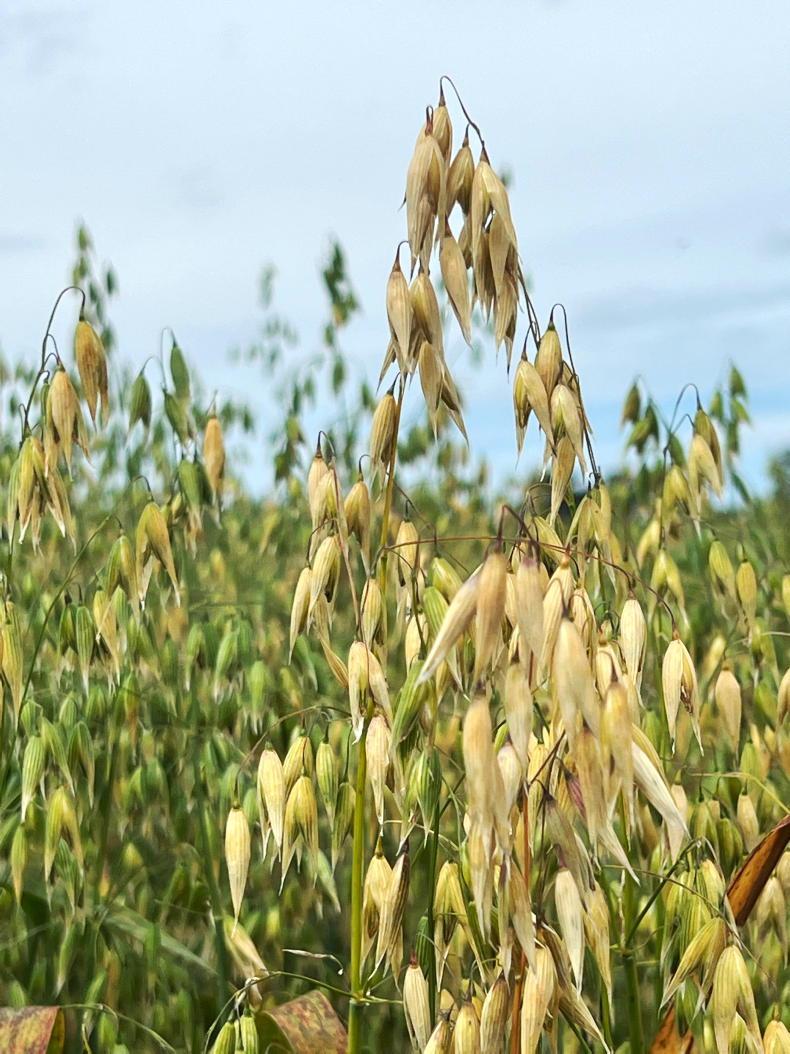
Stephen's May-sown spring oats are starting to change colour.
David Hobson, Dunsany, Co Meath
The grain dryer is running 24 hours a day in Meath and managing space in the farmyard has become a challenge but David says it’s not a bad situation to be in. The weather has played ball and he is hoping to finish the cereal harvest this week.
The Aurelia winter oilseed rape was finished on 28 July. It had an excellent average yield of 2.25t/ac. David will drill next year’s crop in a week’s time, staying with Aurelia but also planting some LG Armada. Chicken manure is being applied on this land at 4t/ac and incorporated immediately. This will supply the majority of the crop’s nitrogen requirements.
The Husky winter oats were completely flattened by heavy rain in July and it was challenging to cut with green straw. The crop averaged 3.75t/ac. Going forward, the farm has decided to drop this crop from the rotation due to two years of poor margins and market conditions.
The wheat harvest began on 30 July and David got a good run with very little rain in the past ten days. Yields have been excellent, ranging from 4.4 to 5.4 t/ac with good hectolitre weights (72 to 78 kph) and moisture contents of 16 to 20%. He says Graham was noticeably the best variety.
Champion suffered from fusarium and lower bushel weights, but still performed well.
The SY Amity spring barley was cut last weekend and did very well at 3.45t/ac, 17% moisture and 66kph. The crop was drilled after grazed stubble turnips using minimum tillage in March. Although David was surprised with the result, he says the early sowing and reduced cultivation helped root establishment and to keep moisture in the ground for longer, which helped spring crops this year.
Raking straw, moving bales, stubble cultivations and catch cropping will be prioritised in the coming week. The 2026 cropping plan will also be finalised and David says low index land will be targeted with organic manure and lime applications.
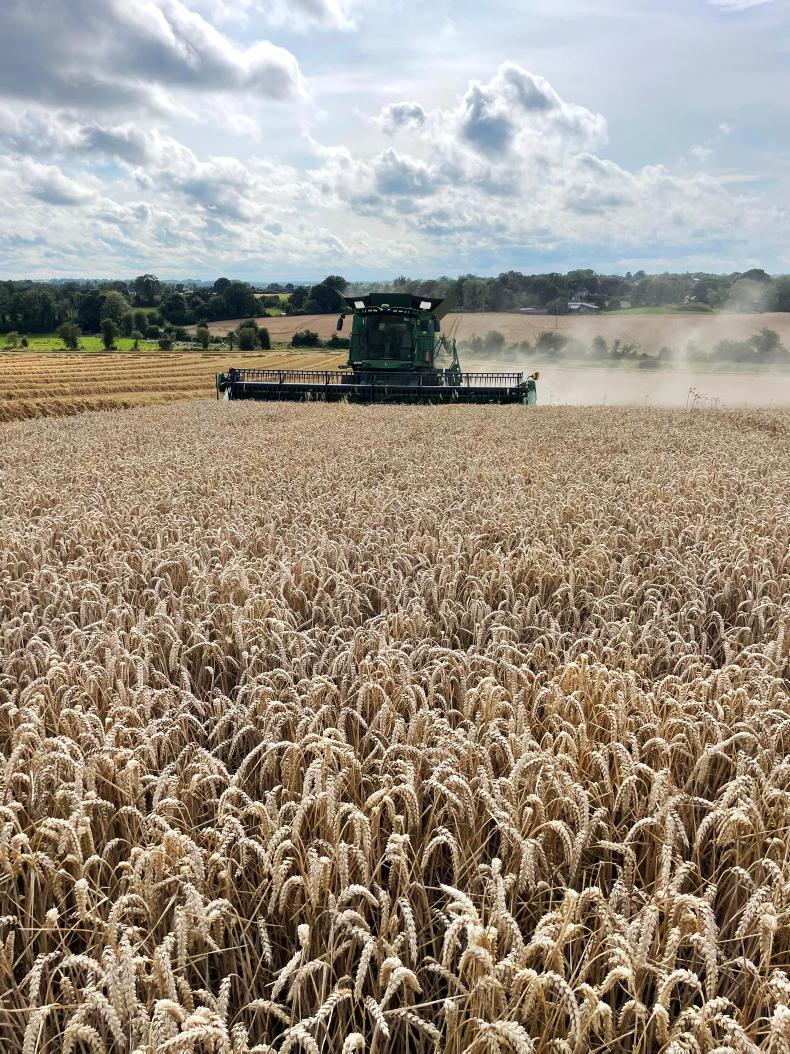

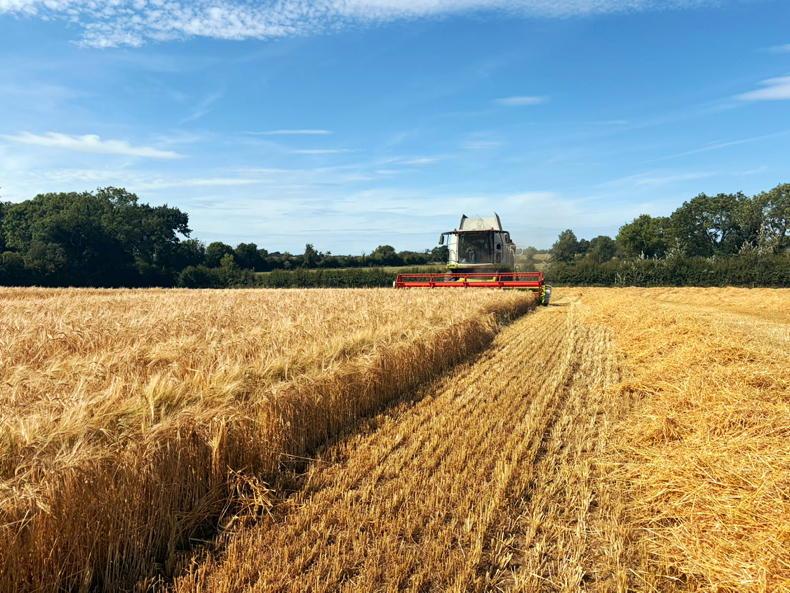
Hobson Farms made the most of the fine weather to get through all their cereal crops.
Pádraig Connery, Villierstown, Co Waterford
The cereal harvest was over in July for the first time ever for Pádraig as the spring barley was finished on 31 July. He then got everything baled by the bank holiday weekend. The good conditions allowed him to cut over 200ac in seven days.
The winter oats were harvested between 24 and 26 July. Pádraig was disappointed as they yielded 3.2t/ac at 16% moisture and a KPH of 56. As the grain quality was quite good, Pádraig is unsure why the crop did not yield too well but he did notice large variations in the height of the crop. The winter wheat yielded 4.1t/ac at 17% moisture and 74KPH. Pádraig was happy as it is a tough enough field. The straw was entered in the SIM but Pádraig withdrew it as there was a good demand for the straw.
The Hurler spring barley yielded 3.3t/ac at 65KPH and 17% moisture. The SY Amity for malting yielded 3t/ac at 16% moisture, 8.7% protein, and 68KPH.
However, the highlight of the harvest was the Laureate spring barley. It averaged 3.15t/ac, but one field was as high as 3.5t/ac with hectolitre weights of over 70 but averaging 68.5.
All of Pádraig’s malting barley passed this year. There was an average of eight round bales per acre on the barley.
The spring beans are all that is left to be harvested now. They have changed colour a lot in the past ten days, and Pádraig expects to cut them in August.
Pádraig has now turned his attention to planting cover crops.
He planted a brassica mix under the Farming for Water EIP where winter crops will be planted, but any fields going into spring crops are being planted with an eight-way mix. Pádraig’s agronomist suggested planting some winter oilseed rape this year given the early harvest. Pádraig has no experience with it and does not have a side knife or extension for the combine, but he will consider it over the next couple of weeks.
Stephen Wallace, Mountrath, Co Laois
It has been a busy week for Stephen between harvesting and exhibiting at the Tullamore Show with his family’s fencing business.
The winter oats were the first crop cut on the farm. It yielded 3.9t/ac at 16% moisture content and Stephen was pleased with the crop. There were over 11 bales/ac on the oats.
Only 4ac of winter wheat have been cut so far. This was a poor crop as the wheat had take-all due to the position in the rotation the field was in. It yielded just under 3t/ac. The remaining wheat looks quite good but it won’t be ripe for another 10 days, something Stephen is taking as a good sign.
There are only 10ac of spring barley left to cut, which Stephen thinks is the best of the crop. The crop has yielded 2.8t/ac so far at 16% moisture. There is an average of eight to nine bales/ac on the barley too. Stephen is happy enough with the crop overall as it was grown with a reduced level of chemical fertiliser due to the use of slurries.
The winter beans are ripening in but it will still be near the end of August by the time they are harvested. They look better than what Stephen expected earlier in the year with the dry spells of weather. The spring beans are about a fortnight behind and have a good bit of green left when compared to the winter beans. Stephen is hopeful of a good yield.
The very late-sown spring oats are starting to turn, but they will be the last crop to be harvested. Considering the May planting date and the field the crop is in, Stephen says it actually looks like quite a nice crop.
Stephen has planted some cover crops of leafy turnip and forage rape under the Farming for Water EIP. They should get a good start with some recent rain and warm temperatures.

Stephen's May-sown spring oats are starting to change colour.
David Hobson, Dunsany, Co Meath
The grain dryer is running 24 hours a day in Meath and managing space in the farmyard has become a challenge but David says it’s not a bad situation to be in. The weather has played ball and he is hoping to finish the cereal harvest this week.
The Aurelia winter oilseed rape was finished on 28 July. It had an excellent average yield of 2.25t/ac. David will drill next year’s crop in a week’s time, staying with Aurelia but also planting some LG Armada. Chicken manure is being applied on this land at 4t/ac and incorporated immediately. This will supply the majority of the crop’s nitrogen requirements.
The Husky winter oats were completely flattened by heavy rain in July and it was challenging to cut with green straw. The crop averaged 3.75t/ac. Going forward, the farm has decided to drop this crop from the rotation due to two years of poor margins and market conditions.
The wheat harvest began on 30 July and David got a good run with very little rain in the past ten days. Yields have been excellent, ranging from 4.4 to 5.4 t/ac with good hectolitre weights (72 to 78 kph) and moisture contents of 16 to 20%. He says Graham was noticeably the best variety.
Champion suffered from fusarium and lower bushel weights, but still performed well.
The SY Amity spring barley was cut last weekend and did very well at 3.45t/ac, 17% moisture and 66kph. The crop was drilled after grazed stubble turnips using minimum tillage in March. Although David was surprised with the result, he says the early sowing and reduced cultivation helped root establishment and to keep moisture in the ground for longer, which helped spring crops this year.
Raking straw, moving bales, stubble cultivations and catch cropping will be prioritised in the coming week. The 2026 cropping plan will also be finalised and David says low index land will be targeted with organic manure and lime applications.

Hobson Farms made the most of the fine weather to get through all their cereal crops.
SHARING OPTIONS