


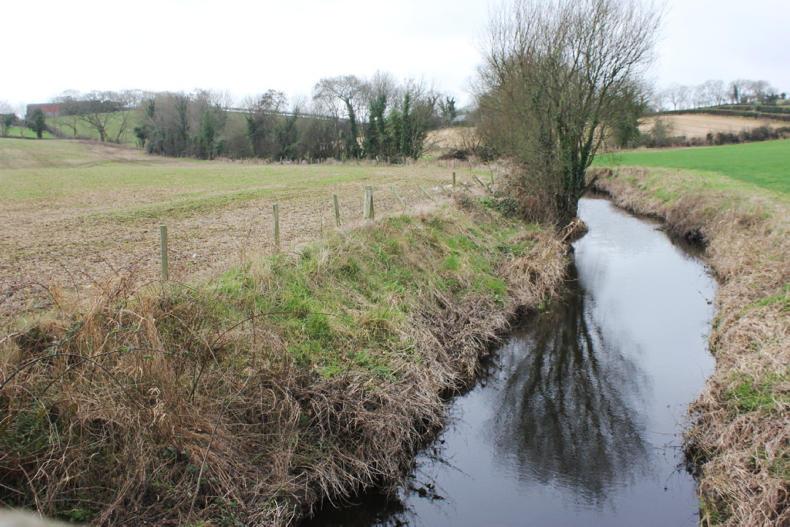
At first glance, the updated Countryside Management Scheme (to be known as the Environmental Farming Scheme – EFS) ticks all the boxes.
A pot of gold totalling £100m is waiting to be collected by any farmers interested in enhancing the biodiversity or water management on individual farms (or even single fields).
It has been eagerly anticipated, both by farmers like myself with more than a passing interest in many of the scheme options, and by organisations such as the RSPB, which has vociferously campaigned for something that offers real hope for the alarming decline in farmland bird numbers.
However, the whisperings within agricultural circles seemed to favour not getting too carried away about the prospects ahead, and I think it’s fair to say this line of thinking has turned out to be something of an understatement. I attended one of the information evenings, and came away feeling decidedly under-whelmed.
Perhaps I slot far too nicely into the category of farmer that could be described as grumpy, cynical, old-fashioned, stuck in the past, or a whinger, and I readily accept those characterisations, but the long and the short of it is quite simple: the new scheme does not look financially attractive (when compared with the last scheme) and is complicated in its multi-tiered approach. A further masterstroke (assuming the architects didn’t want a stampede of applications) was to make all information and application strictly an online process.
With a limited budget available to DAERA, and restrictions on manpower, we can probably exonerate everyone involved in the planning of this scheme. I suspect they have done an excellent job of best managing the available resources. The biggest single problem is just that all those thousands of farming men and women who are mildly interested in joining the EFS will have attended one of the information evenings, and heard phrases such as, environmental planner report, higher level, wider level and riparian buffer strip. By the time it came to the ‘‘can only be done online’’, they will have, quite frankly, run a mile.
Of course, there will be something there for plenty of people too. I suspect the scheme will still attract committed eco-friendly farmers, and large or wealthy landowners may easily find a bit of rich picking somewhere among the 200 or 300 pages of computerised information. Hobby farmers will be another target species, with perhaps a bit of time on their hands to carry out some of the remedial work. But I am not convinced that sizeable numbers of ordinary, flat-out, average family units will have much interest in applying.
There are to be no free dinners. The flat-rate payment of about a tenner an acre across the whole farm has been abolished, and payments will focus heavily on individual fields or designated areas within fields (adjacent to waterways for example).
Biodiversity
My primary interest would be towards biodiversity, but it is disappointing to note that winter feed crops for wild birds are now paid substantially less than the old CMS.
A figure of £590/ha sounds more than the old amount of £510/ha, until you remember the old scheme was a two-year mixture, thus halving the establishment cost.
Back then, my costs for growing bird cover were roughly £345/ha, but this could be divided in half (spread over the two-year duration). This resulted in a positive margin of £336/ha per year. However, if that same establishment cost has to be counted every year, the £590/ha in the new EFS will leave an annual gross margin of £245/ha. In layman’s terms, this equates to £37/ac less in pocket.
A week after the information event, I spent a couple of evenings trawling through all the documents, but could not find what I was looking for anywhere. Given all the trumpeting of the much-heralded online information onslaught, I find this somewhat surprising, although I’m told that it is all there now, given that the scheme opened this week.
At this point in time, I am not inclined to apply. I genuinely wanted to be attracted to this scheme, but my gut feeling is that I’d be better off ignoring some of the monetary payments, and reap the benefits of doing whatever I want whenever it suits me, across my fields and woodland.
Presumably, that will mean more hefty bills when my wife stocks up on bird feeding mixtures from the local shops.
I consider that a small price to pay for retaining my farming freedom.




SHARING OPTIONS