I am one of three sisters, and we have one brother. He was left the home farm, house, etc by my parents. He is single with no family of his own. Myself and my sisters, we all have families and some of the younger ones are interested in farming and would like to inherit the farm (or parts of it).
It has come to our attention that our brother is being influenced in his decisions on the farm by a distant relative. This person has a record of persuading others to make her a joint account holder and a will beneficiary.
What are our rights if he makes a will favouring this person? Can we contest such a will? What if his savings are in a joint account with this person?
ANSWER: Unlike our European counterparts, common law countries including Ireland, England and Wales do not have forced heirship laws, meaning those who decide to leave a will, have the freedom to leave assets to whom they like. This is known as testamentary freedom.
The main exception is for spouses where they are protected by the Succession Act regarding their entitlement to a legal right share, which is half of the estate where there are no children or one-third where there are children. Brothers and sisters are not entitled to any share, per se, unless they inherit under the rules of intestacy.
Making a will
If your brother is making a will, the solicitor will need to satisfy themselves that your brother is doing so of his own free will and is not subject to duress or undue influence of others. The solicitor will make enquiries as to why your brother is leaving his assets to certain persons and will keep a detailed record of that conversation so that the solicitor can rely on it in court, if required.
Depending on your brother’s age the solicitor might also ask him to get a doctor to sign off on the fact that he has capacity and understands what he is doing at the time of making the will.
Naturally, if the will is challenged the court will want to ensure that the wishes of the person making the will are honoured in so far as possible.
No will
If your brother did not make a will and died without a spouse, children or parents surviving him, it would fall to you and your sisters as the next of kin under the rules of intestacy.
If someone else claimed that your brother had promised the farm to them, they could bring a claim against the estate claiming ownership of the assets on the basis that they acted on that promise to their detriment and it would be unconscionable to deny the claim.
Contesting a will
If your brother leaves the farm to someone other than yourselves, there are very limited circumstances in which you can contest the will.
As outlined above, you could contest it on the basis that your brother did not have capacity at the time of making the will and/or that he was subject to duress and undue influence.
This is normally defended on the basis that the solicitor satisfied themselves that the person was making decisions based on their own free will.
Furthermore, a doctor’s certificate normally is sufficient to defend a claim that the person making the will did not have capacity.
The other avenue would be to claim an interest owing to a promise made by your brother to you but you will generally need others to vouch for that promise and also demonstrate that you relied on that promise to your detriment.
Costs
As regards costs, they normally follow the action so that the losing party has to pay both sets of legal costs. However, the court has discretion to direct that the costs come out of the estate.
This could arise if there was a good arguable case put forward by the claimant notwithstanding that they may have been unsuccessful in their claim.
Joint bank account
A joint bank account creates a presumption of joint ownership but that presumption is rebuttable, where for example, only one party provided all or most of the funds, the account was opened for convenience only, or there was no intention to gift a beneficial interest.
It also depends on what type of bank account was set up.
Joint accounts often include a right of survivorship meaning the surviving account holder automatically inherits the proceeds of the account on death.
Naturally, it’s up to your brother to decide what he wants to do with the farm. In my experience while some bachelors are mindful to ensure that the farm stays in the family name, more often than not they are more concerned about benefiting someone who has a genuine interest in farming and wants to continue actively farming the land.
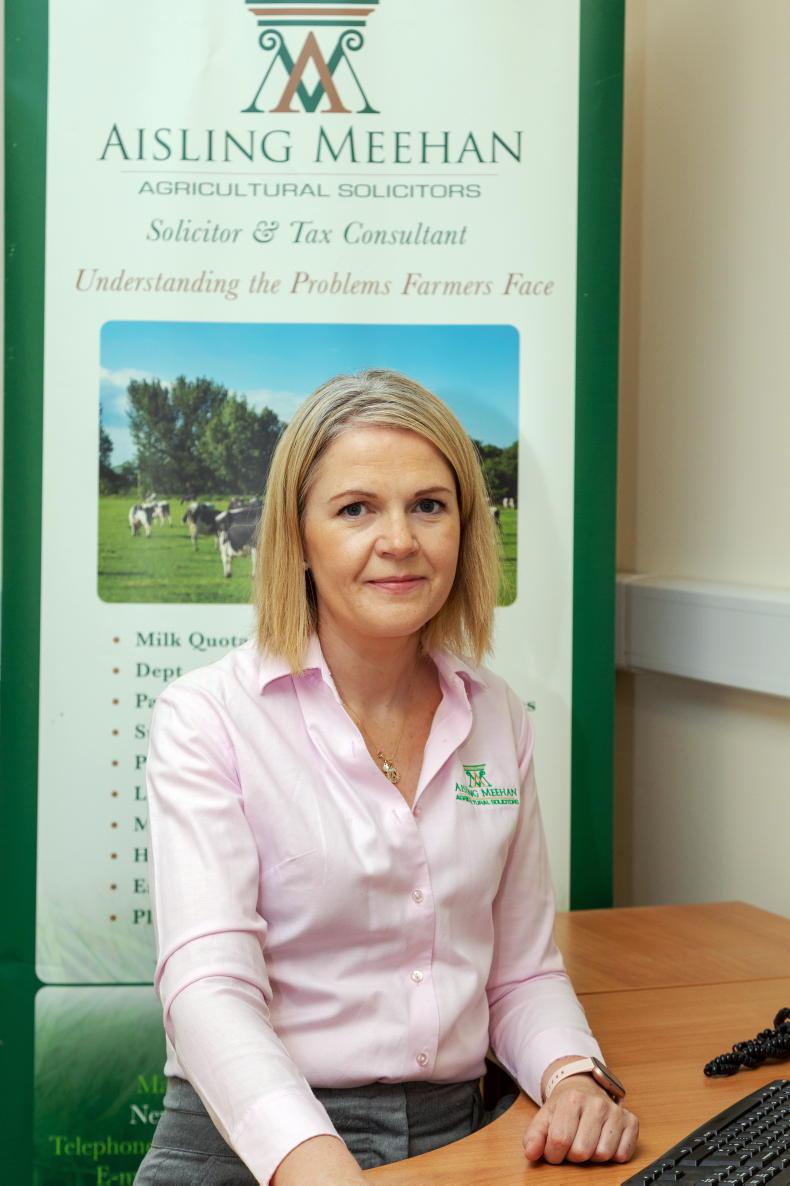
Aisling Meehan, agricultural solicitors and tax consultants.
Disclaimer: The information in this article is intended as a general guide only. While every care is taken to ensure accuracy of information contained in this article, Aisling Meehan, Agricultural Solicitors and Tax Consultants does not accept responsibility for errors or omissions howsoever arising. E-mail aisling@agrisolicitors.ie
I am one of three sisters, and we have one brother. He was left the home farm, house, etc by my parents. He is single with no family of his own. Myself and my sisters, we all have families and some of the younger ones are interested in farming and would like to inherit the farm (or parts of it).
It has come to our attention that our brother is being influenced in his decisions on the farm by a distant relative. This person has a record of persuading others to make her a joint account holder and a will beneficiary.
What are our rights if he makes a will favouring this person? Can we contest such a will? What if his savings are in a joint account with this person?
ANSWER: Unlike our European counterparts, common law countries including Ireland, England and Wales do not have forced heirship laws, meaning those who decide to leave a will, have the freedom to leave assets to whom they like. This is known as testamentary freedom.
The main exception is for spouses where they are protected by the Succession Act regarding their entitlement to a legal right share, which is half of the estate where there are no children or one-third where there are children. Brothers and sisters are not entitled to any share, per se, unless they inherit under the rules of intestacy.
Making a will
If your brother is making a will, the solicitor will need to satisfy themselves that your brother is doing so of his own free will and is not subject to duress or undue influence of others. The solicitor will make enquiries as to why your brother is leaving his assets to certain persons and will keep a detailed record of that conversation so that the solicitor can rely on it in court, if required.
Depending on your brother’s age the solicitor might also ask him to get a doctor to sign off on the fact that he has capacity and understands what he is doing at the time of making the will.
Naturally, if the will is challenged the court will want to ensure that the wishes of the person making the will are honoured in so far as possible.
No will
If your brother did not make a will and died without a spouse, children or parents surviving him, it would fall to you and your sisters as the next of kin under the rules of intestacy.
If someone else claimed that your brother had promised the farm to them, they could bring a claim against the estate claiming ownership of the assets on the basis that they acted on that promise to their detriment and it would be unconscionable to deny the claim.
Contesting a will
If your brother leaves the farm to someone other than yourselves, there are very limited circumstances in which you can contest the will.
As outlined above, you could contest it on the basis that your brother did not have capacity at the time of making the will and/or that he was subject to duress and undue influence.
This is normally defended on the basis that the solicitor satisfied themselves that the person was making decisions based on their own free will.
Furthermore, a doctor’s certificate normally is sufficient to defend a claim that the person making the will did not have capacity.
The other avenue would be to claim an interest owing to a promise made by your brother to you but you will generally need others to vouch for that promise and also demonstrate that you relied on that promise to your detriment.
Costs
As regards costs, they normally follow the action so that the losing party has to pay both sets of legal costs. However, the court has discretion to direct that the costs come out of the estate.
This could arise if there was a good arguable case put forward by the claimant notwithstanding that they may have been unsuccessful in their claim.
Joint bank account
A joint bank account creates a presumption of joint ownership but that presumption is rebuttable, where for example, only one party provided all or most of the funds, the account was opened for convenience only, or there was no intention to gift a beneficial interest.
It also depends on what type of bank account was set up.
Joint accounts often include a right of survivorship meaning the surviving account holder automatically inherits the proceeds of the account on death.
Naturally, it’s up to your brother to decide what he wants to do with the farm. In my experience while some bachelors are mindful to ensure that the farm stays in the family name, more often than not they are more concerned about benefiting someone who has a genuine interest in farming and wants to continue actively farming the land.
Aisling Meehan, agricultural solicitors and tax consultants.
Disclaimer: The information in this article is intended as a general guide only. While every care is taken to ensure accuracy of information contained in this article, Aisling Meehan, Agricultural Solicitors and Tax Consultants does not accept responsibility for errors or omissions howsoever arising. E-mail aisling@agrisolicitors.ie








SHARING OPTIONS