



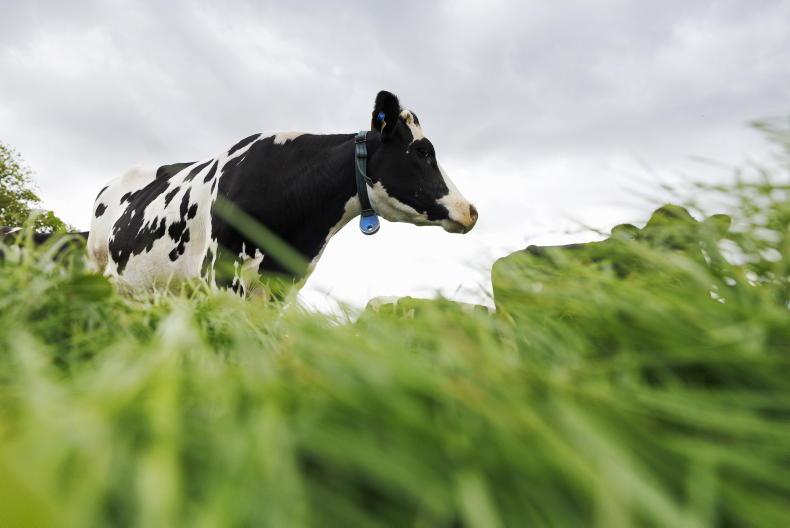
The Department of Agriculture is warning farmers about the risks of nitrates poisoning in cattle, as grass growth continues to recover after the summer drought.
Nitrate poisoning is caused by excess consumption of nitrates from plants, water or via ingestion of nitrate-containing fertilisers, it advised.
“A cow can consume a toxic amount of nitrate in as little as one hour and will start to show signs shortly after.
“A flush of grass growth after a dry period is noted as a high-risk time. High nitrate levels in forage are present when nitrate is taken up by the plant faster than it can be converted into protein."
Low levels of sunlight
“This can occur during times of low levels of sunlight, during dry spells or when temperatures drop, as all of these scenarios reduce plant energy levels to convert nitrate into protein,” it said.
Nitrate uptake from the soil can be accelerated following dry conditions when plant growth picks up again, it added.
“A similar process is seen in newly reseeded pasture. Low soil pH, high nitrogen levels from white clover, sulfur or phosphorus soil deficiencies and low molybdenum also increase nitrate uptake by plants.
Accumulation
“Using high levels of nitrogen fertiliser late in the season can predispose plants to nitrate accumulation, particularly if grazing soon after application and before full dry matter response. However, nitrate levels can get high without using nitrogen fertiliser,” it said.
For farmers concerned about nitrate toxicity in livestock they are advised to chat to their vet.




SHARING OPTIONS