Over 850,000 samples have been genotyped as part of the National Genotyping Programme (NGP) so far in 2025 according to new data from ICBF. There was just under 15,000 herds participating in the programme for spring 2025 but this is set to increase next year as more herds enrolled in the programme during 2025.
Ireland’s NGP is a world-first for a country to target an entire bovine population to be genotyped. As things stand, there are 1,017,959 cows in total in NGP, with 12,911 beef herds holding 295,486 suckler cows and 5,696 dairy herds holding 722,473 dairy cows enrolled in the programme as at 24 November 2025.
An additional 3,675 herds enrolled in the programme during 2025, with the majority of these beef farmers. There was 2,180 new beef herds enrolled when the programme re-opened with these farmers holding 41,404 new suckler cows. A total of 1,495 new dairy herds enrolled when the programme re-opened and these dairy herds have a total of 164,415 dairy cows at present.
Each of these new herds in the programme has to sample and test all animals on the farm that have been given sample tags by ICBF. They will also have to send samples for genotyping to the genotyping lab for all newborn calves.
Based on the 850,000 samples genotyped so far this year, approximately 15% of dairy calves had parentage errors discovered by genotyping. This means that either the dam or the sire was incorrectly assigned at registration. For calves born in the suckler herd, the percentage of parentage errors was less, at 12%.
These figures exclude calves registered with no sire, which stands at 9%. A high majority, 83%, of these calves can be assigned a sire after being genotyped. In the remaining cases a sire cannot yet be identified if it has not been genotyped.
In 3% of cases, the wrong breed has been assigned at registration and these have been fixed by genotyping while in a smaller number of cases, 2% the wrong sex was assigned at registration and these too have been fixed by genotyping.
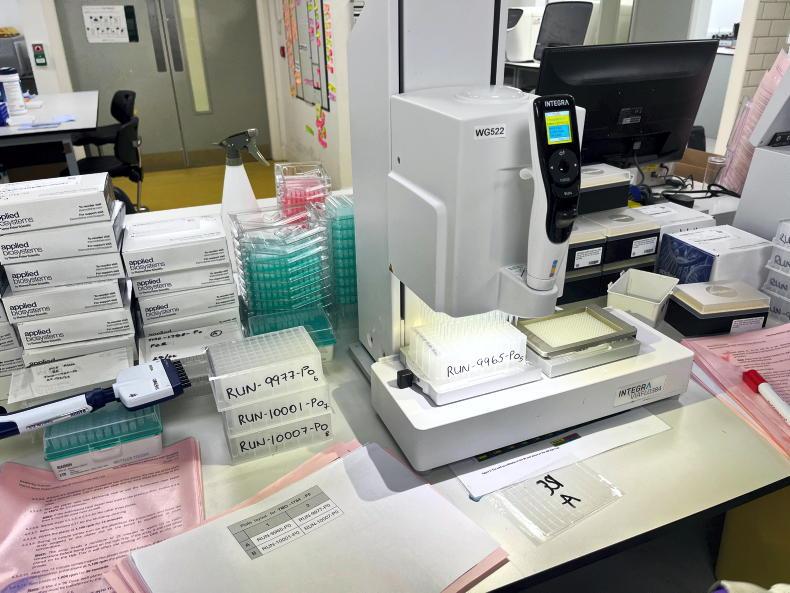
After incubation and amplification, the 96 samples per tray are transferred to a 384-sample SNP array for genotyping.
How genotyping works
Genotyping works by extracting a DNA sample from a tissue sample and reading the genes present in the DNA. By knowing what genes an animal has, the reliability of the animal’s genetic merit or EBI will be greatly increased.
This is important because parent average doesn’t tell the full story of an animal’s DNA. While half the genes will be from the sire and half from the dam, the percentage of genes from each parent for each trait will be different.
This is what makes people and animals different. Even full brothers or full sisters express different traits to each other.
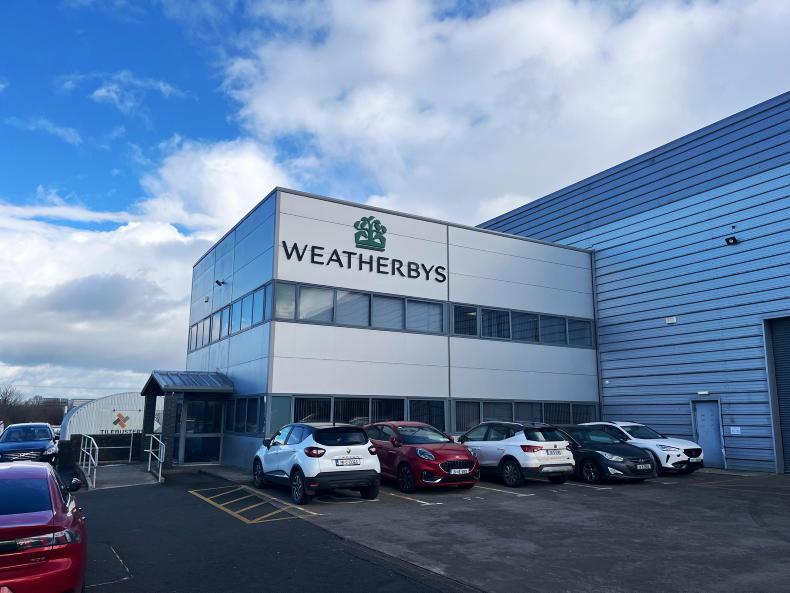
The main genotyping lab in Ireland is located at Naas in Co Kildare and is operated by Weatherbys. All of the NGP samples go to this lab but, during the busiest times of the year, about half of the samples are transported to Denmark to be genotyped in a lab there.
The process of sorting the samples and getting them genotyped takes time, with an average time spent in the lab per sample of four days. On average, the time from birth to a blue card arriving at the farm is 12 days although this increases to 14.5 days during the busiest times of the year.
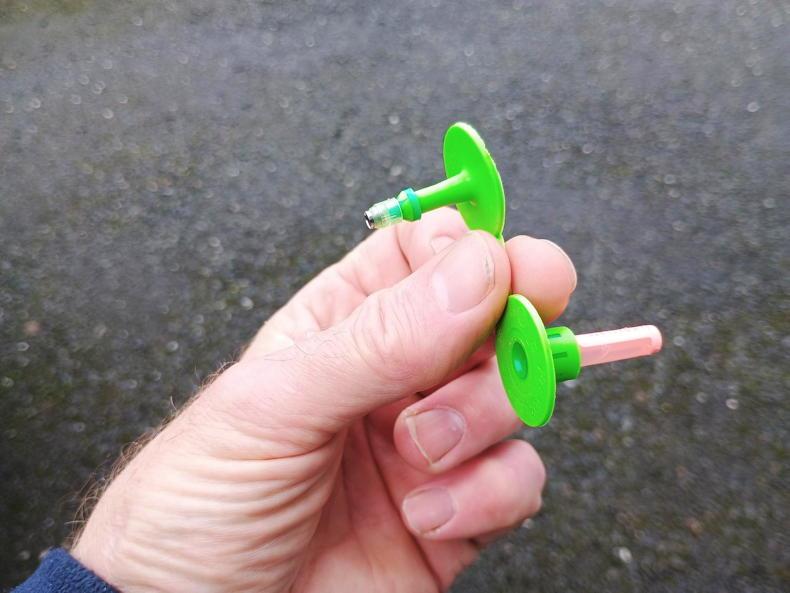
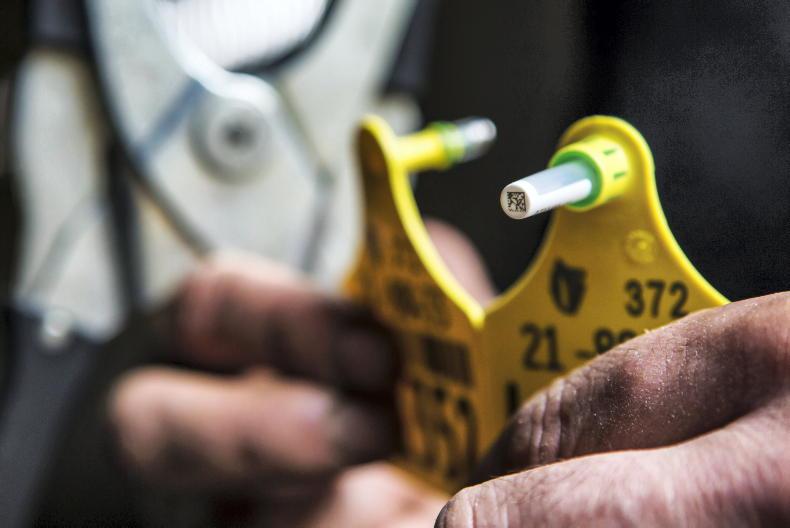
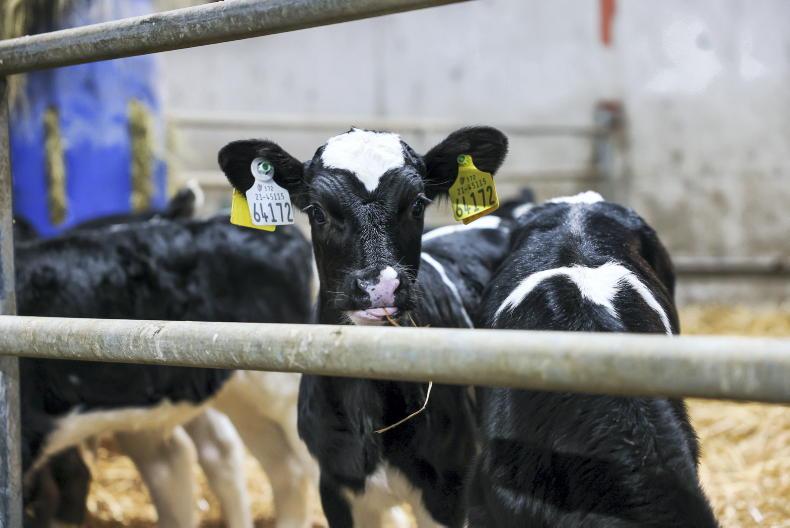
A tissue tag is used to obtain a sample that can be sent off for genotyping to an approved lab.
Programme
The NGP is set to run in its current form until the end of 2027 meaning there are two spring calving seasons remaining in the current programme. The cost of genotyping is shared between the farmer, Department of Agriculture and industry with funding from milk processors and meat factories contributing towards the cost. The initial cost of genotyping animals on the farm was paid for by the state.
Farmers are beginning to wonder what is likely to happen after 2027, will the current programme continue, will it lapse or will farmers have to pay more for being part of the programme?
According to ICBF, the plan is to continue with the NGP after 2027, but under an evolved structure. A spokesperson for ICBF said;
“Genetic improvement/genotyping remains a key action in the Government’s Climate Action Plan. There are a number of options being explored that will ensure the continuation of the genotyping programme. However, our primary focus over the next six months will be on the operational aspects of the NGP, to ensure we have another successful spring calving season.”
Over 850,000 samples have been genotyped as part of the National Genotyping Programme (NGP) so far in 2025 according to new data from ICBF. There was just under 15,000 herds participating in the programme for spring 2025 but this is set to increase next year as more herds enrolled in the programme during 2025.
Ireland’s NGP is a world-first for a country to target an entire bovine population to be genotyped. As things stand, there are 1,017,959 cows in total in NGP, with 12,911 beef herds holding 295,486 suckler cows and 5,696 dairy herds holding 722,473 dairy cows enrolled in the programme as at 24 November 2025.
An additional 3,675 herds enrolled in the programme during 2025, with the majority of these beef farmers. There was 2,180 new beef herds enrolled when the programme re-opened with these farmers holding 41,404 new suckler cows. A total of 1,495 new dairy herds enrolled when the programme re-opened and these dairy herds have a total of 164,415 dairy cows at present.
Each of these new herds in the programme has to sample and test all animals on the farm that have been given sample tags by ICBF. They will also have to send samples for genotyping to the genotyping lab for all newborn calves.
Based on the 850,000 samples genotyped so far this year, approximately 15% of dairy calves had parentage errors discovered by genotyping. This means that either the dam or the sire was incorrectly assigned at registration. For calves born in the suckler herd, the percentage of parentage errors was less, at 12%.
These figures exclude calves registered with no sire, which stands at 9%. A high majority, 83%, of these calves can be assigned a sire after being genotyped. In the remaining cases a sire cannot yet be identified if it has not been genotyped.
In 3% of cases, the wrong breed has been assigned at registration and these have been fixed by genotyping while in a smaller number of cases, 2% the wrong sex was assigned at registration and these too have been fixed by genotyping.
After incubation and amplification, the 96 samples per tray are transferred to a 384-sample SNP array for genotyping.
How genotyping works
Genotyping works by extracting a DNA sample from a tissue sample and reading the genes present in the DNA. By knowing what genes an animal has, the reliability of the animal’s genetic merit or EBI will be greatly increased.
This is important because parent average doesn’t tell the full story of an animal’s DNA. While half the genes will be from the sire and half from the dam, the percentage of genes from each parent for each trait will be different.
This is what makes people and animals different. Even full brothers or full sisters express different traits to each other.
The main genotyping lab in Ireland is located at Naas in Co Kildare and is operated by Weatherbys. All of the NGP samples go to this lab but, during the busiest times of the year, about half of the samples are transported to Denmark to be genotyped in a lab there.
The process of sorting the samples and getting them genotyped takes time, with an average time spent in the lab per sample of four days. On average, the time from birth to a blue card arriving at the farm is 12 days although this increases to 14.5 days during the busiest times of the year.
A tissue tag is used to obtain a sample that can be sent off for genotyping to an approved lab.
Programme
The NGP is set to run in its current form until the end of 2027 meaning there are two spring calving seasons remaining in the current programme. The cost of genotyping is shared between the farmer, Department of Agriculture and industry with funding from milk processors and meat factories contributing towards the cost. The initial cost of genotyping animals on the farm was paid for by the state.
Farmers are beginning to wonder what is likely to happen after 2027, will the current programme continue, will it lapse or will farmers have to pay more for being part of the programme?
According to ICBF, the plan is to continue with the NGP after 2027, but under an evolved structure. A spokesperson for ICBF said;
“Genetic improvement/genotyping remains a key action in the Government’s Climate Action Plan. There are a number of options being explored that will ensure the continuation of the genotyping programme. However, our primary focus over the next six months will be on the operational aspects of the NGP, to ensure we have another successful spring calving season.”






SHARING OPTIONS