Students from agriculture-related courses have no trouble finding a job or continuing their education, but their starting salary is lower than in other sectors.
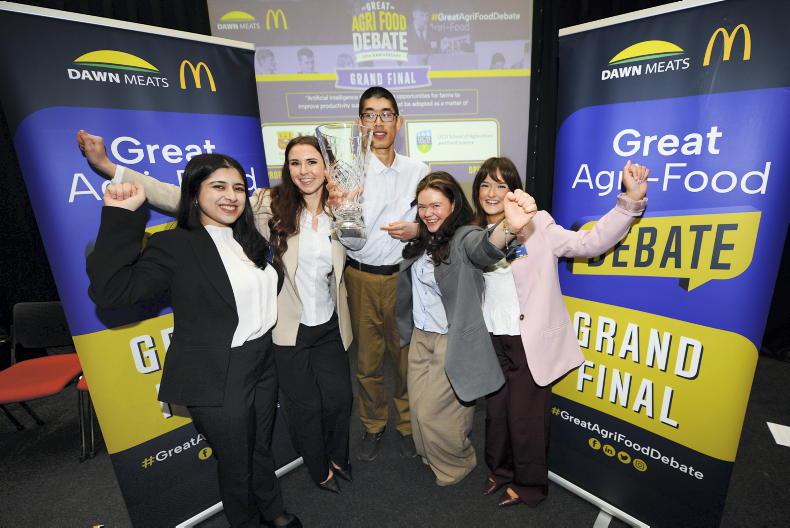
The Irish Farmers Journal Agri Careers Expo in the RDS, Dublin, last week. \ Philip Doyle
ADVERTISEMENT
Graduates from agricultural courses have lower pay than those from most other fields of study, a survey of the class of 2017 by the Higher Education Authority has found.
Among students who graduated with a third-level qualification in 2017, those from agriculture, forestry, fisheries and veterinary studies in full employment reported a mean annual salary of €29,736. This is below the national average of €33,574.
Only arts and humanities graduates earned less, with €24,728.
ADVERTISEMENT
Those with the highest level of pay one year after graduation were in education, with €38,701.
Employment
Agriculture, forestry, fisheries and veterinary graduates were close to the national picture when it comes to their professional situation.
Some 70% were in full-time employment (71% nationwide) and 4% were unemployed and looking for work (5% nationwide).
They were more likely to continue their education, with 19% engaged in full-time further study or training, compared with 13% of the general graduate population.
This content is available to digital subscribers and loyalty code users only. Sign in to your account, use the code or subscribe to get unlimited access.
The reader loyalty code gives you full access to the site from when you enter it until the following Wednesday at 9pm. Find your unique code on the back page of Irish Country Living every week.
CODE ACCEPTED
You have full access to the site until next Wednesday at 9pm.
CODE NOT VALID
Please try again or contact support.
Graduates from agricultural courses have lower pay than those from most other fields of study, a survey of the class of 2017 by the Higher Education Authority has found.
Among students who graduated with a third-level qualification in 2017, those from agriculture, forestry, fisheries and veterinary studies in full employment reported a mean annual salary of €29,736. This is below the national average of €33,574.
Only arts and humanities graduates earned less, with €24,728.
Those with the highest level of pay one year after graduation were in education, with €38,701.
Employment
Agriculture, forestry, fisheries and veterinary graduates were close to the national picture when it comes to their professional situation.
Some 70% were in full-time employment (71% nationwide) and 4% were unemployed and looking for work (5% nationwide).
They were more likely to continue their education, with 19% engaged in full-time further study or training, compared with 13% of the general graduate population.
If you would like to speak to a member of our team, please call us on 01-4199525.
Link sent to your email address
We have sent an email to your address. Please click on the link in this email to reset your password. If you can't find it in your inbox, please check your spam folder. If you can't find the email, please call us on 01-4199525.
ENTER YOUR LOYALTY CODE:
The reader loyalty code gives you full access to the site from when you enter it until the following Wednesday at 9pm. Find your unique code on the back page of Irish Country Living every week.








SHARING OPTIONS