In December 2011, the Teeling family made national headlines when it emerged that Beam, the US bourbon whiskey giant which owns brands such as Jim Beam and Canadian Club, had acquired the Cooley distillery in Co Louth for $95m (€73m) in one of the biggest deals of the year.
The Teeling family owned about one-third of Cooley distillery, which was one of only three operational whiskey distilleries in Ireland in 2011 and produced the Kilbeggan, Connemara and Tyrconnell brands of Irish whiskey.
For Jack Teeling, who was managing director of Cooley at the time, selling the business allowed him to start again with a blank canvass.
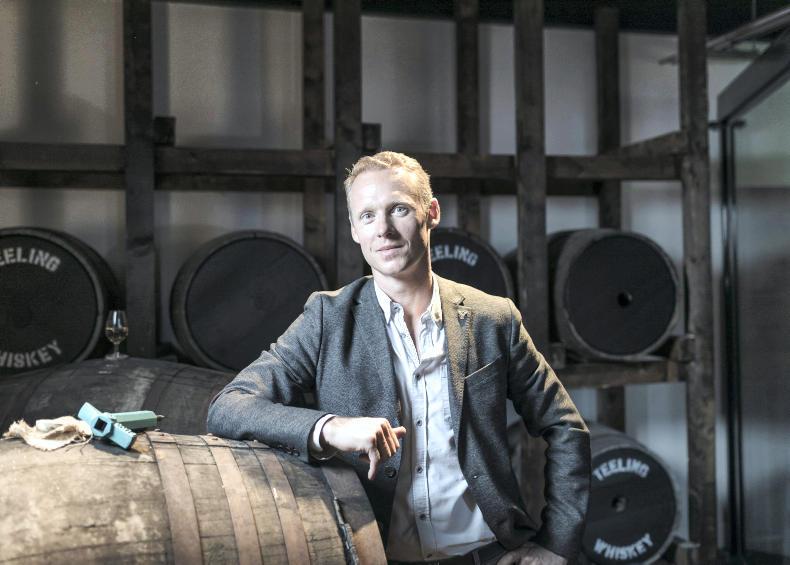
“When I left Cooley I saw an opportunity to start again with a clean slate and do something different,” says Teeling. “Cooley had some very old whiskey brands with a lot of history. But these are hard to sell to younger consumers. I wanted to create a new craft whiskey brand that was different but relevant to new consumers,” he adds.
Still in his 30s, Teeling planned to develop a new Irish whiskey brand along with building a new whiskey distillery in the heart of Dublin city. In 2012, the Teeling Whiskey Company was born.
“My view was that we wanted to build the brand and develop the route to market first,” says Teeling.
I was lucky to secure a large supply of whiskey from my old industry contacts
“If we could do this, we could justify the major capital investment required to build a new distillery. I was lucky to secure a large supply of whiskey from my old industry contacts. I used all the money I had to buy this large chunk of inventory, which allowed us to kickstart building our route to market right away.”
Global markets
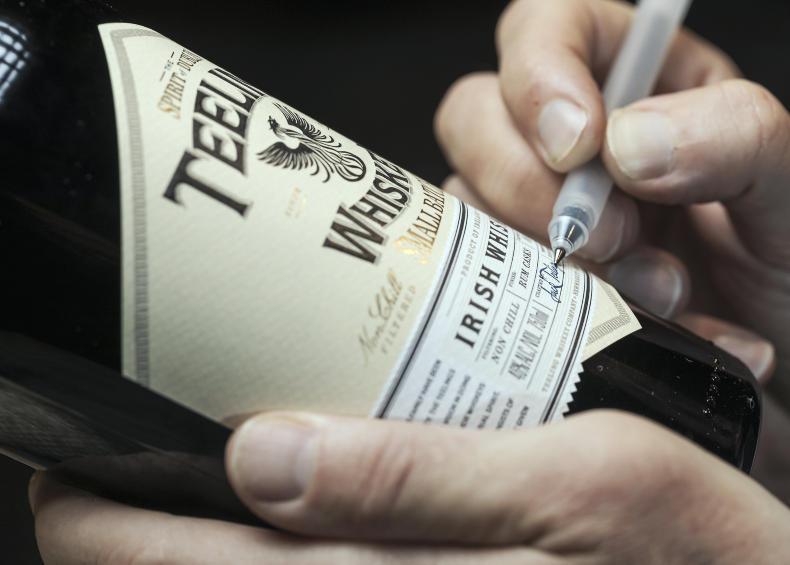
In February 2013, the fledging company sold its first bottle of Teeling brand whiskey. By the end of the year, Teeling whiskey was selling in 18 markets worldwide. With an initial sales pipeline established, Jack Teeling sought to raise the capital needed to build a new distillery.
Ulster Bank had never done asset back financing on whiskey before
“We had proven we could monetise the stock we had bought. We had established a market value for it and shown we could sell it for a much higher price than we bought it,” says Teeling.
“So we raised debt against the value of our stock. Ulster Bank had never done asset back financing on whiskey before and we became a test case for that type of financing for them. If we went bankrupt, Ulster Bank was confident there was a secondary market for our stock and it could be monetised,” he adds.
Teeling invested €10m in building the new state-of-the-art whiskey distillery in the Liberties area of Dublin city.
When it opened in March 2015, it was the first new whiskey distillery to open in Dublin city in more than 125 years.
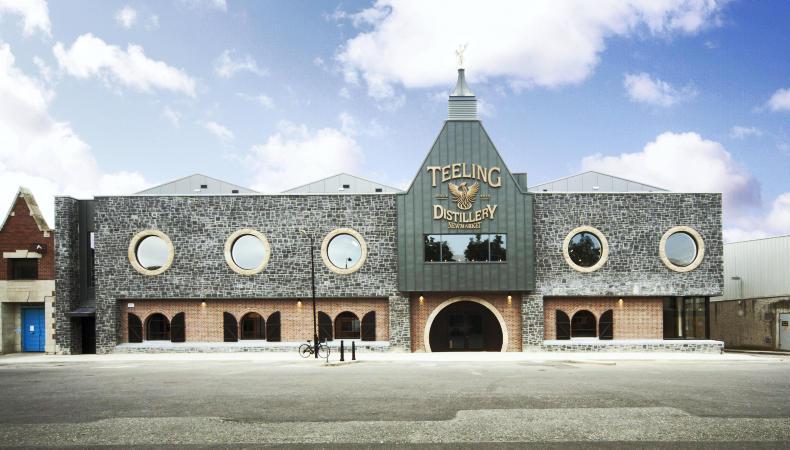
In the years since opening the distillery, Teeling Whiskey Company has continued to build sales into new markets. Today, the company has sales in 65 markets around the world. However, the majority of sales come from a handful of markets including the US, Ireland, France, Germany, Belgium, Netherlands, the UK and the Nordic countries.
The US remains the backbone of the global market for Irish whiskey, which is about 10m cases every year. Of this, the US accounts for 4.5m cases and the market is growing by 10% every year. While global demand for Irish whiskey is growing year after year, Teeling’s strategy is built around a differentiated product offering.
If you have a differentiated offering, it allows consumers to discover different whiskeys and flavours
“When I set up this company, I wanted to produce a differentiated premium product. I didn’t want to initially produce a €100 bottle of whiskey. But I wanted to start at a price point that was at the beginning of the consumer’s premiumisation journey at €30 to €40. I saw this as an affordable trade-up for consumers,” says Teeling.
“We decided on the positioning for our product and we engineered everything around that. If you have a differentiated offering, it allows consumers to discover different whiskeys and flavours as their tastes evolve.
“If you’re in whiskey, you’re in it for the long haul. And for Irish whiskey to have proper longevity it needs different producers doing different things, so we can offer real breadth and choice to consumers and not just have three or four brands all trying to do the same thing,” he adds.
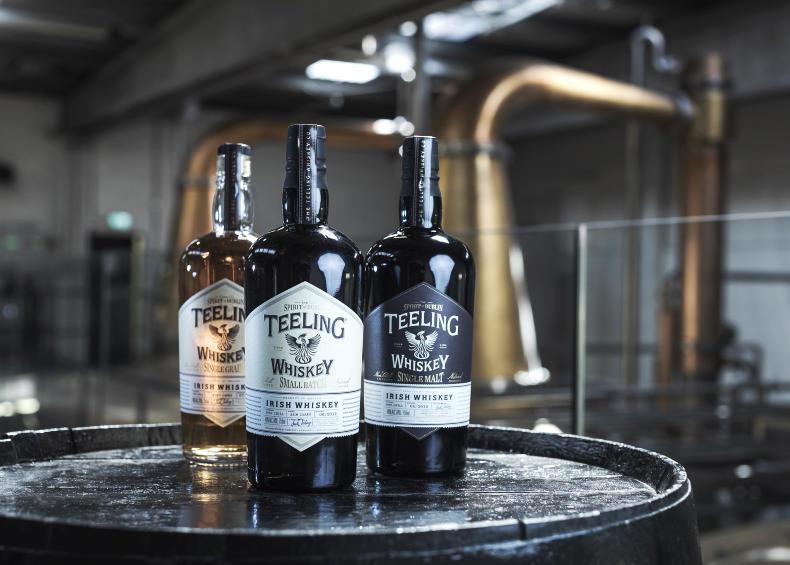
When it comes to product innovation and new product development, Teeling works closely with Enterprise Ireland (EI) to trial new whiskey recipes and use different barrels for trial batches.
“We’ve done a lot of our research and development (R&D) work here in the distillery with support from EI,” says Teeling. “We are experimenting with 70 different types of barrels to mature our whiskey in. We’ve used barrels from rum, gin, wine, schnapps and ginger beer to name a few. We’ve even tried different types of wood. Some of these trials work and some don’t,” he says.
Teeling himself also completed EI’s Leadership 4 Growth programme during his days with Cooley, which he says got him thinking differently about the business.
Irish grain
Teeling Whiskey Company buys malting barley from Boortmalt and the Malting Company of Ireland, as well as some spring barley from Glanbia, to produce its range of Irish whiskey.
Irish tillage farmers endured a difficult 2018 with bad weather really hurting crops. Teeling says you can see that in the 2018 crop of malting barley with whiskey yields from the crop much lower compared with other years.
The Irish whiskey industry will always survive globalisation because Irish whiskey cannot be produced anywhere else
Overall, Teeling is very confident in the future of the Irish whiskey industry and the added value it can provide for Irish grain.
“The Irish whiskey industry will always survive globalisation because Irish whiskey cannot be produced anywhere else. We’re the only industry that uses Irish grain, Irish water and Irish air to make our product.
“Many of the biggest brands in Irish agribusiness are our alcohol brands such as Baileys, Guinness and Jameson. Hopefully we can be part of a new wave of brands,” he says.