Kinisla, the milk processor formerly known as Kerry Dairy Ireland, announced turnover of €1.4bn and a 7.5% increase in EBITDA (earnings before interest, taxation, depreciation and amortisation) to €86.8m for the year ended December 2025.
Milk volumes processed at the company rose by 5.2% to 1.23bn litres, the company said in its business review, published this week.
Kinisla said it will create 100 new roles over the next 12-24 months. Those jobs will be in central and other functions which the company said will support its next phase of growth.
The processor plans to invest €300m over the next five years.
That investment will be focused on growth in nutritional ingredients, particularly in milk protein manufacturing technology, strengthening the consumer foods snacking business, and supporting delivery of Kinisla’s environmental targets.
The company operates with four main divisions – agribusiness, dairy ingredients, nutritional ingredients and dairy consumer foods.
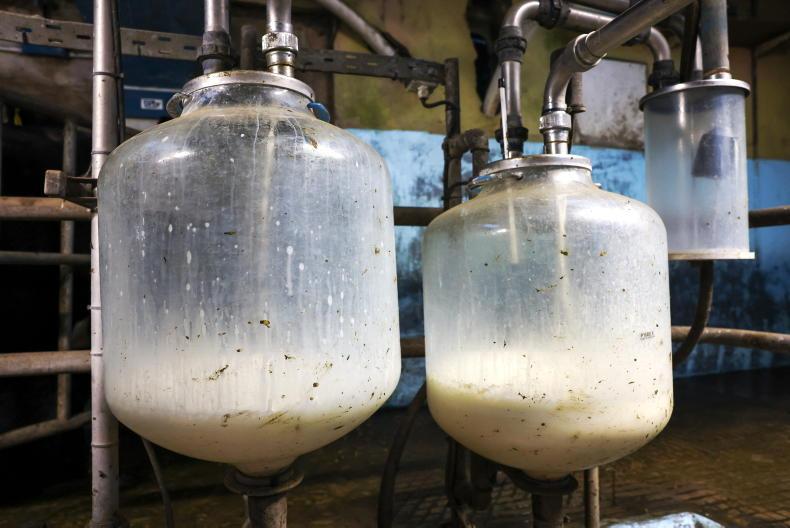
The agribusiness division saw its third highest milk intake on record at 1.23bn litres, and record constituents of 4.23% butterfat and 3.59% protein. Kinisla said the division continued to “make strong progress” during the year.
Delivered
It said that both its nutritional and dairy ingredients divisions delivered “outstanding progress” in 2025. Dairy ingredients saw revenue growth of around 4% last year, while Nutritional Ingredients saw 20% growth in its milk proteins sales.
The company highlighted the role of the rising adoption of GLP-1 type drugs in driving momentum in ready-to-drink beverages, snacks and protein bars.
Dairy consumer foods, which includes brands such as Dairygold, Charleville and Cheestrings, saw revenue growth of 11% in 2025.
This performance was helped by record Cheestrings sales and growth for grass-fed dairy products in the US, which was described as an “emerging market” for the processor.
The Irish Farmers Journal sat down with management at the company to discuss the business report and the plans for the company for the future.
The first question put to CEO Pat Murphy, chair James Tangney and chief financial officer Richard Chute was about the name change.
“It’s a very important day for us with the new name, providing a foundation for the future,” Murphy said.
“It was agreed at the time of the transaction between Kerry Co-op and Kerry Group that Kery Dairy Ireland would change its name as part of the transaction,” Chute said, “after reporting a strong year and announcing new jobs and investments, it is the right time to bring the new identity to the market.
Identity
“The identity of Kinisla is specific to what was Kerry Dairy Ireland.”
Tangney confirmed that he is chair of Kinisla, and chair of Kerry Co-op which will continue to exist under its current name.
The report published by Kinisla has very little financial information in it, beyond top line revenue and earnings.
This is far, far less than the full sets of accounts for 2025 already published by every other major dairy co-op in the country.
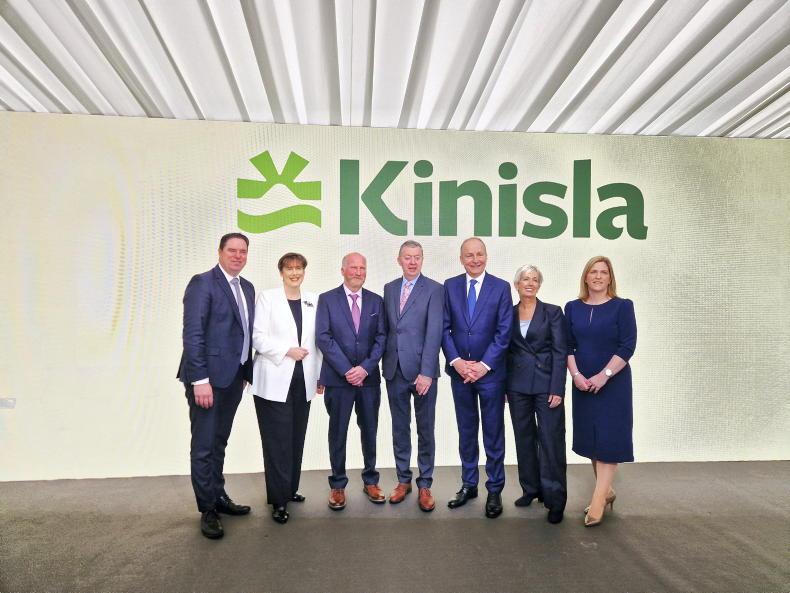
Minister for Agriculture, Martin Heydon, Minister for Children, Disability and Equality, Norma Foley, Kinisla chair, James Tangney, Kinisla CEO, Pat Murphy; Taoiseach, Micheál Martin, Kinisla board member Catherine Keogh, Kinisla Communications Director, Mary Buckley pictured at the launch of the new company identity
When asked, Chute said: “The results we announced today are our preliminary results. We will conclude our financial statements and issue our statutory accounts later in the year.”
He explained the delay in producing full accounts, saying: “We’re in a formation period and our structure is somewhat more complex than others because we have the Kinisla business which incorporates into Kerry Co-op. All of that gets consolidated and that journey takes a little bit longer, particularly in the formation year.”
He said that it would be “around quarter three” of the year before those accounts are published. He said that after the formation year, the publication of financial results would be more aligned with the rest of the industry.
Looking ahead, Murphy said that Kinisla is looking to make further investment in its snacking business. “Over the last 12-18 months we’ve put Cheestrings into the front part of supermarkets in the UK where people can buy without ever going into the aisles. They’re going quite well, with adults eating Cheestrings now as well which is fantastic.
Focused
“The other piece that we’re focused on is protein, which is exploding all over the world. We have significantly grown the MPI (milk protein isolate) business out of Listowel. There seems to be significant demand for natural protein, particularly into America with GLP-1 and into Europe now and the UK.
“We just need to develop that business more with new technologies, and significantly ramp up out production capacity of both MPI and MPC (milk protein concentrate). We also got to get into WPC (whey protein concentrate), we do make some already, mostly for internal use, but now we got to get into that as well.”
Tangney added “from a farmer point of view, it is vital that Kinisla gets into the business of value add. The more milk we can get into Cheestrings and the more we can expand that, the more return there will be for dairy farmers on the ground. With commodity prices, there is little to be [profit] made, so it all about the value add. It is the same with MPI.
“Kerry were always ahead of the curve, and we’re confident with their technologies, Kinisla will be ahead of the curve. And that’s where it is going to return to farmers, as it was bought by farmers to return the milk price.”
Emphasised
Speaking of the purchase, Tangney emphasised how well the company has performed since the deal which saw the co-op take a 70% share in Kinisla at the end of 2024. He said the performance has been “very reassuring”, adding that “it’s very important with regard to debt levels. If it wasn’t performing, then going forward it would affect our debt levels, but we’re now in a great position relating to our debt levels, giving us room to put in new technologies and to be driving on with adding value.”
Suppliers to Kinisla have been presented with a new contact in recent weeks, which they have until early August to return.
The previous supply contract expired at the end of April this year.
At the time of the deal to buy Kinisla from Kerry Group, there was an understanding that suppliers would be requested to share up to raise €50m towards the purchase of the 30% of the business retained by Kerry Group. That share up was dropped for 2026, with the low price of milk cited as the reason.
Tangney confirmed, however, that the intention remains to collect the money from suppliers. He didn’t have any details to share on how the money would be collected and whether it would be on a voluntary or mandatory basis.
“We’re looking at all scenarios around that to collect the money,” he said.
It is always difficult to get a full picture of the health of a company from just a couple of high-level pieces of financial information.
That being said, the growth in the EBITDA number certainly points to a good first year for Kinisla under its new ownership structure.
Most farmers judge the performance of their processor through the price they get paid for milk, and suppliers to Kinisla should be relatively content after 2025.
The plans for further investment and the continued success of both the consumer business and the nutrition business should provide some reassurance for the future.
It does seem odd, however, that full accounts for 2025 are not likely to appear until much later in the year.
The excuse that it is the first year of trading does provide some leeway, but farmers don’t have to look too far up the road to ArraTipp, a co-op born out of the merger of two processors in 2025, which still was able to produce a full set of accounts by mid-April this year.
Farmers looking at the contract they are expected to sign will be locking their supply into Kinisla until 2030 without a full picture of the financial position of the processor, and also without any clear indication on how they will be expected to contribute to the purchase of the balance of Kinisla from Kerry Group.
Most will probably sign as the milk price held up well in 2025, but Kinisla certainly seems to be asking them to take more on trust than should necessarily be the case.
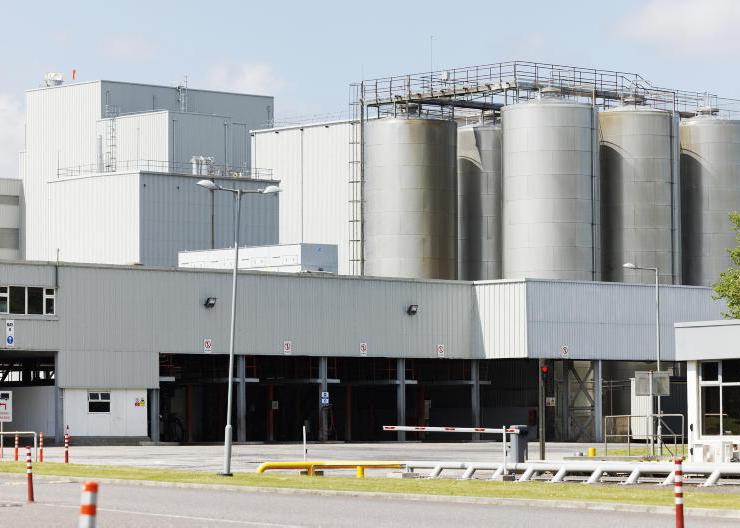
Kinisla (formerly Kerry Dairy Ireland) plant in Charleville, Co Cork. \ Donal O' Leary
Kinisla, the milk processor formerly known as Kerry Dairy Ireland, announced turnover of €1.4bn and a 7.5% increase in EBITDA (earnings before interest, taxation, depreciation and amortisation) to €86.8m for the year ended December 2025.
Milk volumes processed at the company rose by 5.2% to 1.23bn litres, the company said in its business review, published this week.
Kinisla said it will create 100 new roles over the next 12-24 months. Those jobs will be in central and other functions which the company said will support its next phase of growth.
The processor plans to invest €300m over the next five years.
That investment will be focused on growth in nutritional ingredients, particularly in milk protein manufacturing technology, strengthening the consumer foods snacking business, and supporting delivery of Kinisla’s environmental targets.
The company operates with four main divisions – agribusiness, dairy ingredients, nutritional ingredients and dairy consumer foods.
The agribusiness division saw its third highest milk intake on record at 1.23bn litres, and record constituents of 4.23% butterfat and 3.59% protein. Kinisla said the division continued to “make strong progress” during the year.
Delivered
It said that both its nutritional and dairy ingredients divisions delivered “outstanding progress” in 2025. Dairy ingredients saw revenue growth of around 4% last year, while Nutritional Ingredients saw 20% growth in its milk proteins sales.
The company highlighted the role of the rising adoption of GLP-1 type drugs in driving momentum in ready-to-drink beverages, snacks and protein bars.
Dairy consumer foods, which includes brands such as Dairygold, Charleville and Cheestrings, saw revenue growth of 11% in 2025.
This performance was helped by record Cheestrings sales and growth for grass-fed dairy products in the US, which was described as an “emerging market” for the processor.
The Irish Farmers Journal sat down with management at the company to discuss the business report and the plans for the company for the future.
The first question put to CEO Pat Murphy, chair James Tangney and chief financial officer Richard Chute was about the name change.
“It’s a very important day for us with the new name, providing a foundation for the future,” Murphy said.
“It was agreed at the time of the transaction between Kerry Co-op and Kerry Group that Kery Dairy Ireland would change its name as part of the transaction,” Chute said, “after reporting a strong year and announcing new jobs and investments, it is the right time to bring the new identity to the market.
Identity
“The identity of Kinisla is specific to what was Kerry Dairy Ireland.”
Tangney confirmed that he is chair of Kinisla, and chair of Kerry Co-op which will continue to exist under its current name.
The report published by Kinisla has very little financial information in it, beyond top line revenue and earnings.
This is far, far less than the full sets of accounts for 2025 already published by every other major dairy co-op in the country.

Minister for Agriculture, Martin Heydon, Minister for Children, Disability and Equality, Norma Foley, Kinisla chair, James Tangney, Kinisla CEO, Pat Murphy; Taoiseach, Micheál Martin, Kinisla board member Catherine Keogh, Kinisla Communications Director, Mary Buckley pictured at the launch of the new company identity
When asked, Chute said: “The results we announced today are our preliminary results. We will conclude our financial statements and issue our statutory accounts later in the year.”
He explained the delay in producing full accounts, saying: “We’re in a formation period and our structure is somewhat more complex than others because we have the Kinisla business which incorporates into Kerry Co-op. All of that gets consolidated and that journey takes a little bit longer, particularly in the formation year.”
He said that it would be “around quarter three” of the year before those accounts are published. He said that after the formation year, the publication of financial results would be more aligned with the rest of the industry.
Looking ahead, Murphy said that Kinisla is looking to make further investment in its snacking business. “Over the last 12-18 months we’ve put Cheestrings into the front part of supermarkets in the UK where people can buy without ever going into the aisles. They’re going quite well, with adults eating Cheestrings now as well which is fantastic.
Focused
“The other piece that we’re focused on is protein, which is exploding all over the world. We have significantly grown the MPI (milk protein isolate) business out of Listowel. There seems to be significant demand for natural protein, particularly into America with GLP-1 and into Europe now and the UK.
“We just need to develop that business more with new technologies, and significantly ramp up out production capacity of both MPI and MPC (milk protein concentrate). We also got to get into WPC (whey protein concentrate), we do make some already, mostly for internal use, but now we got to get into that as well.”
Tangney added “from a farmer point of view, it is vital that Kinisla gets into the business of value add. The more milk we can get into Cheestrings and the more we can expand that, the more return there will be for dairy farmers on the ground. With commodity prices, there is little to be [profit] made, so it all about the value add. It is the same with MPI.
“Kerry were always ahead of the curve, and we’re confident with their technologies, Kinisla will be ahead of the curve. And that’s where it is going to return to farmers, as it was bought by farmers to return the milk price.”
Emphasised
Speaking of the purchase, Tangney emphasised how well the company has performed since the deal which saw the co-op take a 70% share in Kinisla at the end of 2024. He said the performance has been “very reassuring”, adding that “it’s very important with regard to debt levels. If it wasn’t performing, then going forward it would affect our debt levels, but we’re now in a great position relating to our debt levels, giving us room to put in new technologies and to be driving on with adding value.”
Suppliers to Kinisla have been presented with a new contact in recent weeks, which they have until early August to return.
The previous supply contract expired at the end of April this year.
At the time of the deal to buy Kinisla from Kerry Group, there was an understanding that suppliers would be requested to share up to raise €50m towards the purchase of the 30% of the business retained by Kerry Group. That share up was dropped for 2026, with the low price of milk cited as the reason.
Tangney confirmed, however, that the intention remains to collect the money from suppliers. He didn’t have any details to share on how the money would be collected and whether it would be on a voluntary or mandatory basis.
“We’re looking at all scenarios around that to collect the money,” he said.
It is always difficult to get a full picture of the health of a company from just a couple of high-level pieces of financial information.
That being said, the growth in the EBITDA number certainly points to a good first year for Kinisla under its new ownership structure.
Most farmers judge the performance of their processor through the price they get paid for milk, and suppliers to Kinisla should be relatively content after 2025.
The plans for further investment and the continued success of both the consumer business and the nutrition business should provide some reassurance for the future.
It does seem odd, however, that full accounts for 2025 are not likely to appear until much later in the year.
The excuse that it is the first year of trading does provide some leeway, but farmers don’t have to look too far up the road to ArraTipp, a co-op born out of the merger of two processors in 2025, which still was able to produce a full set of accounts by mid-April this year.
Farmers looking at the contract they are expected to sign will be locking their supply into Kinisla until 2030 without a full picture of the financial position of the processor, and also without any clear indication on how they will be expected to contribute to the purchase of the balance of Kinisla from Kerry Group.
Most will probably sign as the milk price held up well in 2025, but Kinisla certainly seems to be asking them to take more on trust than should necessarily be the case.
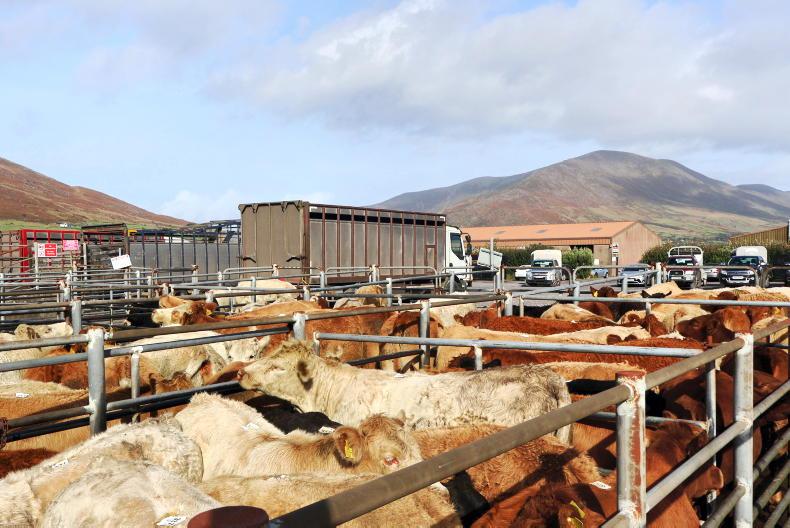
Kinisla (formerly Kerry Dairy Ireland) plant in Charleville, Co Cork. \ Donal O' Leary
SHARING OPTIONS