SuperValu made the news this week in a way that nobody could have envisaged, by having its fridges hacked remotely.
It was not alone as it happened in several locations across Europe and, in the UK, a number of meat processors also reported interference with their refrigeration.
For as long as refrigeration has been available to food processors and retailers, there have been occasions when it has malfunctioned. In businesses where there are huge refrigerated stocks, it is normal that there is a manual checking system involving physical monitoring on a regular basis.
This is less likely in smaller retail outlets, where the business is locked up and shut down, often for twelve or more hours per day.
New cause and type of malfunction
What is different on this occasion is that the malfunction was caused by hacking of the computerised control system by external forces, with a clear intention to damage and disrupt the business.
It appears that the level of damage caused was contained this time, but it is a warning of what can happen in an age when, increasingly, our everyday tasks are managed remotely – and that is with the use of Artificial Intelligence (AI) still in its infancy.
For many older farmers, technology is limited to a trusty tractor and a few implements that are frequently several years old, maybe decades old.
However, more-modern tractors, harvesters and many other tools are increasingly computerised. When a tractor breaks down, it is just as likely that it is caused by a computer problem as it is by an issue with diesel or some other mechanical function.
A laptop computer is now as much part of a service engineer’s tool kit as a socket set.
Increased dependence on technology
Over the past century, farming and food production have moved from being manual businesses, with horses providing the heft to a complex mechanised operation. More recently, it has begun moving into a third age, one that will be dominated by technology, with continued expansion in the use of AI and robotics.
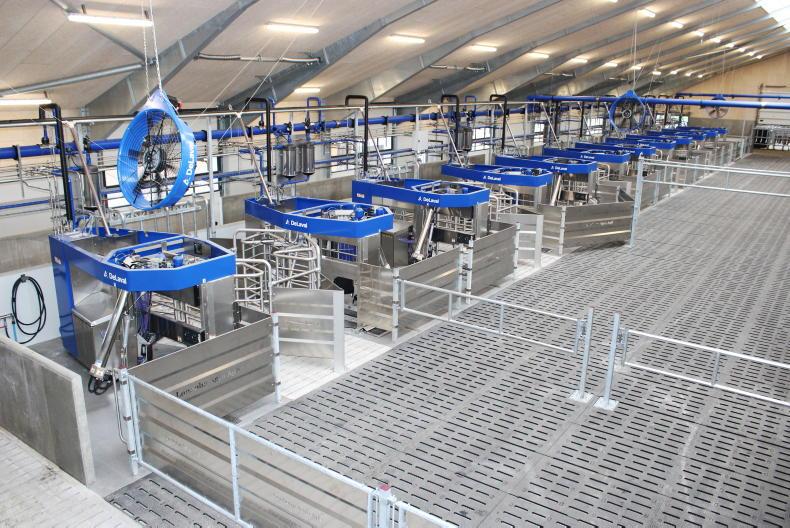
The use of GPS has enabled precision farming in planting and fertiliser spreading, and robots are widely used in dairy farming. Technology is also an integral part of many calving and lambing sheds, with farmers grateful that they can get away with waking up and glancing at a screen to check what’s happening.
It is a welcome alternative to pulling on the clothes and heading out into a winter night for an unnecessary visit to animals not yet ready to give birth.
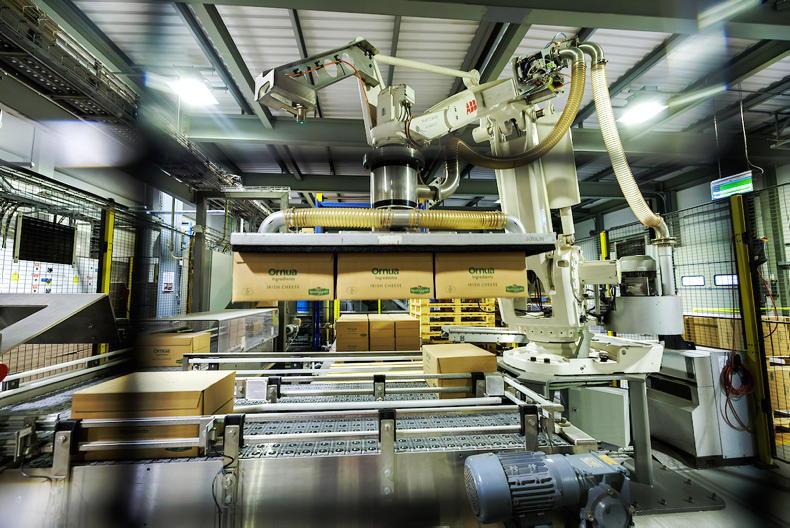
Moving into processing, the striking thing about visiting a major dairy processor is how few people are on the factory floor as so much of the processing cycle is automated.
The industry has come a long way from when a flat-bed lorry drove into the creamery and the 10 gallon (45l) churns were lifted off manually.
While some farmers may still recall the creamery cans, they have long since become a relic from a different era.
In meat-processing, pigs and poultry lend themselves to automation as they are all of similar size, but the varying sizes of beef carcasses make it a bigger challenge and, therefore, abattoirs still require people at all of the key stages.
Further processing and packing of all meat types are now increasingly mechanised as the retail sector has moved away from serving over butcher’s counter to standard self-service packs in a display fridge.
Food security threat
The term food security is widely used in discussions around agricultural policy at national and EU level. Farm leaders constantly warn that it is taken for granted, and recently the former Agriculture Commissioner, in a piece in the Irish Farmers Journal, lamented that it is being overlooked in the current Common Agricultural Policy (CAP) debate.
All of that is true, but as the SuperValu experience shows, food security is now subject to a further threat that is both external and sinister. As the use of technology and AI expands, the threat and risk will increase.
There is no going back to the creamery can or ploughing by horse, but farmers and the wider agri-food industry need to be prepared for a threat that, until now, was unimaginable.