Farmers face a dilemma as they wrestle with the reality of proposed Common Agricultural Policy (CAP) budget cuts. What to do?
There's no easy answer. The farm organisations are mobilising opposition to the CAP proposals, domestically and across the EU, but it's very hard to see where extra money is going to come from.
It seems the best we can hope for is a less severe cut than the 24% reduction proposed by the European Commission and endorsed by the leaders of the 27 member state governments.
It seems beyond the bounds of possibility that the CAP money coming to Ireland from Brussels, known as the national envelope, will be as good for the next seven years as it has been for the current seven-year cycle, ending next year.
The whole system is so complex that it's hard exactly to pin down the fundamentals at play. This is particularly true for those whom are outside of farming.
It's understandable that a lot of people may think that farmers are just going to have to learn to live in the real world, that they can’t rely on handouts from the taxpayer forever.
Reasonable
It’s also entirely reasonable that public sector workers would not be accepting of an analysis that contrasts cuts in farmer supports to the pay increase agreed for them.
Public sector workers are employed by the State – they derive all their income from their employment.
Farmers are self-employed – they have assets (mostly land) worth huge amounts of money.
Farmers are fiercely independent and demand the right of self-determination. So why should farmers be compared in any way with public sector workers? That's a fair question.
But there is an explanation as to why CAP payments are fundamental to farmers' incomes and it is a legitimate justification for farmers saying that any cut to CAP is a cut to their incomes.
The reasons for this lie in the origins and the evolution of the CAP. It’s essentially a contract between the European consumer and the European food producer. That contract was drawn up by the European Commission and has changed over time, but is based on a simple principle.
That principle is that it’s essential for food production to be maintained in Europe, while acknowledging that inputs and production costs in Europe are higher than elsewhere.
That means that it's hard to produce food in the EU and make a living, because food commodity prices are set globally, so food prices tend to be at the low end of the spectrum most of the time.
Contrasts
There are some costs that are more easily contrastable than others. Chemicals, fertiliser and medicines are typically cheaper outside the European Union than within it.
Apart from carbon taxes and the like, companies will sometimes admit that prices are pitched at what the market can bear. They will quickly add that higher costs are imposed on product development and licensing in the EU, due to the EU’s stringent “precautionary principle” and that higher prices reflect those higher verification standards.
Quite simply, it's dearer to get a product on the market in the European Union, so that product is dearer for farmers to buy. So, a layer of important consumer protection costing producers, who must compete with food produced in other parts of the world where standards are not as high or as strictly imposed.
Labour costs are another obvious point of difference. While farms in Europe are still primarily family farm operations, labour costs are extremely high compared with many of our competitors.
This is a particular problem for Ireland within Europe – we have the highest minimum wage in the European Union outside Luxembourg, a country that does not rely very much on food production within its economy, although it is the home country of European Commissioner for Agriculture and Food Christophe Hansen.
The Irish minimum wage is actually twice that of many of our fellow EU members and is four times that of Romania. It's also a multiple of the minimum wage in the United States, Australia and or New Zealand, never mind Brazil or Argentina.
That's another cost to producers. The market does not repay farmers for that extra cost or any extra cost, so the CAP must.
Food pricing
Tirlán CEO Sean Molloy attracted quite a bit of attention when he said recently that food is too cheap. It attracted attention, as he knew it would.
Some see it as heresy to ever suggest that the consumer should pay more for food. That is particularly true at the moment, because of recent food inflation.
The first point here is that while food has become notably dearer over the last 12 months, it isn’t because of anything the farmer is getting. In fact, the prices farmers are getting for milk and meat have significantly contracted through 2026.
Farmers have had to absorb the higher input costs this year, while consumers pay more to retailers, presumably for the higher input costs incurred by processors and retailers themselves.
However, the underlying trend over the last 40 years is that food is historically cheap. Food has not tracked inflation at retailer level for decades and within that falling price in real terms, farmers have been forced to accept a lower percentage of the price consumers pay.
I think what Sean Molloy was really saying is that farmers can no longer afford to accept the kind of prices they are getting from the marketplace for their product, that something has to change.
That is an unarguable fact and the scary thing is that’s within the framework of the current CAP. Things will be worse from 2028 on.
Stark
At the risk of repeating myself, the Teagasc national farm survey for 2025 showed two stark things. Firstly, in what was a historically good year for sheep and cattle prices, sheep and cattle farmers were making way short of the average industrial wage.
In fact, they were making on average what is now the national minimum wage for a full-time worker.
The second point is that drystock farmers' entire income was, give or take, equal to their direct payments. If you take away the direct payments and support and scheme supports, farmers have no income.
In other words, farmers are only breaking even in the prices they're getting from the marketplace.
If this were anything else, you'd say "so just stop producing food, get another job".
But we can't really stop food production in Europe. Strategically, we need food domestically produced within the EU and the world needs food to be produced in Europe.
The former for food security and food production standards – the latter for volume of food produced globally.
If you were to take an area as vast as Europe out of significant amounts of food production, that would affect global food availability.
As things stand, we have only about 60 days’ worth of food available in storage across the world. With the unpredictability of our weather patterns as a result of climate change, that is a dangerously low reserve.
People talk about the fuel and energy reserves we have in this country and that is a genuine issue. Oil and fossil fuels are still fundamental to our way of life, but food is more important than oil.
If you give a person a choice of being without petrol for a week or being without food for a week, I know which they will pick. Surely we should have more food in storage than we have, as a global strategic goal.
Unfortunately, for food producers, increasing food production and food stocks in store would not be a solution to the lack of return from the marketplace.
The stark fact is that global food commodity markets heavily punish farmers if surpluses exist.
As a grain farmer, I know that I will only get an elevated price, one that properly reflects the cost of production plus a margin, if the markets perceive there to be a shortage of grain.
If grain supply is in balance or if there is a slight surplus, which is what should be desired, I'm probably losing money. It’s kind of an insane situation and the only thing keeping family farms viable is the CAP.
The other solution, of course, is for farms to become much bigger. There are two problems with that. Firstly, that runs counter to one of the fundamental targets of the CAP; to maintain rural communities.
Agriculture is not as ubiquitous an employer as it once was in rural Ireland or in rural Europe, but it's still very important.
The second reason is because if farmers are only making the minimum wage – increasing farms in scale and replacing farmer labour with hired labour doesn't significantly reduce the cost base. Farms don't become an inch more viable.
That's why we're seeing some very large fruit and vegetable farms in trouble. That is why there are concerns for very large dairy farms.
Their cost base is less robust in many ways than the 80- to 120-cow farmer who's doing it on his own with a little bit of farm relief labour and a good bit of family support. And those smaller farms typically have much lower repayments to make.
Correct model
We have effectively come back round where we started. We probably have the correct model of farming in Europe, give or take, for Europe's needs. The right farm scale, the right level of intensity, the right level of output, give or take.
Farm and food that meet the very stringent regulations of the European Commission on behalf of the European consumer.
I am left with the inescapable conclusion that to preserve this model, the European consumer must continue to support farmers through the CAP. A 24% cut in the CAP budget won’t achieve that requirement.
Another option might be some form of equalisation tax imposed on food coming into the EU from the rest of the world, to reflect cheaper production costs and lower environmental standards. The proceeds of this tax could be shared out among farmers.
You might say "oh, that would run contrary to trade laws". However, that’s exactly what we're doing with the carbon border adjustment mechanism (CBAM), which is an equalisation tax to make sure that fertiliser coming into the European Union costs as much as fertiliser produced in the European Union, which is subjected to carbon tax.
If there's one type of product that CBAM would make some sense for, it's food. It'll probably never happen.
Some time ago, I did suggest that logic dictates that there should be a food tax at supermarket level, which is then paid out to the producers.
The reason this is justifiable is the market reality that food producers will not get justice from the food chain in any other way.
Be of no doubt, we are on the brink of a crisis in food production in Europe. If the CAP is cut to the extent that is proposed, the family farm will under the kind of threat that the US family farm was under in the 1980s. The outcome was catastrophic and irreversible.
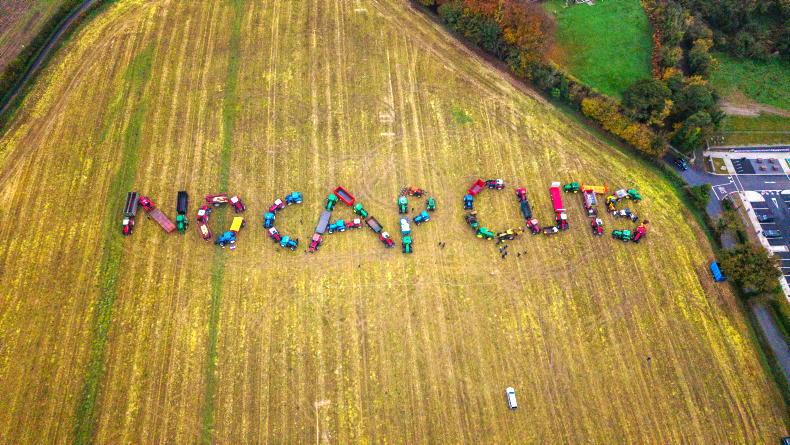
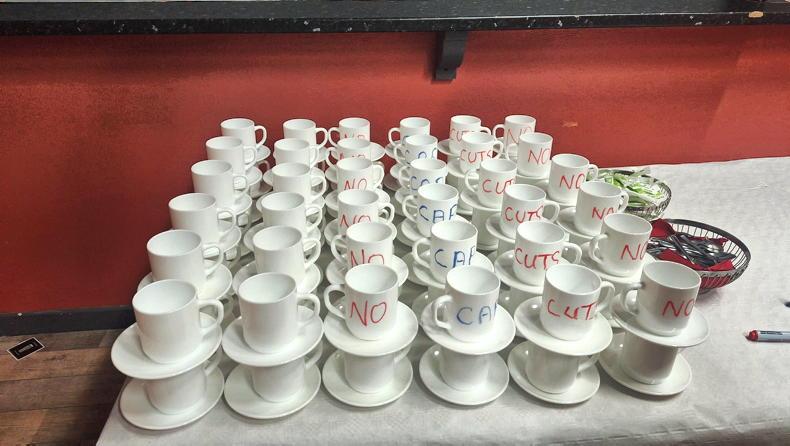
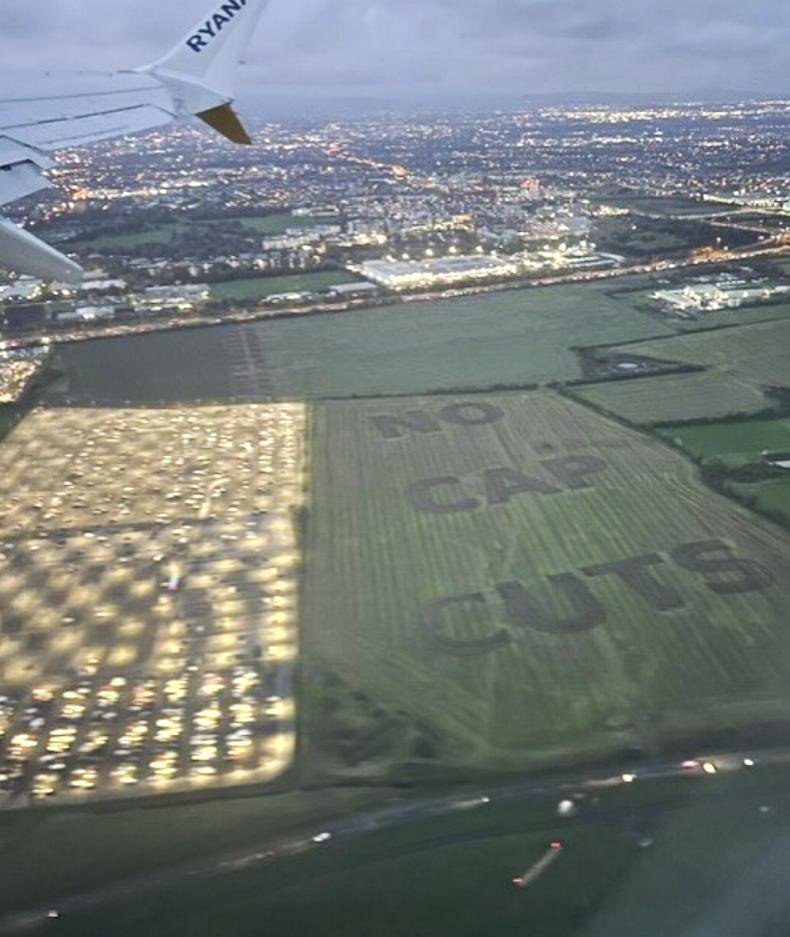
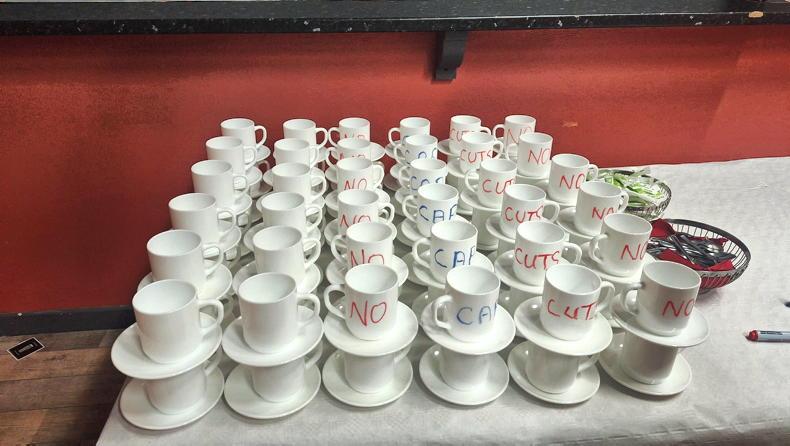
So, as the Irish Farmers' Association's 'No CAP cuts' campaign grows and as other farm organisations voice their opposition to the proposals from the Commission and now from the member states, it's important to remember that their claims are legitimate.
The CAP is not cheap, but it is worth it.