Grocery prices in the UK were 5.4% higher in the four weeks to 13 July this year compared with the same period last year, according to the latest Kantar data released during the week, the highest since January 2024.
This means that with the average household spending £5,283 (€6,072) annually, the latest increase could add a further £275 (€316) to this if shopping habits remained the same.
Similarly, the food and non-alcoholic beverages category of the consumer price index including owner occupiers’ housing costs (CPIH) crept up for the year to June to 4.5% from 4.4% in May with the one-month rate at 0.3%.
Implications
The recent increases, which are also applicable to Irish groceries, reflect the passing on of higher meat and dairy costs through the supply chain.
What will be of particular interest in the coming months is how consumers react to higher shelf prices. The most recent Kantar data published by the Agriculture and Horticulture Development Board (AHDB) for supermarket sales is for the 12 weeks to 15 June.
It shows that “average prices for total beef products increased 10.4% year on year, resulting in a volume decline of 3.6% (-4,747 tonnes) and a spend increase of 6.3%”.
Mince and steak were the biggest fallers, down 4.5% and 9.8% respectively, with the AHDB highlighting that these were “driven by steep increases in average prices, up 18.9% and 20.5% respectively".
Consumer choices
When prices are on an upward trend, unless incomes are also increasing at the same pace, consumers adjust shopping behaviour. The most recent Kantar report on the UK retail sector highlights a greater switching to own-label product instead of brands.
The other obvious consumer move is to be more discerning about what are termed as discretionary purchases.
Beef and lamb readily fall into the category of discretionary purchases, even before the price increases over recent weeks. Put simply, consumers can switch from beef and lamb to chicken and pork as alternative meats that serve a similar purpose as the centre point of either a family meal or a dining out occasion.
These are much cheaper meats and chicken has been growing in popularity year on year.
Beef and lamb sourcing
Another option for controlling the retail price of beef and lamb is to find a cheaper supply source. The top three UK supermarkets have had until recently a policy of selling only British and Irish beef.
In this arrangement, the main offering was of UK origin, with Irish beef used to balance the supply with demand. This works particularly well, as the major beef and lamb processors in the UK are also the main beef and lamb processors in Ireland.
Their storage and distribution logistics are integrated and Irish supplies slot into the just-in-time ordering and delivery systems that are in place with all retailers.
An order can be delivered from a factory in Mayo in the same way as an order is delivered from anywhere else in England, Scotland or Wales. This supply stream can be switched on when required and switched off when not.
Imported beef
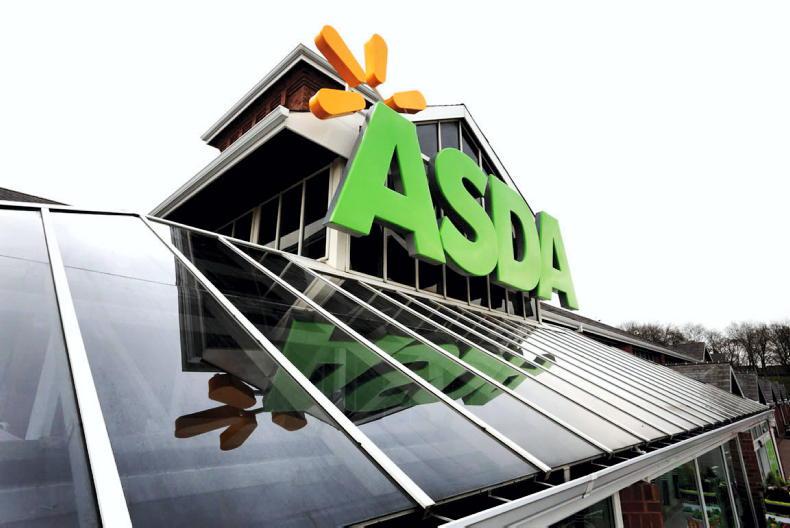
Recently, Asda became the first UK supermarket group to put its toe in the water and test how imported beef would fare with its shoppers.
It presented a 'limited time offer' of steakmeat on an arm's length basis using a third party supplier and its branding using a South American product.
Asda was able to keep its distance, saying that it wasn’t part of its core Asda offering and if it went down badly, the limited time offer or pilot project could be quietly shelved.
Other retailers followed suit and, by this stage, each of the big three retailers have trialled a non-British or -Irish beef offering without any significant negative reaction.
It hasn’t all been plain sailing, as the Irish Farmers Journal understands that there have been problems with delivery logistics for imported product travelling across the world. However, with the price of beef in Brazil hovering around the equivalent of €3/kg, this price point will be an attractive option for retailers, especially when consumer budgets are under pressure.
Read more
Three UK supermarkets stock imported beef
Uruguayan steaks on sale in Asda
Steaks from Uruguay on sale in Asda
Grocery prices in the UK were 5.4% higher in the four weeks to 13 July this year compared with the same period last year, according to the latest Kantar data released during the week, the highest since January 2024.
This means that with the average household spending £5,283 (€6,072) annually, the latest increase could add a further £275 (€316) to this if shopping habits remained the same.
Similarly, the food and non-alcoholic beverages category of the consumer price index including owner occupiers’ housing costs (CPIH) crept up for the year to June to 4.5% from 4.4% in May with the one-month rate at 0.3%.
Implications
The recent increases, which are also applicable to Irish groceries, reflect the passing on of higher meat and dairy costs through the supply chain.
What will be of particular interest in the coming months is how consumers react to higher shelf prices. The most recent Kantar data published by the Agriculture and Horticulture Development Board (AHDB) for supermarket sales is for the 12 weeks to 15 June.
It shows that “average prices for total beef products increased 10.4% year on year, resulting in a volume decline of 3.6% (-4,747 tonnes) and a spend increase of 6.3%”.
Mince and steak were the biggest fallers, down 4.5% and 9.8% respectively, with the AHDB highlighting that these were “driven by steep increases in average prices, up 18.9% and 20.5% respectively".
Consumer choices
When prices are on an upward trend, unless incomes are also increasing at the same pace, consumers adjust shopping behaviour. The most recent Kantar report on the UK retail sector highlights a greater switching to own-label product instead of brands.
The other obvious consumer move is to be more discerning about what are termed as discretionary purchases.
Beef and lamb readily fall into the category of discretionary purchases, even before the price increases over recent weeks. Put simply, consumers can switch from beef and lamb to chicken and pork as alternative meats that serve a similar purpose as the centre point of either a family meal or a dining out occasion.
These are much cheaper meats and chicken has been growing in popularity year on year.
Beef and lamb sourcing
Another option for controlling the retail price of beef and lamb is to find a cheaper supply source. The top three UK supermarkets have had until recently a policy of selling only British and Irish beef.
In this arrangement, the main offering was of UK origin, with Irish beef used to balance the supply with demand. This works particularly well, as the major beef and lamb processors in the UK are also the main beef and lamb processors in Ireland.
Their storage and distribution logistics are integrated and Irish supplies slot into the just-in-time ordering and delivery systems that are in place with all retailers.
An order can be delivered from a factory in Mayo in the same way as an order is delivered from anywhere else in England, Scotland or Wales. This supply stream can be switched on when required and switched off when not.
Imported beef
Recently, Asda became the first UK supermarket group to put its toe in the water and test how imported beef would fare with its shoppers.
It presented a 'limited time offer' of steakmeat on an arm's length basis using a third party supplier and its branding using a South American product.
Asda was able to keep its distance, saying that it wasn’t part of its core Asda offering and if it went down badly, the limited time offer or pilot project could be quietly shelved.
Other retailers followed suit and, by this stage, each of the big three retailers have trialled a non-British or -Irish beef offering without any significant negative reaction.
It hasn’t all been plain sailing, as the Irish Farmers Journal understands that there have been problems with delivery logistics for imported product travelling across the world. However, with the price of beef in Brazil hovering around the equivalent of €3/kg, this price point will be an attractive option for retailers, especially when consumer budgets are under pressure.
Read more
Three UK supermarkets stock imported beef
Uruguayan steaks on sale in Asda
Steaks from Uruguay on sale in Asda
SHARING OPTIONS