With turnout delayed, we look at supplementation rates required for suckler cows, heifers and thin cows to avoid excessive BCS losses prior to breeding.
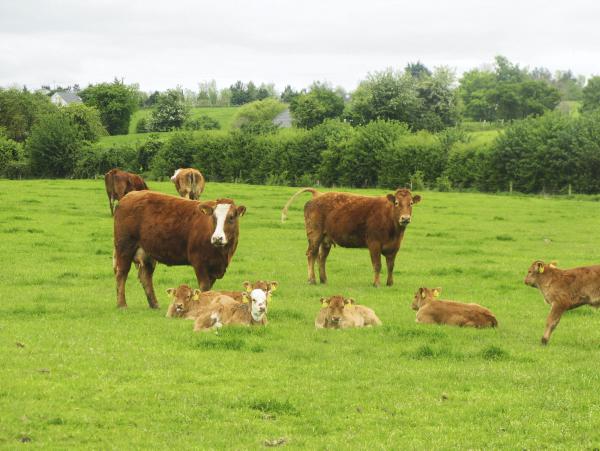
Supplementing calved cows: With continued wet weather in many parts of the country, turning out calved cows has been difficult, with many farmers opting not to turn out until weather and ground conditions improve. While this may make perfect sense in terms of avoiding ground damage, the diet of the cow should be adjusted accordingly. Where a cow calves in the spring and is set to go to grass within four to six weeks of calving, and the cow is on average quality 68 DMD silage, then no supplementation is required. The delayed turnout could result in subsequent poor conception rates where the diet of the cow is not adjusted accordingly. Between calving and bulling, the target drop in body condition score (BCS) is 0.5. Rapid reductions in BCS prior to breeding will have a negative impact on conception rates. Where silage is below average (66 DMD or lower) and cows are calved longer than six weeks, concentrate supplementation will be required at a rate of 1-2kg per day until they go back in calf or go out to grass. First calvers and thin cows should be fed 1-1.5kg of meal extra per day to the rest of the herd to try and maintain or increase condition slightly. In contrast, where silage quality is very good (74 DMD+) then there may be no need to supplement stock.
Buying replacements: Like a stock bull, replacement heifers should be bought in well in advance of the breeding season to allow for relevant vaccinations to be given and for the heifers to become acclimatised to the herd. Focus on weights – heifers should calve down slightly before, or at the beginning of, the calving season to ensure they have adequate time to go back in calf without slipping out of the targeted calving season. At bulling, the heifer needs to be a minimum of 60% of mature cow weight, usually 380-420kg liveweight. For herds that are due to start calving at the start of February, breeding of heifers will have to take place in late April. That leaves just six weeks to get replacement heifers purchased and ready for bulling. Heifers should get a primary course of vaccination and the booster before the breeding season. Many vaccines will require the booster shot to be administered four to six weeks after the initial course.
Tetany: Although the risk of tetany greatly increases with quick growth of lush grass in later spring, the current weather conditions combined can be a contributing factor to an increasing risk of tetany, particularly on soils with a high potash content, or on soils that received high levels of potash in the late autumn or early spring. Suckler cows are at a much greater risk of tetany in the spring compared to their dairy counterparts as there is often no concentrate supplementation carried out. Placing lick buckets with cows or supplementing with hay or silage will reduce the risk of tetany in the short term.
ADVERTISEMENT
Register for free to read this story and our free stories.
This content is available to digital subscribers and loyalty code users only. Sign in to your account, use the code or subscribe to get unlimited access.
With turnout delayed, we look at supplementation rates required for suckler cows, heifers and thin cows to avoid excessive BCS losses prior to breeding.
The reader loyalty code gives you full access to the site from when you enter it until the following Wednesday at 9pm. Find your unique code on the back page of Irish Country Living every week.
CODE ACCEPTED
You have full access to the site until next Wednesday at 9pm.
CODE NOT VALID
Please try again or contact support.
Supplementing calved cows: With continued wet weather in many parts of the country, turning out calved cows has been difficult, with many farmers opting not to turn out until weather and ground conditions improve. While this may make perfect sense in terms of avoiding ground damage, the diet of the cow should be adjusted accordingly. Where a cow calves in the spring and is set to go to grass within four to six weeks of calving, and the cow is on average quality 68 DMD silage, then no supplementation is required. The delayed turnout could result in subsequent poor conception rates where the diet of the cow is not adjusted accordingly. Between calving and bulling, the target drop in body condition score (BCS) is 0.5. Rapid reductions in BCS prior to breeding will have a negative impact on conception rates. Where silage is below average (66 DMD or lower) and cows are calved longer than six weeks, concentrate supplementation will be required at a rate of 1-2kg per day until they go back in calf or go out to grass. First calvers and thin cows should be fed 1-1.5kg of meal extra per day to the rest of the herd to try and maintain or increase condition slightly. In contrast, where silage quality is very good (74 DMD+) then there may be no need to supplement stock.
Buying replacements: Like a stock bull, replacement heifers should be bought in well in advance of the breeding season to allow for relevant vaccinations to be given and for the heifers to become acclimatised to the herd. Focus on weights – heifers should calve down slightly before, or at the beginning of, the calving season to ensure they have adequate time to go back in calf without slipping out of the targeted calving season. At bulling, the heifer needs to be a minimum of 60% of mature cow weight, usually 380-420kg liveweight. For herds that are due to start calving at the start of February, breeding of heifers will have to take place in late April. That leaves just six weeks to get replacement heifers purchased and ready for bulling. Heifers should get a primary course of vaccination and the booster before the breeding season. Many vaccines will require the booster shot to be administered four to six weeks after the initial course.
Tetany: Although the risk of tetany greatly increases with quick growth of lush grass in later spring, the current weather conditions combined can be a contributing factor to an increasing risk of tetany, particularly on soils with a high potash content, or on soils that received high levels of potash in the late autumn or early spring. Suckler cows are at a much greater risk of tetany in the spring compared to their dairy counterparts as there is often no concentrate supplementation carried out. Placing lick buckets with cows or supplementing with hay or silage will reduce the risk of tetany in the short term.
If you would like to speak to a member of our team, please call us on 01-4199525.
Link sent to your email address
We have sent an email to your address. Please click on the link in this email to reset your password. If you can't find it in your inbox, please check your spam folder. If you can't find the email, please call us on 01-4199525.
ENTER YOUR LOYALTY CODE:
The reader loyalty code gives you full access to the site from when you enter it until the following Wednesday at 9pm. Find your unique code on the back page of Irish Country Living every week.






SHARING OPTIONS