


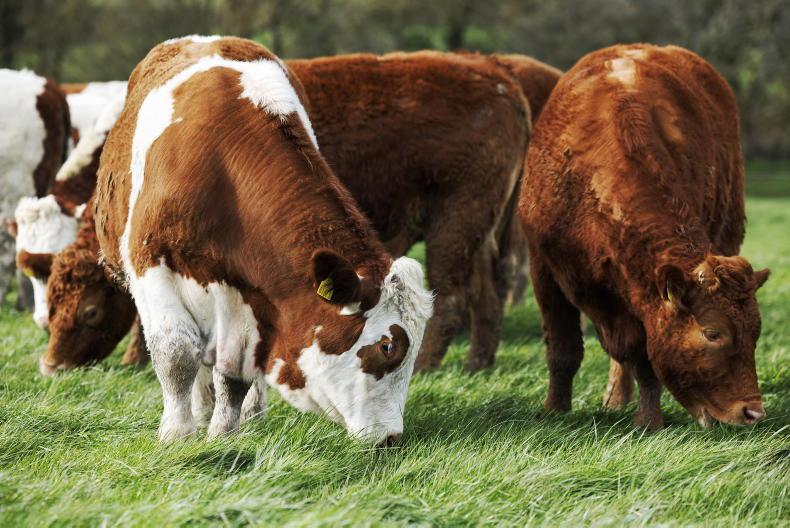
We’ve had over ten days of dry and fine weather, and ground conditions on most farms are as near to perfect for the time of the year as anyone could ask for.
While mid-September did bring some sticky conditions, it seems that the drier than normal year has seen water tables drop, and September rain has soaked away from the top few inches.
By now, drystock farms should have at least 35% of the farm closed up. The general target is that by the end of October, 70% of the farm would be closed.
On heavy farms with little lighter stock to graze, this is often 100% and not by choice.
Lime and dung
With the drier conditions, it’s an ideal time to spread a load of lime. There are very few farms in the country that wouldn’t benefit from spreading lime, but it should always be done based off a nutrient management plan.
Spreading lime on high molybdenum soils can have a drastic effect on herd fertility due to locking up of essential minerals.
The closing date for applying farm yard manure is also fast approaching (31 October). Again, consult your nutrient management plan and apply on soils lowest in P and K that may not typically receive organic manure.
Derek O’Donoghue – Salesian College, Co Limerick
Conditions are excellent. All stock remain at grass bar some Angus-cross yearling bullocks that were housed three weeks ago. These are targeted for finishing at 22 months and are receiving 7.5kg concentrates/head/day across two feeds.
The heifers are at grass with zero concentrates as feeding in the paddocks became too messy. These will be fed when they are housed for a target slaughter date after Christmas.
Cattle will remain at grass for the next two weeks and will then be housed.
Ewes will be joined with the ram this weekend, with two new Belclares and one Charolais ram being used. All breeding stock were dipped last week before mating, with ewes flushed.
System Dairy beef and sheep
Soil Type Variable
Farm cover (kg/DM/ha) 953
Growth (kg/DM/ha/day) 35
Demand (kg/DM/ha/day) 15
Peter Doyle – Derrypatrick Herd, Co Meath
About half of the 2025 calves are now weaned. Weaning is done on a phased basis, with a portion of cows weaned and housed, with their calves and the remaining cows and calves left at grass.
Weight recordings from last week showed male calves weighed 340kg on average with an ADLWG of 1.37kg from birth to weaning, while heifers averaged 316kg with an ADLWG of 1.26 kg.
Even though our farm cover has dropped, between half of the cows being housed and the finishing cattle going for slaughter this week, demand will drop down to 18kg DM/ha.
Depending on ground conditions and growth, cows may or may not go back out to grass to clean up paddocks after weanlings
System Suckler to beef
Soil Type Variable
Farm cover (kg/DM/ha) 675
Growth (kg/DM/ha/day) 35
Demand (kg/DM/ha/day) 25
Niall O’Meara – Killimor, Co Galway
From 20 October I will be giving cows and calves access to the shed and silage from the paddock. When herding, I will turn cows in to the shed and offer a small amount of concentrates on top of the silage to encourage intake.
Cows will be mineral bolused with high iodine and high copper boluses at the weekend ahead of breeding.
Ground and growth conditions are ideal; most of the stock are in one large batch and are on 36-hour grazing.
There are eight or nine paddocks with a cover above 2,000kg DM/ha and I’ll look to get these grazed off before housing full time.
Calves will receive a pneumonia vaccine ahead of housing, and paddocks for calves to graze beside the yard have a nice cover on them.
System Suckler to weanling
Soil Type Variable
Farm cover (kg/DM/ha) 854
Growth (kg/DM/ha/day) 30
Demand (kg/DM/ha/day) 25


SHARING OPTIONS