



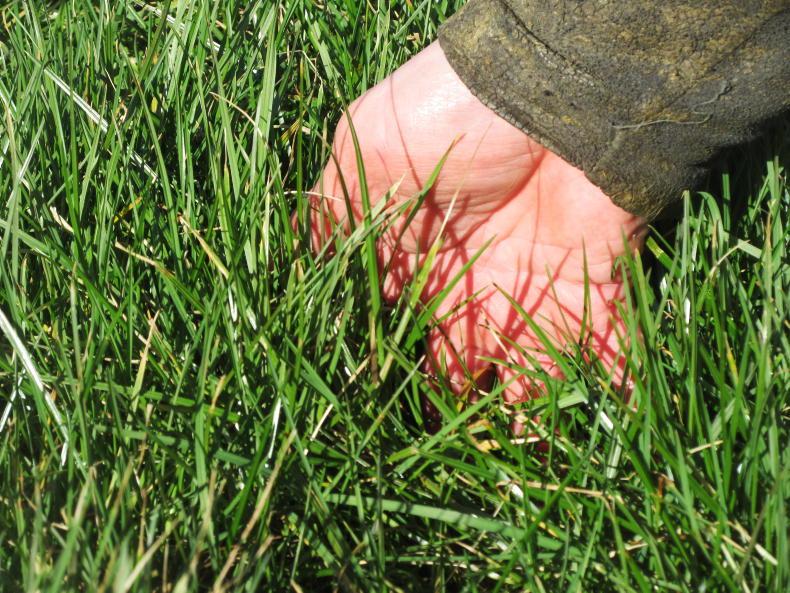
Growth seems to be extremely variable across the country. While some farmers are reporting a real lift in growth the past two weeks, others on heavier ground are struggling to see a rise in soil temperatures and, consequently, growth.
In either case, farms should complete weekly farm walks, be it to ensure that covers don’t get ahead of stock or that there is sufficient cover there.
Average farm cover should not dip below 550kg, as this indicates that stock are grazing covers of 1,100kg, which they will quickly get through and you can rapidly find yourself grazing covers below 1,000kg.
A low average farm cover will also mean lower grass growth. Paddocks do the majority of their growing when there is a cover of grass on them, as an increased cover leads to increased green area and increased photosynthesis.
Where farmers are finding average covers heading to 550kg, preventative action needs to be taken by either reducing demand or increasing growth. Demand can be reduced through weaning of autumn calvers or introducing some concentrates to stock.
Fertiliser application should be brought up to date as well to help ensure plants have sufficient nutrients for growing.
William Treacy – Hackballscross, Co Louth
We were testing during the week and still have one third of the cattle housed. With the good weather forecast this weekend hopefully we’ll get all the stock back out grazing.
We have been zero-grazing and feeding silage to get through the wet spell.
Slurry was spread on the silage and grazing ground in February. Once grazed, the silage fields got an application of three bags/acre of 24N + 6S as there was a good cover already there.
The paddocks that were grazed tight recently were spread with slurry and topped up with an application of fertiliser.
With the warm temperatures forecast it will hopefully drive grass growth.
System Suckler to finishing
Soil Type Free draining
Farm cover (kg/DM/ha) 967
Growth (kg/DM/ha/day) 45
Demand (kg/DM/ha/day) 36
Wesley Browne – Dunraymond, Co Monaghan
I currently have 92 cows calved which are out at grass. There’s not a lot of grass ahead at the moment with the cows going into smaller covers and cleaning paddocks out in three days.
I’m waiting on the growth to pick up before any more stock are let out but I have lots of silage left. Cows are currently in groups of 14 to prevent excessive damage to the swards, but I hope to group them into larger batches next week.
The silage ground was spread with a bag of urea/acre with good covers in the fields from the autumn. Grazed paddocks are also receiving an application of urea to help push grass growth.
System Suckler to beef
Soil Type Heavy
Farm cover (kg/DM/ha) 483
Growth (kg/DM/ha/day) 22
Demand (kg/DM/ha/day) 27
John Hally – Thrive Farm, Co Tipperary
The grazing block was spread with slurry in February’s dry spell and more recently received a bag of 27N. We let out 80 yearlings which consisted of heifers and lighter bullocks to grass in February. The remainder of the heavier stock began grazing in April.
The silage ground has been grazed and closed off. It got spread with two bags of urea with the intention of getting first cut underway in the middle of May to secure good quality silage for winter feeding.
Ground is still tender. The cattle are currently split into four groups and have to be kept moving to prevent excessive damage to the sward.
System Dairy Beef
Soil Type Free draining
Farm cover (kg/DM/ha) 976
Growth (kg/DM/ha/day) 27
Demand (kg/DM/ha/day) 38



SHARING OPTIONS