



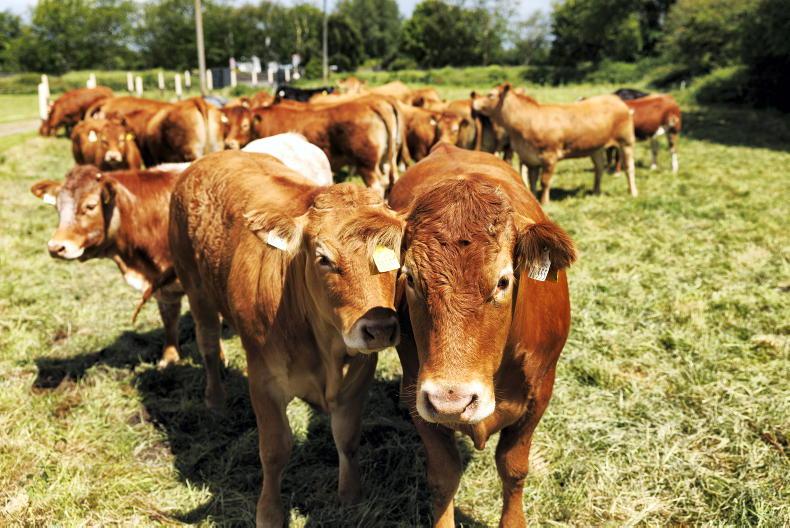
Grass growth continues to be strong in the west and northwest, while the south and southeast are seeing growth rates continue to fall off.
There is no significant rain over the next week, this looks set to fall even further, while drier farms in the western half will see grazed off paddocks slow to bounce back again.
Where a bank of grass is not available to carry the farm through the dry spell, demand will have to be reduced to bring it more in line with growth.
Second cut silage ground may have to be incorporated into the grazing block to tide things over, or concentrates can be introduced to forward stock earlier than planned to bring demand down. Early spring calving cows could also possibly be weaned and placed on a reduced diet, provided weanlings have developed sufficiently.
As it stands, grass dry matter is very high (in the low 20% for most,) meaning there is more grass available in paddocks then we might estimate. Take this into consideration and ensure that graze outs are achieved; every extra day grazed in a paddock helps stretch out the rotation.
Jack Spillane – Tipperary Farm, Co Tipperary
We are suffering with the dry weather and it appears that this will continue. I pulled demand back to 28 through feeding out silage in round feeders to yearling cattle, with this set to be further reduced to 22kg DM/ha to try and hold cover where it is. We pulled 145 of the strongest yearlings (bullocks over 480kg and heifers over 450kg) and they are now being fed 4kg/head/day of concentrates to reduce demand.
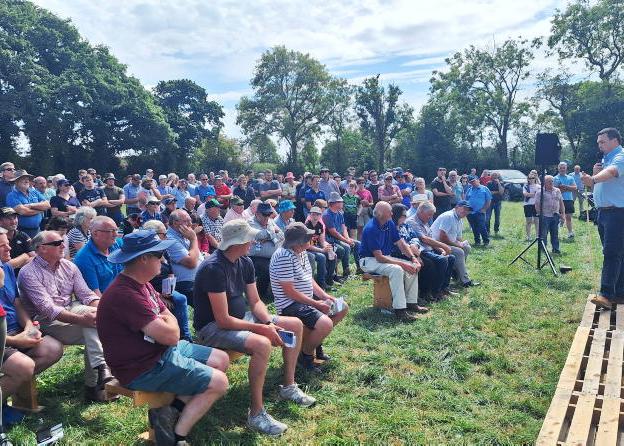
We have a lot of shade on farm, with calves and yearlings both very content in the current warm weather. With more dry weather forecast, it will be a while before we are back in a surplus of grass again. We are also preparing for our open day taken place next Wednesday at 11am which with the them being building highly profitable, sustainable, and labour-efficient dairy-to-beef systems.
System Dairy calf to beef
Soil Type Variable
Farm cover (kg/DM/ha) 581
Growth (kg/DM/ha/day) 21
Demand (kg/DM/ha/day) 28
Peter Doyle – Derrypatrick Herd, Co Meath
Our first-cut silage ground is coming back in to the rotation which is alleviating any immediate worries. This has a cover of 1,300kg DM/ha, with our days ahead now sitting comfortably at 20 days.
The timing of this ground coming back in is usually a pinch point regarding grass supplies on a drier year. Where we have more moisture, we try and take second cut off some of it.
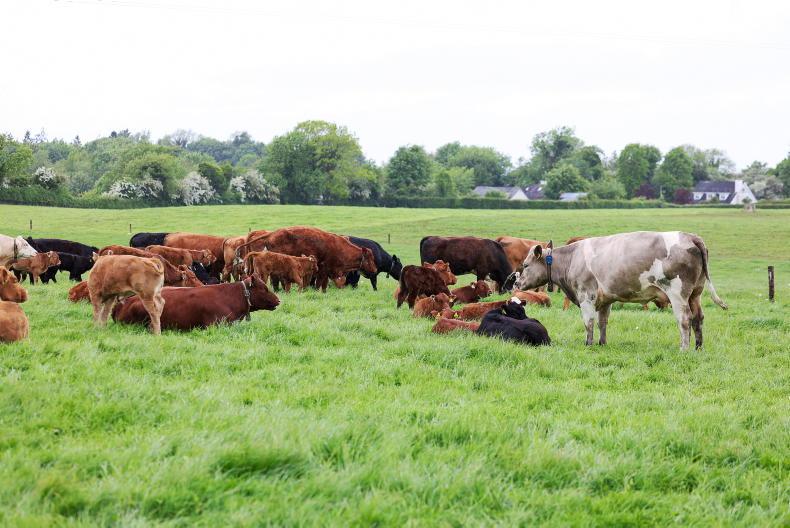
We have no cattle close to slaughter so it is difficult to reduce demand. If necessary, we will go in with silage at grass to suckler cows. Second-cut red clover silage will be harvested in the coming days after seven weeks regrowth. No slurry or fertiliser will go back on this until there is rain forecast.
Breeding has finished this week, with 10 weeks of breeding carried out. A scan will be completed at a later date.
System Suckler to beef
Soil Type Variable
Farm cover (kg/DM/ha) 686
Growth (kg/DM/ha/day) 33
Demand (kg/DM/ha/day) 37
Ken Gill – Clonbollogue, Co Offaly
I have a decent bank of grass ahead of stock, so even with the lack of rainfall I’m still in a good position. In a week’s time things will start to tighten up a little.
Thankfully I booked cattle in to the factory a month earlier this year, with 10 drafted and sold last week, with all coming back with fat scores of three or greater.
Angus heifers averaged a 315kg carcase, which I am happy with. Cows will begin to calf down in the next two weeks or so, so these are on a restricted diet.
Some cows have been pulled from the leader follower system and are grazing some stemmier covers, while I have some store cattle grazing ahead of the weanlings to push these on more.
The cover crop of peas and barley sown over the red clover and grass was harvested last week yielding 6.5 bales/acre.
System Organic suckler to beef
Soil Type Variable
Farm cover (kg/DM/ha) 927
Growth (kg/DM/ha/day) 41
Demand (kg/DM/ha/day) 25



SHARING OPTIONS