



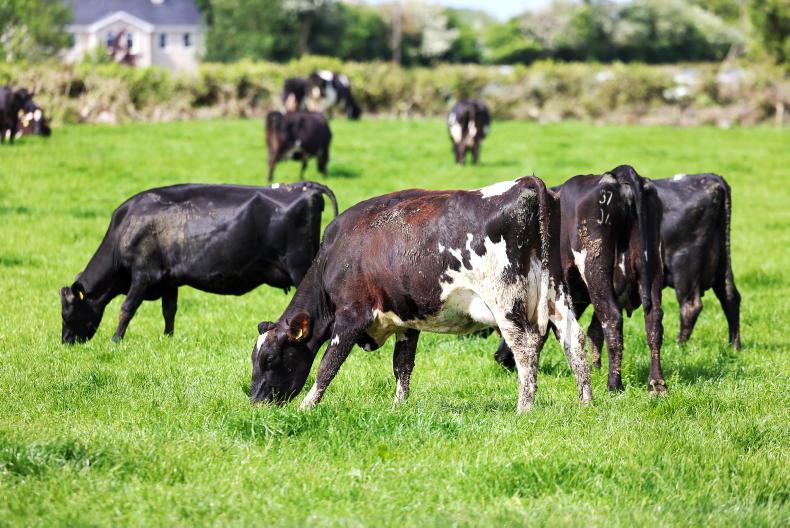
Three weeks into November and grazing should have stopped on nearly all farms, bar those with an exceptionally high cover.
Grass is of poor enough quality now, with the current wet weather seeing low dry matter, as well as cattle wasting energy keeping themselves warm in the cold and wet, when this grass would be of more value and better utilised in spring.
As it stands, only 11% of farms are currently in this higher cover bracket.
Some 50% of farms have an average farm cover (AFC) of 700kg dry matter per hectare (DM/ha), which is a little on the high side for closing, but is acceptable and likely more preferable than poaching paddocks badly trying to continue grazing.
With ground conditions as they are, it is generally only very dry farms that are still grazeable.
However, grazing just one paddock too many can drop farm cover, with Pasturebase Ireland figures showing an extra paddock grazed at 1,200kg DM/ha being able to drop farm cover by 50kg to 75kg DM/ha at closing.
Forage crops
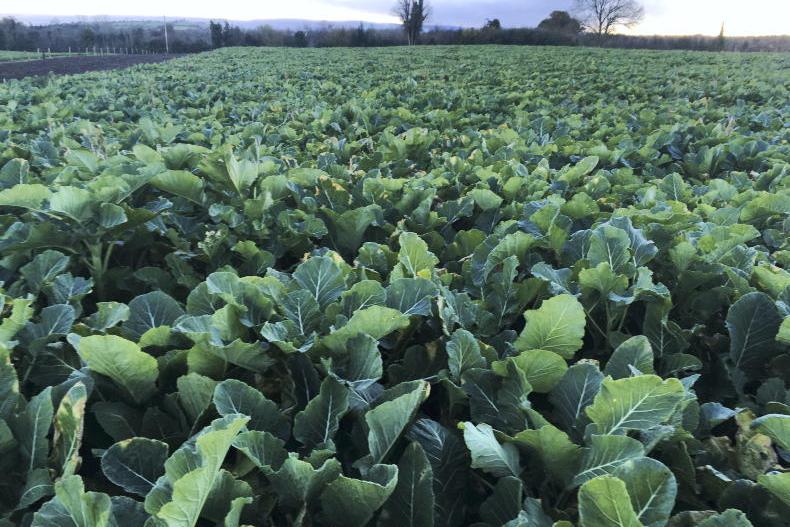
With some frost and snow forecast for parts of the country over the next few days, vigilance is needed around feeding forage crops.
It is not recommended to feed these frozen crops, as sudden deaths can occur from feeding due to nitrates poisoning, with nitrates levels increased by the frost.
The best advice is to wait until frost or snow has thawed.
Changing the time you move the fence until the afternoon can help in some situations and you should try to wait until the sun has thawed the crop in the afternoon to move the fence.
If the crop doesn’t thaw out, feed extra silage to get you over the frosty period. Make sure drinkers are flowing and not frozen as well.



SHARING OPTIONS