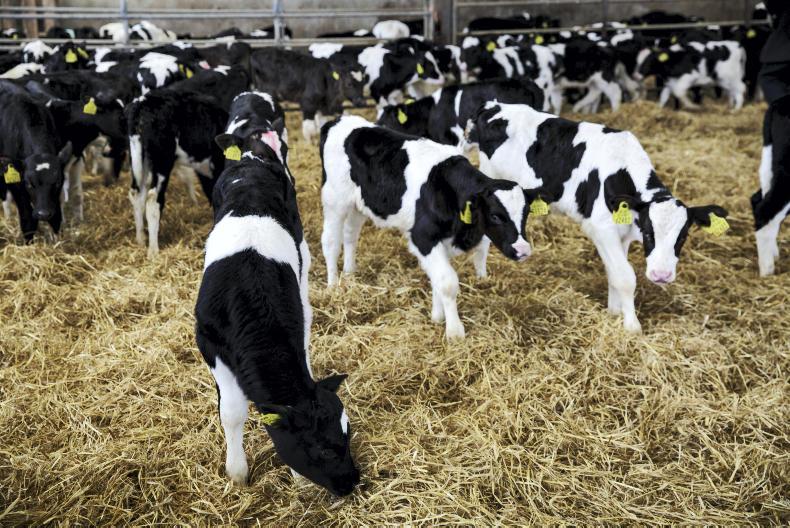
The calf trade continues to be heavily influenced by live export activity, with volumes exported at a high level. The latest Department of Agriculture figures for the week ending 26 May recorded calf exports of 6,687, twice the volume for the corresponding week in 2017.
As can be seen in Table 1, Spain continues as the standout performer, with the number of calves imported now surpassing the 50,000 mark.
This is a sharp jump of 16,149 head on 2017 levels. Export performance to the Netherlands was running marginally behind with 2017 levels for much of the season, but is now surpassing last year’s levels. Belgium has also re-emerged as an important market, while exports to France have recovered after a dip in 2017, with Italy also continuing to progress from strength to strength.
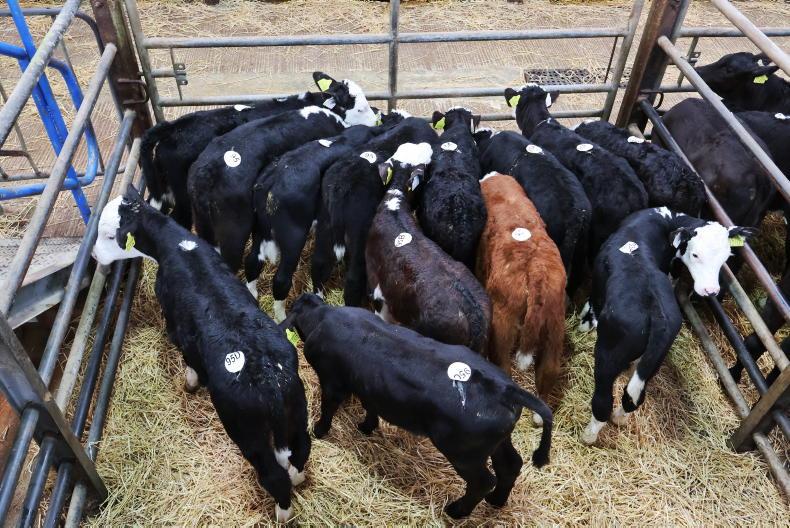
Ireland is benefitting from lower calf supplies in other EU countries, with the season prolonged by a reduction in prices for Angus and other beef-sired calves. This has opened up an opportunity for exporters to handle these calves and return a margin, with export consignments dominated by bull calves, but also including some beef-sired heifer calves.
Many mart managers report more bite in the market as numbers follow a seasonal decline. Friesian bulls are selling from €80 to €130 on average, with better-quality lots to €150 to €180. Angus prices are influenced heavily by calf quality and age, with heifers selling anywhere from €100 to €200 while bulls average €170 to €230 per head. Herefords are generally commanding a premium of €10 to €20 over average Angus prices.
The calf trade continues to be heavily influenced by live export activity, with volumes exported at a high level. The latest Department of Agriculture figures for the week ending 26 May recorded calf exports of 6,687, twice the volume for the corresponding week in 2017.
As can be seen in Table 1, Spain continues as the standout performer, with the number of calves imported now surpassing the 50,000 mark.
This is a sharp jump of 16,149 head on 2017 levels. Export performance to the Netherlands was running marginally behind with 2017 levels for much of the season, but is now surpassing last year’s levels. Belgium has also re-emerged as an important market, while exports to France have recovered after a dip in 2017, with Italy also continuing to progress from strength to strength.
Ireland is benefitting from lower calf supplies in other EU countries, with the season prolonged by a reduction in prices for Angus and other beef-sired calves. This has opened up an opportunity for exporters to handle these calves and return a margin, with export consignments dominated by bull calves, but also including some beef-sired heifer calves.
Many mart managers report more bite in the market as numbers follow a seasonal decline. Friesian bulls are selling from €80 to €130 on average, with better-quality lots to €150 to €180. Angus prices are influenced heavily by calf quality and age, with heifers selling anywhere from €100 to €200 while bulls average €170 to €230 per head. Herefords are generally commanding a premium of €10 to €20 over average Angus prices.






SHARING OPTIONS