



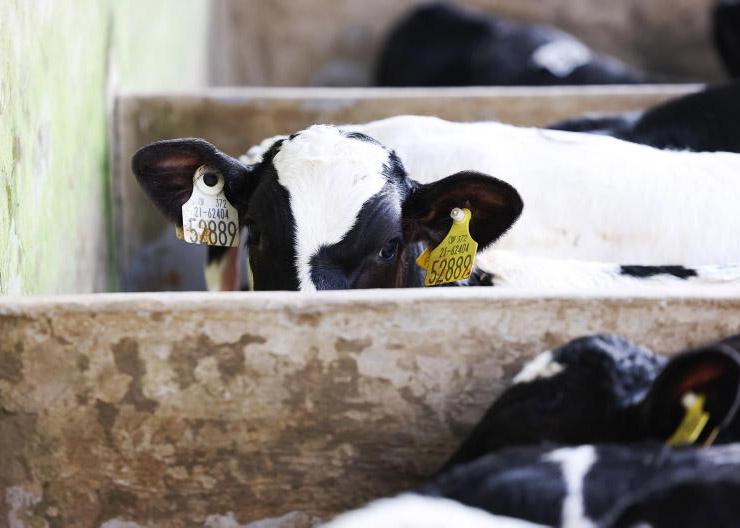
The Netherlands cannot independently ban the import of Irish calves because the European Animal Transport Regulation permits it, according to a Dutch minister.
Speaking at a recent debate on livestock on livestock farming in the Netherlands, Minister for Food Security, Fisheries and Horticulture, Silvio Erkens, who called the import of Irish calves “undesirable” said he will discuss the subject further at European level.
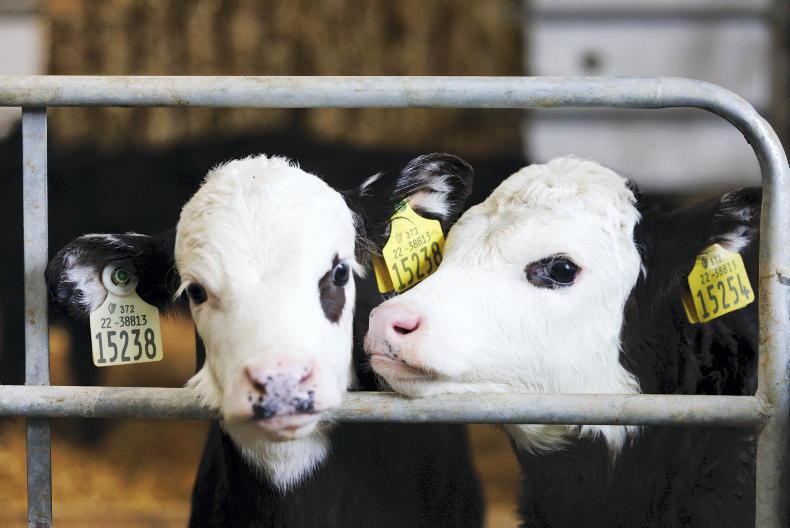
The veal sector in the Netherlands had committed to phasing out the import of Irish calves by 2026. However, upsets to the supply chain such as the impact on supply of calves from bluetongue in neighbouring countries such as Germany and Belgium resulted in Dutch buyers purchasing about 84,000 Irish calves in 2025.
This is a wider European supply chain issue rather than a Dutch one, Van Drie Group, one of the largest buyers of calves, admitted in a statement this week.
“Voluntary sector agreements have limitations within the European internal market. When stricter requirements apply only to participants in a private quality system, there is a risk that trade will shift to parties outside this system.”
This would result in a minimal shift in the overall number of calves imported into the Netherlands or to lead to animals traveling longer distances to other countries instead. There is also a risk that companies will leave the sustainability schemes in order to continue trading under broader EU rules.
The statement also mentioned the sector plan ‘Veal Forward’, which contains stricter requirements for the import and transport of calves. If these sectoral requirements are fully guaranteed, it would effectively put an end to current import practices from countries such as Ireland.
Pressure on imports of calves in the Netherlands appears to be coming from an unlikely duo.
Animal welfare organisations, who have long called for an end to the practice seem to be joined by some voices within the Dutch dairy sector are opposed to the import of extra livestock into the country when there are pressures on stocking rates and schemes to get farmers to exit farming.
Ireland is the second biggest source of calves to the Dutch veal sector, second only to Germany and after 17 weeks of trading this year they have accounted for 56,584 head making up 23% of all calves brought into the Netherlands.



SHARING OPTIONS