




Farmers need a price of €4/kg to deliver a viable margin from suckler beef production. To safeguard the long-term viability of the sector from rising input prices and the impacts of weather volatility, a beef price of €4.50/kg is required.
These figures were presented by Dr Paul Crosson at the Teagasc Beef 2014 open day at Grange on Wednesday. The Teagasc analysis showed that, at a price of €3.50/kg, even the most efficient production systems would not be in a position to cover the costs of production.
“At a €3.50/kg scenario, you are going to struggle to just about break even,” Crosson said.
“Realistically, the cost of production is at 3.50/kg and that’s for the highly productive farmers. The national average is at €4/kg and higher. The average farmer needs these prices in order to cover their cost and get a return on labour,” Crosson added.
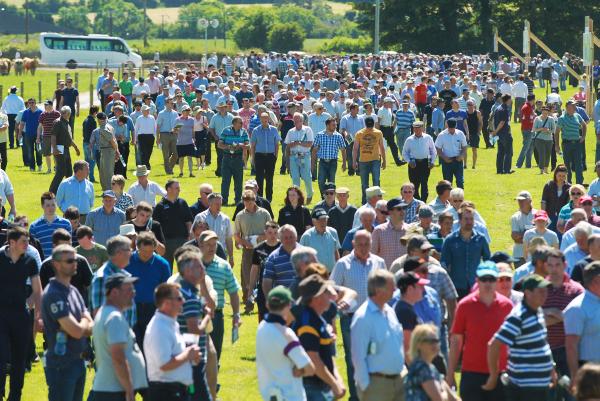
More than 8,000 attended the Grange open day.
War of words
Meanwhile, a bitter war of words has erupted between the beef processors, the Department of Agriculture and farm organisations. On Tuesday, a small number of beef farmers staged a sit-in protest at the Department offices over falling prices.
Henry Burns, national livestock chair with the IFA, said that both the confidence and income of farmers have been eroded as a result of the recent price collapse and once again called on Minister for Agriculture Simon Coveney to intervene. The IFA accused Minister Coveney of “taking his eye off the ball” with regard to the price crisis and accused him of being “the Minister for factories, not farmers”.
Minister Coveney reacted strongly to the claims, saying that he is “acutely aware” of the problems facing Irish beef farmers. The Minister also pointed to the beef price pressure in Britain – our largest export market.
Earlier this week, Eblex, the body in charge of beef and lamb promotion in Britain, said the increased volume of Irish beef into Britain in the past 12 months is a contributing factor to the British beef collapse. British beef prices currently stand at a base price of £3.16/kg, having fallen more than 20p in a month.
Henry Burns also said that the changing of specifications by processors earlier this year was “totally uncalled for” and has “undermined the sector”.
In a rare show of unity from the farm organisations, the IFA, ICSA and ICMSA appear to be on the same page regarding the IFA’s protest.
The ICSA staged a poster protest at the Grange open day condemning the actions of processors, describing the beef sector as a “closed shop”. The ICMSA also said it supported the actions of the IFA in recent days.
However, the country’s third largest beef processor has reacted angrily to the claims made by the IFA during its protest.
Niall Browne, CEO of Dawn Meats, told the Irish Farmers Journal that the IFA has changed its message regarding the beef trade.
“When we sat down with the IFA last February, they acknowledged that Dawn Meats had been clear about our specifications through media articles, our producer newsletter and through speaking at public meetings over the previous two years,” Browne said.
“Eighty-nine per cent of steers and heifers supplied into Dawn Meats adhere to our publicly published specification. Of the remaining 11%, some of these animals were for specific niche markets … The IFA campaign is about the minority of supplies rather than the bulk of cattle supply,” Browne added.
Browne also pointed to cattle price trends in Ireland in recent years.
“The reality is that cattle prices have risen by over 40% in the last five years and are now higher than the EU average,” he concluded.
The Irish Farmers Journal understands that processors have come under significant pressure from retailer customers, especially in the past few weeks, which has led to the latest price fall.
Figures reported on page 16 in this week’s Irish Farmers Journal confirm that retail margin has increased in recent times at the expense of farmers. In 2013, the farmer received 57% of the average price of beef on the British retail price. While the retail price per kilo has increased by 7%, the farmer’s share has fallen to 42%.
Prices quoted in Ireland for heifers and steers are 3.75/kg this week with fears that the price is likely to drop to €3.70/kg next week.



SHARING OPTIONS