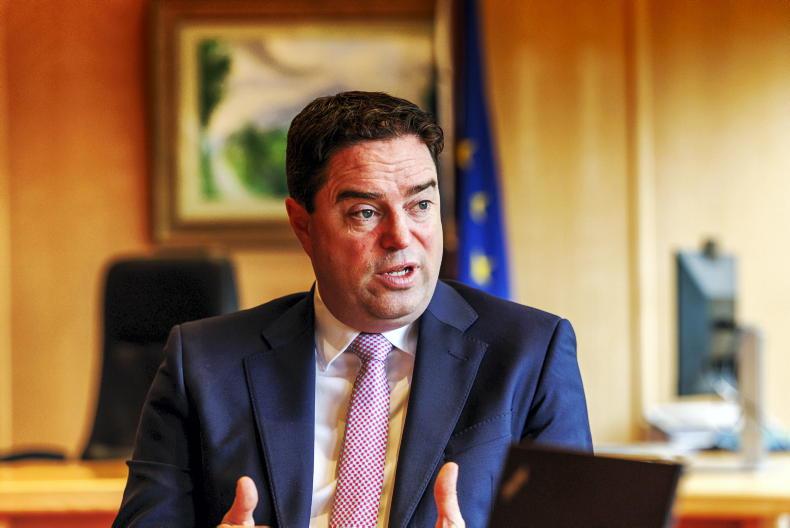
The long-awaited TB action plan, which aims to halt the current surge in the disease, was unveiled on Tuesday by Minister for Agriculture Martin Heydon.
The plan is underpinned by 30 proposed actions which include the following:
The introduction of a pre-movement test under EU animal hellth Law:
A high-risk breakdown is deemed to be one where there are three or more standard skin reactors in the one breakdown.
The exposed cohort are animals that have tested negative to a TB test, but are or were in the same management group as reactor animals at the time of a breakdown.
Testing
Gamma interferon (GIF) testing – or blood testing – will be mandatory in breeding herds of 80 cows or more where 5% of the exposed cohort test positive or there are 10 reactors, whichever is the lesser. This testing will be carried out within 14 working days of the skin test reactors being disclosed.
Furthermore, high-risk herds which suffer a TB relapse will require testing at six-monthly intervals for a period of three years.
There will be a restriction on the sale of cows to other farms from TB-restricted herds for two years after the removal of the last reactor.
This measure will apply to herds with 80 cows or more where 5% of the exposed cohort test positive or there were 10 reactors, whichever is the lesser.
However, cows from such herds may still be sold direct to a controlled finishing unit (CFU) or direct to slaughter during this two-year period.
The purchase of calves from restricted TB herds will be allowed under the new plan, but farms which purchase such calves will be themselves restricted until the holding has two clear skin tests at least 60 days apart.
The plan also contains a measure that will facilitate the sale of TB test-negative cull cows from restricted herds through special cull cow sales in marts to CFUs.
Wildlife
In terms of addressing the challenges posed by wildlife in the spread of TB, the plan has proposed that:

Breeding strategy
Other points of interest in the plan include a proposal to develop a national breeding strategy to increase the resistance of the national cattle population to TB and incentivise the use of bulls with higher levels of TB resistance through the on-farm market valuation (OFMV) scheme.
The Department has also committed to establishing a dedicated telephone helpline for farmers who enter a breakdown, which will focus on advising farmers of what happens during a TB breakdown.
Surprisingly, there was no mention of funding in the document or references to the level of TB compensation available to farmers.
Step change
At the launch of the plan, Minister Heydon expressed confidence that “the additional targeted measures in this plan will represent a step change in how we control and, over time, eradicate the spread of this disease”.
“Some of these measures will require additional controls on farmers and it has been to the foremost of my mind to try and strike a balance between minimising the number of affected farmers while at the same time introducing impactful measures that will reduce the current high levels of TB,” Minister Heydon said.
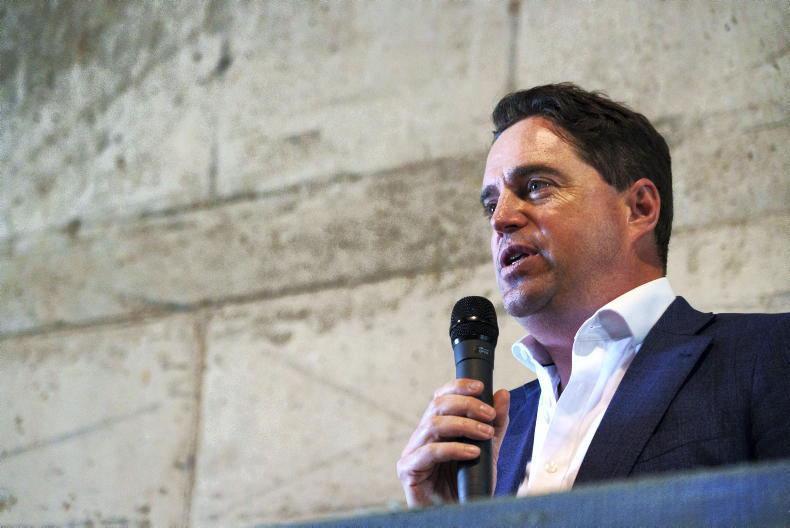
“I believe these measures will provide farmers who are dealing with the stress of a TB outbreak today a pathway to navigate a way out of a restriction and help empower farmers who are currently TB free to remain TB free,” he maintained.
Recent years have seen a massive increase in TB levels nationally. Over 41,600 reactors were recorded in 2024, which was a 44% increase when compared with 2023 (around 29,000 reactors). This was on top of an increase of 24% in 2023 from over 23,000 reactors in 2022.
Over 6,000 farms were affected by a TB outbreak in 2024. Herd incidence has increased from 4.31% in 2022 to 6.04% in 2024, which is a 36% increase in the number of herds restricted between 2022 and 2024.