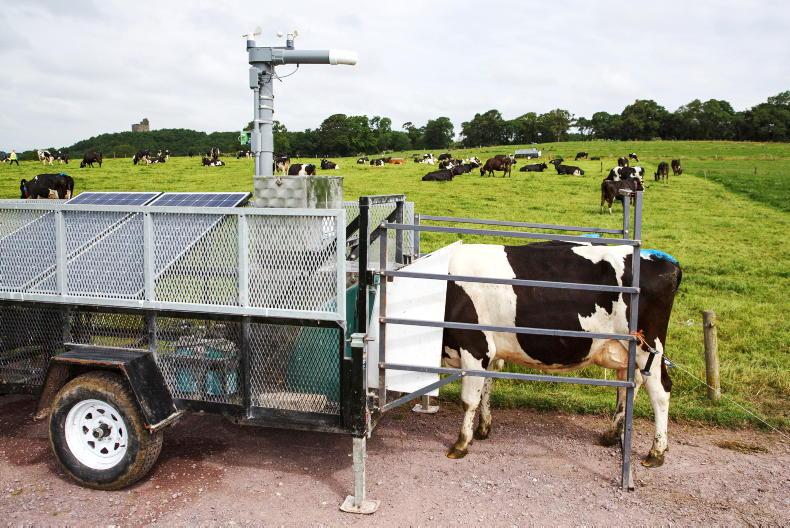
Measuring methane emissions in dairy cows using the GreenFeed system in Moorepark, Co Cork. \ Donal O' Leary
ADVERTISEMENT
The Climate Action Plan focuses on research, new technologies and trusted technologies to reduce methane emissions.
The plan says animal breeding research will be accelerated, mentioning the need for higher-EBI cows, research funding and data assimilation to contribute to the breeding of beef animals which are lower emitters of methane.
Feed additives are a big focus of the plan for agriculture. Feed additives will continue to be tested under Irish conditions to find the most suitable technologies which reduce methane, but also adhere to animal welfare and food safety standards.
ADVERTISEMENT
The plan also outlines the need for further research on the development of feed additives to reduce biogenic methane when animals are at grass. This could play a large role in the Irish dairy sector.
While many Irish farmers already pay huge attention to breeding and early slaughter of animals, the challenge will be to get farmers who are not focused on these practices to make the switch.
Other measures such as greater uptake of clover and possibly multispecies swards can also help to reduce methane at grass, while reducing fertiliser use.
Improved animal health and a focus on generating carbon footprints for individual farms will also be a help.
Register for free to read this story and our free stories.
This content is available to digital subscribers and loyalty code users only. Sign in to your account, use the code or subscribe to get unlimited access.
The reader loyalty code gives you full access to the site from when you enter it until the following Wednesday at 9pm. Find your unique code on the back page of Irish Country Living every week.
CODE ACCEPTED
You have full access to the site until next Wednesday at 9pm.
CODE NOT VALID
Please try again or contact support.
The Climate Action Plan focuses on research, new technologies and trusted technologies to reduce methane emissions.
The plan says animal breeding research will be accelerated, mentioning the need for higher-EBI cows, research funding and data assimilation to contribute to the breeding of beef animals which are lower emitters of methane.
Feed additives are a big focus of the plan for agriculture. Feed additives will continue to be tested under Irish conditions to find the most suitable technologies which reduce methane, but also adhere to animal welfare and food safety standards.
The plan also outlines the need for further research on the development of feed additives to reduce biogenic methane when animals are at grass. This could play a large role in the Irish dairy sector.
While many Irish farmers already pay huge attention to breeding and early slaughter of animals, the challenge will be to get farmers who are not focused on these practices to make the switch.
Other measures such as greater uptake of clover and possibly multispecies swards can also help to reduce methane at grass, while reducing fertiliser use.
Improved animal health and a focus on generating carbon footprints for individual farms will also be a help.
If you would like to speak to a member of our team, please call us on 01-4199525.
Link sent to your email address
We have sent an email to your address. Please click on the link in this email to reset your password. If you can't find it in your inbox, please check your spam folder. If you can't find the email, please call us on 01-4199525.
ENTER YOUR LOYALTY CODE:
The reader loyalty code gives you full access to the site from when you enter it until the following Wednesday at 9pm. Find your unique code on the back page of Irish Country Living every week.








SHARING OPTIONS