



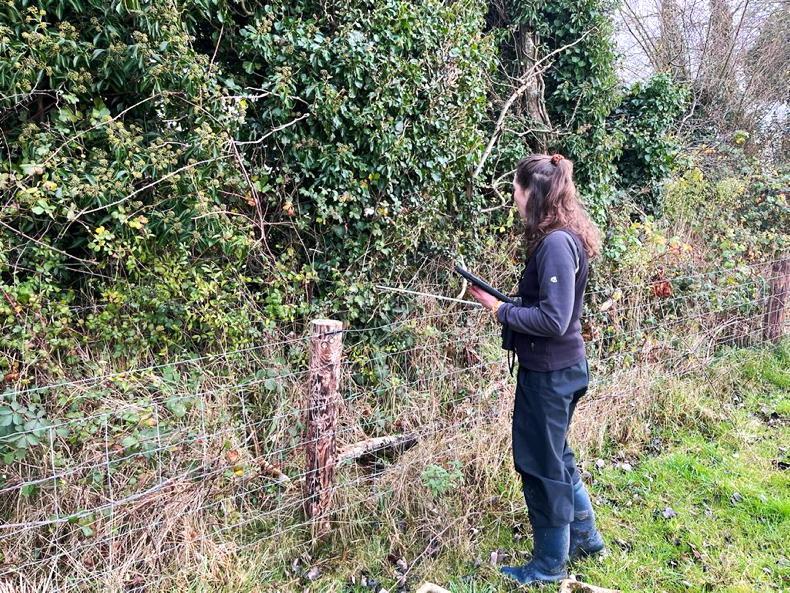
Biodiversity scoring is under way on the Footprint Farms in conjunction with the Biodiversity Regeneration in a Dairying Environment (BRIDE) project, which has now developed into the Farming with Nature standard.
The aim of the project is to both design and implement a results-based approach to conserve and enhance habitats in lowland intensive farmland.
This results-based scheme has seen a number of the Footprint Farms scored by ecologist Laura Hynes, with differing results across the farms.
Laura estimated the space for nature (SFN) percentage on the farm before visiting using satellite images. Visiting the farms then enabled Laura to ground truth the maps.
While hedgerows, field margins, scrub and riparian buffers can be classified as SFN, woodland and wet and extensive grassland areas can also be SFN.
The score given is called the farm biodiversity index (FBI) and the scores from the farms ranged from 5C on Tullamore Farm to 17B on Kenneth Reid’s farm in Co Limerick.
Scores
The scoring system works as follows: the 17 in the FBI represents the percentage of the farm classified as SFN, while the letter signifies the average quality of the SFN.
For example, the FBI of Andrew Mulhare’s farm in Ballybrittas, Co Laois, was 15B. This means that 15% of the farm was classified as SFN, while the average quality of the SFN on the farm is a B.
Across all the farms scored so far, the quality of field margins stands at a C. This means there is some work to be done to improve these scores to a B.
As a Farming with Nature standard, 10B is the minimum target across the farm in terms of an FBI score.
Results
To improve, the field margins could all benefit from an increase in size.
Increasing the widths to 2m or greater would result in the greatest score increase for this habitat.
Having wider field margins would benefit wildflowers, which would in turn benefit pollinators, other invertebrates, small mammals and birds and give barn owls a space to hunt.
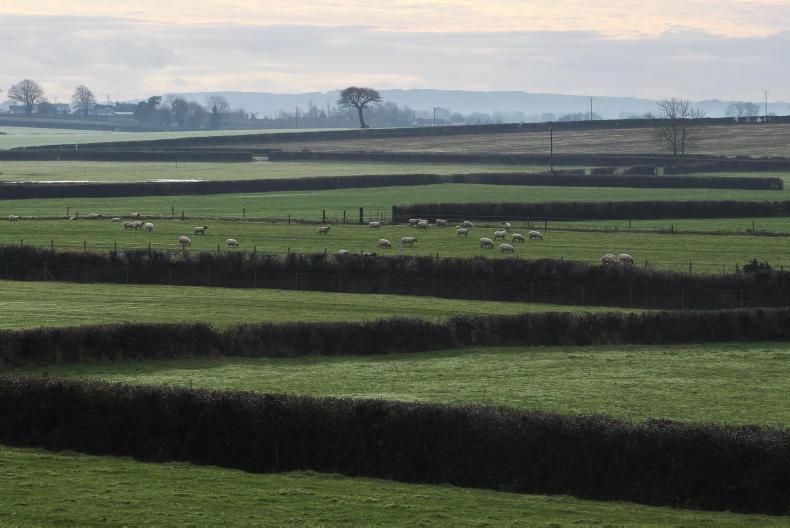
Existing hedgerows on the farm varied in scores from C to B. Some of the hedgerows scored a C, as many had been topped.
It is recommended to leave these hedges to grow untopped and side-trim where necessary only.
This type of hedgerow management allows them to grow taller, which results in more blossoms and berries, as well as providing greater shelter for livestock.



SHARING OPTIONS