


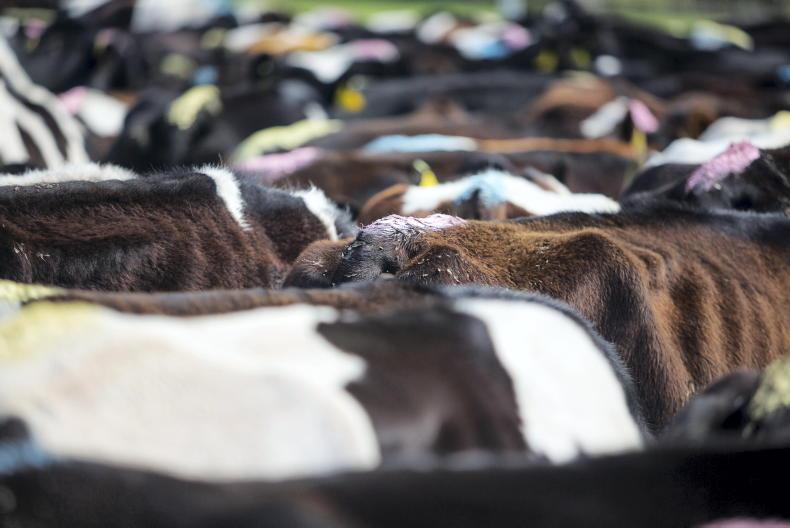
Up to 15 cows died during a bovine viral diarrhoea (BVD) outbreak in a high-yielding dairy herd earlier this year, with a follow-up investigation concluding that a transient infection had passed through the herd.
Limerick regional veterinary lab examined three Friesian cows from the herd in March after the herd saw daily cases emerging of diarrhoea, fever, milk drop, respiratory distress and death - mostly in freshly calved cows.
The herd had not been vaccinated for BVD and, at the time, one calf had tested positive on a tissue tag test, according to the recently-published March 2023 regional veterinary lab report.
Confirmed
The first of the three cows examined at the lab “likely” had BVD, while the virus was confirmed in the two follow-up cases examined. Johnes, intestinal ulcers and bleeding were among the ailments observed in these cows.
Health effects of other disease-causing agents present “may be exacerbated by BVD”, including salmonella and mycotoxins, which were to be investigated in the herd in question.
BVD progress
The report notes that “whilst great progress has been made”, analysis of the disease “has identified the emergence of a small number of local clusters of infection with clinically ill animals”.
Department vets pointed towards the movement of animals, machinery and people as being suspected of facilitating the spread of infection between these herds.
Lower vaccine usage is also responsible for reducing herds’ resistance to BVD and increasing susceptibility to infection, meaning that vaccination and biosecurity measures have assumed a “greater importance in positive herds and those herds neighbouring positive herds”.
Eradication
The latest BVD eradication programme results suggest that progress has been achieved over the past year in combatting the disease, but that there are still improvements needed before tissue tagging for most herds can be ceased.
The number of calves with an initial positive or inconclusive result and without a negative retest result rose from 410 at this stage of 2022 to 467 now.
There is progress seen in the number of herds testing negative, with 99.69% of herds testing negative to date in 2023, up from 99.66% the same last year.




SHARING OPTIONS