


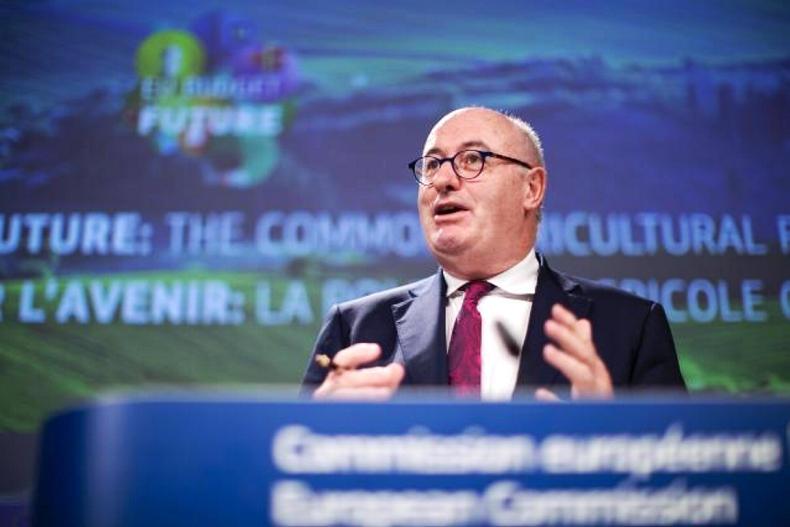
After lots of consultation and release of position papers and debates across the EU, the European Commissioner for Agriculture's proposals for the Common Agricultural Policy (CAP) were published this week.
There were no major shocks as the Commissioner had consistently spoken about the need to get new blood into farming, protect the small and medium farmers, simplify the process and get member states to take more of a role in designing and delivering the CAP in the way that best suits themselves. Farming near the Arctic Circle is very different from farming in the Mediterranean, so he believes Brussels cannot design a one-size-fits-all policy.
Changes
This new way of working will mean that all the controversial decisions will be made in Dublin, not Brussels. When the idea was first mooted there were widespread views that such a policy would effectively remove the “common” from the common agricultural policy and effectively renationalise it.
To avoid this, the Commission is requiring the proposals of member countries to receive their approval first. Each country will have to choose from the menu of options outlined in the CAP proposals and present to the Commission how they will use them to support farmers.
The big changes were well flagged in advance. The upper limit for payments won't impact virtually all Irish farmers either at the €100,000 cut-off point or €60,000 point when payments will be reduced. Where most Irish farmers will feel the cut is in the top slicing of the Direct Payment fund in order to finance new initiatives and deliver environmental benefits.
Similarly, the decision to enhance payments to small and medium farmers plus young farmers will also be funded from the direct payments budget.
Types of farmer
In practice, this means small or young farmers will see an increase in revenues despite the cut in the overall budget of 5%. However, because this is paid for from the Direct Payment fund, it means farmers outside these categories will lose out. Therefore it looks like a substantial farmer who works full-time on a farm will be worse off.
There is also a facility to use some of the Direct Payments fund as coupled support for the more vulnerable parts of the industry – suckler and sheep farming being the obvious examples in Ireland. Up to 10% of the Direct Payment budget can be used this way.
Building a programme to deliver the CAP will be a huge challenge for the Minister. Last time around, the headline-grabing conflict was about defining what an active farmer was. That challenge remains for the next time also as well as deciding what a small and medium farm is and whether to couple a payment on, for example, suckler cows.
Inevitably there will be a conflict of priorities as the Government divides the smaller CAP pot. The budget and CAP are designed assuming no increase in the EU budget, something the Minister and IFA have not yet given up on. A better-funded CAP overall would make the changes easier but that is probably optimistic thinking.



SHARING OPTIONS