‘I’m not from a farming background, but we’re surrounded by farms [at home], and I often gave a hand on relatives’ and neighbouring farms, which I loved. I’ve always had an interest in animals and being outdoors, so when it came to choosing Leaving Cert subjects, agricultural science was a natural choice. I was fortunate to have an excellent teacher, and his love for the subject was both infectious and inspiring.
“Like many students, I found it very hard to decide on a college course at the age of 17. However, after plenty of open days and information evenings, I settled on agricultural science. At that time, there were only two places in the country to study it, University College Dublin and Waterford IT (now SETU). With my interest in animals, animal science at UCD was my first choice, but when the points jumped that year, I missed out by five and went to Waterford instead, planning to transfer later.
“My three years in Waterford were fantastic. The course was hands-on, which suited me, with plenty of lab and farm experience in Kildalton, and I made great friends along the way.
Strength of agriculture
“In my final year, I completed a research project, which first sparked my interest in research. Six of us transferred to UCD together for the Level 8, which made the move a lot easier.
“At that stage, I’d already tried several different jobs, including working on a stud farm, spending a summer in ABP in Waterford and working as an intern in Enfer Labs in Naas, but I wanted more research experience.
“That led me to complete 10 weeks in Teagasc Moorepark, five weeks working with a pig PhD student and five weeks with a dairy PhD student.
“That experience sealed the deal for me. I knew then that I wanted to go on and do a PhD.
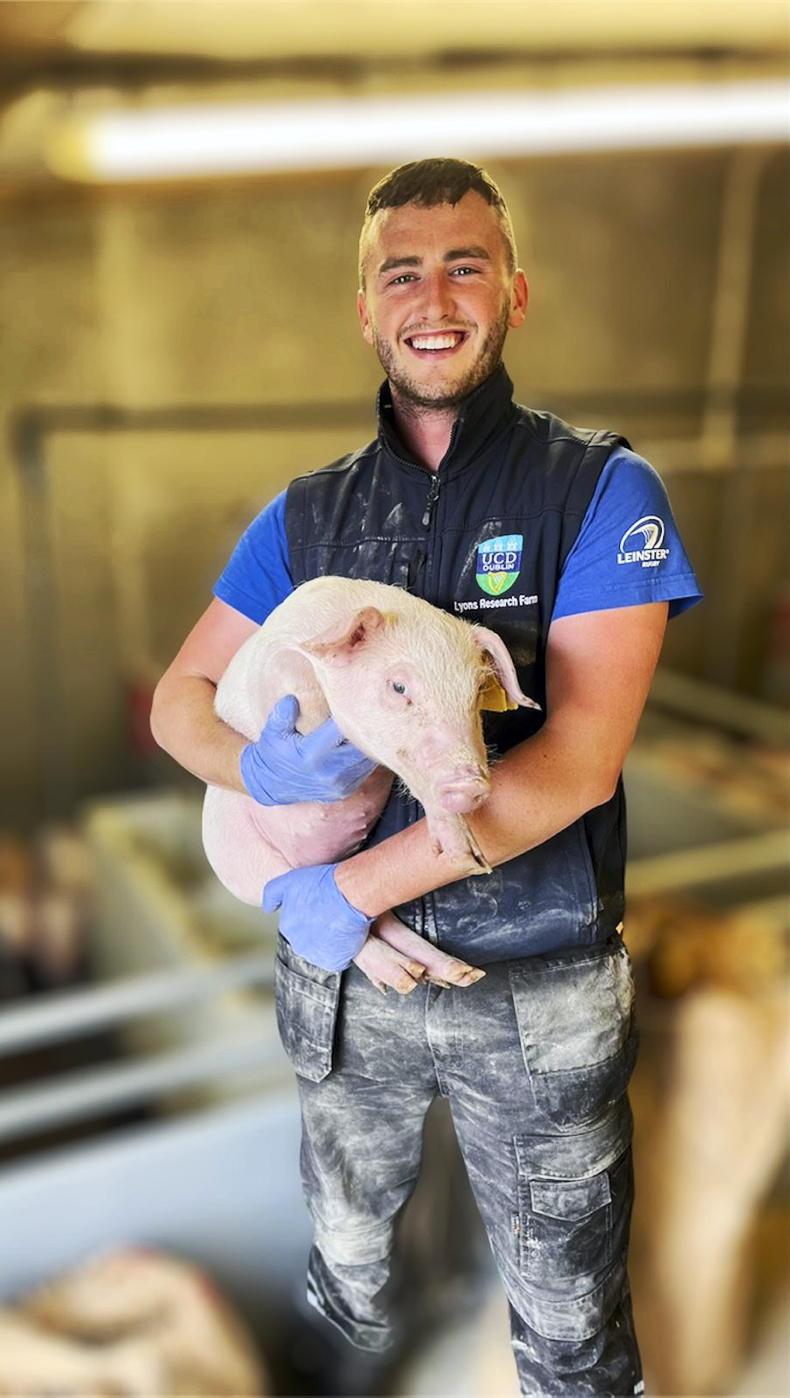
“My biggest takeaways from studying was learning about the scale and complexity of the challenges facing agriculture, from environmental pressures to market demands.
“College also showed me the strength of the agricultural community and the value of a strong professional network. More than anything, it made me want to use what I had learned to try to help find practical solutions that can make a difference.
Paving a way in research
“After graduating from UCD, I joined John O’Doherty’s research team based on UCD Lyons Farm. I spent a couple of years working as a research assistant, which was an excellent experience and gave me a real taste for research.
The role involved working with postgrad students, running animal trials, organising logistics, and collecting and analysing data. I also got a better understanding of how research projects are coordinated, the teamwork involved, and the attention to detail needed to get reliable results.
Those years gave me not only valuable technical skills but also the confidence to take on my own PhD project.
“My PhD was titled The Role of Organic Acid-Preserved Grains in Sustainable Pig Production: Effects on Growth Performance, Digestive Health, and Environmental Impact. In simple terms, I looked at using an organic acid mould inhibitor to preserve feedstuffs like wheat, barley, and faba beans instead of traditional grain drying. The project was funded through a targeted partnership between the BiOrbic Research Ireland Centre for Bioeconomy and industry partners, Adesco Nutricines. Having Adesco involved made a huge difference to the project.
“They challenged me to think critically, look at problems from different angles, and focus on solutions that genuinely benefited farmers.
“The aim was to see how organic acid preservation affected grain quality, pig production performance, and digestive health, and whether it could help reduce the environmental footprint of both grain preservation and pig production.
“My work involved feeding trials with sows, piglets, and grower-finisher pigs, as well as using life cycle assessment to measure the environmental impact. We found that organic acid preservation reduced mycotoxins, improved pig performance, enhanced the microbiome and nutrient digestibility, and cut the environmental footprint of pig production by about 10% compared to conventional drying.
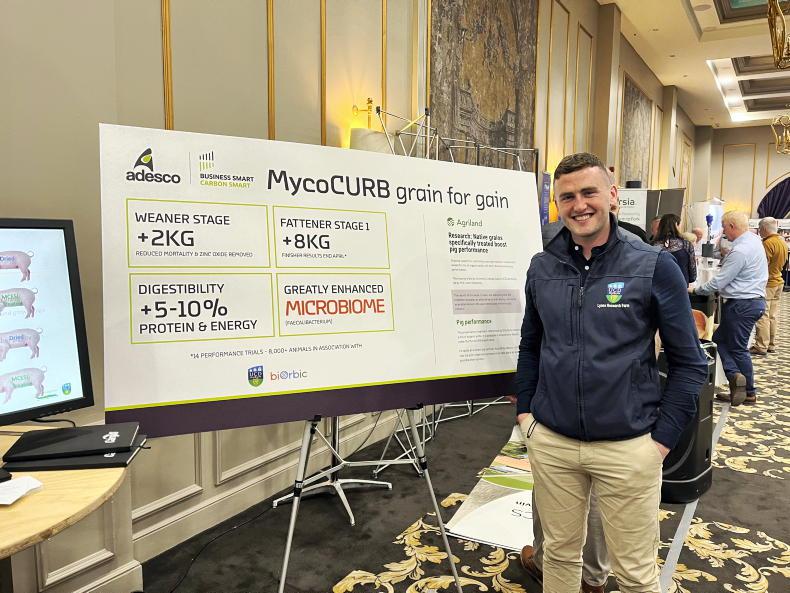
“I believe this preservation strategy has real potential to help farmers, so much so that I have now joined the team at Adesco to continue developing these solutions.
Advice for students
“The best advice I could give to anyone considering a PhD is to have a clear reason for doing it beyond just getting the qualification. I suppose, for me, it was about tackling real-world challenges in agriculture and working with people who shared that focus. Choose a topic you’re genuinely interested in, as that interest will keep you motivated when things get tough. Most importantly, a good supervisor and a solid support network are absolutely essential.
“I was fortunate to have both and to have already worked in Lyons before starting my PhD. If you’re considering applying, it’s a great idea to speak with past students of the college – they can give you a realistic sense of what to expect.”