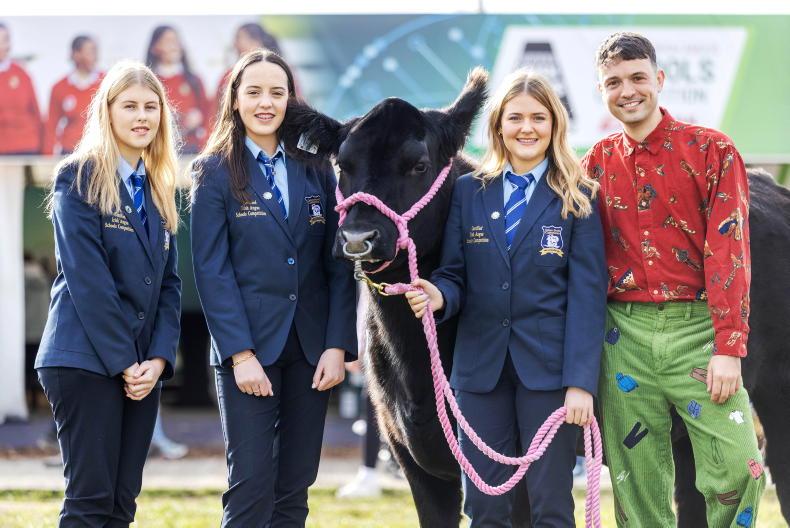
Two years ago, Agri Aware and Laois Offaly Education and Training Board (LOETB) joined forces with a simple mission: to encourage more students to study agricultural science for their Leaving Certificate, while also introducing them to the wide variety of career opportunities within the agri food sector.
After a successful pilot programme with LOETB schools last year, the TY initiative entitled Intro to Ag was rolled out nationwide, with over 5,000 students taking part.
Each were taken on a journey of discovery which offered them a taste of Leaving Cert ag science. On finishing the coursework, students completed a research project focusing on an area of the programme that interests them.
A total of 14 finalists were chosen from all of the group projects countrywide, and were invited to the Aviva Stadium on 13 April for the Intro to Ag Transition Year Fair, hosted by Agri Aware and LOETB. This event showcased the learnings from the programme and the work being done across the educational sector to various stakeholders across the agri food sector.
Gráinne McGrath, contract training officer and agriculture SME at LOETB, emphasises how important the programme is to promote career opportunities for those from a farming and non-farming background.
“That’s the whole ethos around this programme, highlighting that the sector is for everybody, and that we need everybody in it. The event here today is to showcase some of the projects that the students have done around the country.
“The idea is, you’re getting students during TY at an influential part of their educational journey, where they get to take a little bit of a breath and actually think about their future and what they want to do as a career.
“I think it’s very important we’re getting them at the right time and then, hopefully, they take it [ag science] up as a Leaving Cert subject.
“Hopefully, they will go into higher and further education options, and then progress to working in the sector.”
Panel discussion
At the event, Katie Gleeson, known as Katie in the Country, from her substantial social media following, chaired an insightful panel discussion with Kaleb Cooper from the Amazon Prime hit TV show Clarkson’s Farm and Irish YouTuber and farmer Philip Stewart, aka Farmer Phil.
Kaleb spoke about how the farming TV programme improved the awareness of agriculture among the general public.
“It’s brought awareness to everyone, and a lot more youngsters are getting into the industry. I go out there all the time and say, actually it’s not a job, it’s a way of life,” said Kaleb.
Advising the students in the room, Kaleb added, “If you do choose farming as a job, amazing. If you don’t, it’s not the end of the world, it’s fine. But the good thing about farming is that there are so many different careers you can take down that road, many different types of agricultural jobs. Always keep this quote in your head: ‘dreams don’t work unless you do’.
“Whatever you want to do in life, just put the determination into it,” was the advice from Philip Stewart, aka Farmer Phil. “Determination will bring you wherever you need to go.”
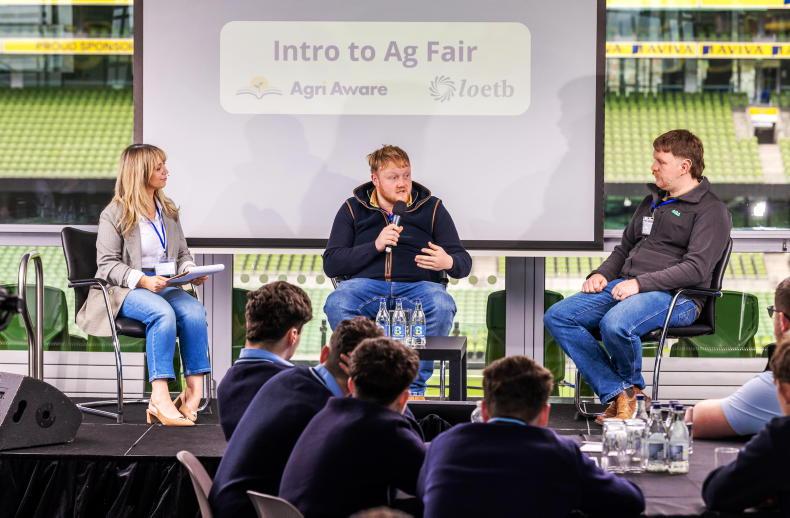
Katie Gleeson interviewing Kaleb Cooper and Philip Stewart during the panel discussion./Finbarr O'Rourke.
Winning project
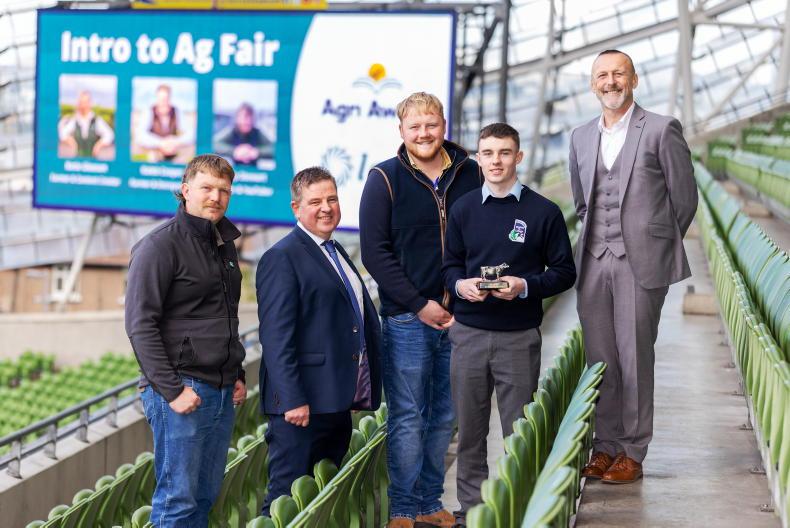
On the day, Sean Duffy from Virginia College in Co Cavan was crowned the national winner of Intro to Ag for his project on vacuum silage making. This was one of 14 projects presented across six schools. The judges were impressed by the project’s innovation, the model developed to demonstrate the idea, and the strong delivery of the overall presentation.
The theory for his project came from making silage in silage pits.
“The less air that is present in a silage pit when it is sealed, has a direct link to the quality of the silage; the less air, the higher the quality. This is because when silage is fermenting, there are aerobic and anaerobic phases,” explained Sean. “When the pit is closed, any remaining air will be used up through aerobic respiration.
“The problem with this is that it creates heat and water. These are both waste products in your silage. If we can remove that air in the first place, we can reduce the energy wasted through aerobic respiration and maximise the anaerobic respiration.
“The anaerobic respiration is very important because it’s what creates the lactic acid, which is the main preservative in your silage that stops it from rotting. By applying a vacuum to a silage pit, you can increase the silage quality,” adds Sean.
Agri Aware chair Shay Galvin paid tribute to Sean. “The winning project showed significant thought and effort in addressing an issue that many farmers face. It clearly reflected the core aim of the Intro to Ag programme which is to encourage students to explore and develop an interest in agriculture.”
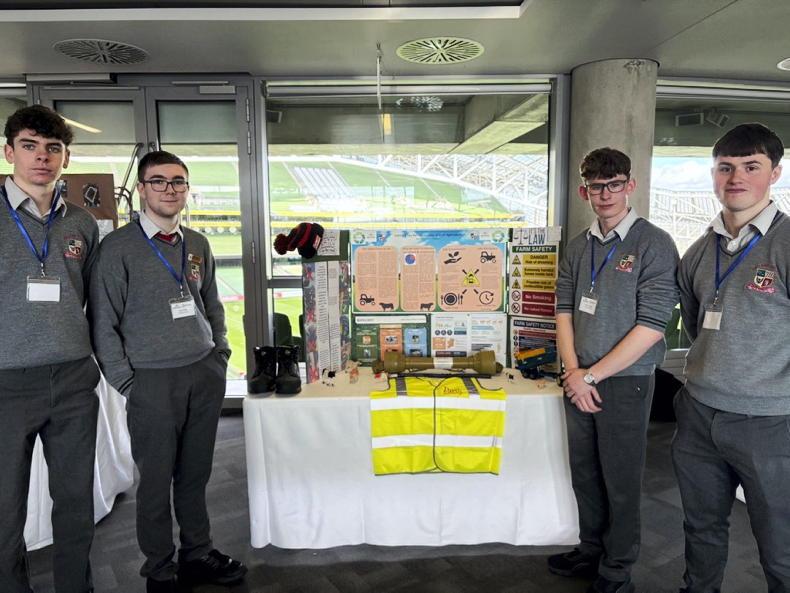
Students Sean Walshe, Luke Kelly, Conor Keogh and James Miller from Portlaoise College, Co Laoise.
Other projects
Portlaoise College, Co Laois: Students Luke Kelly, Conor Keogh, Sean Walshe and James Miller completed a project entitled ‘Safety is key for the success of Irish Agriculture’.
“We believe it is very important to have good safety measures in place on farms to keep it not only a safe workplace but also to keep our food safe and ensure it is coming from safe sources,” said Conor.
“I think this year’s Intro to Ag programme has been seriously beneficial to me and my year. I am considering doing ag science now for the Leaving Certificate, even though I am not from a farm,” he added.
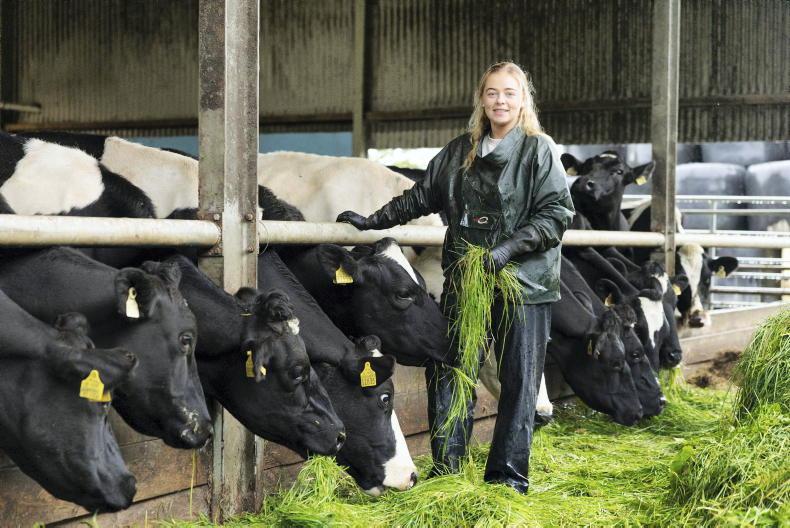
Castlepollard Community School, Co Westmeath: ‘Ground Water Quality on Irish Farms’, was the topic covered by Katie McCormack from Castlepollard Community College.
Hailing from a beef and suckler farm, she identified an issue with slurry management due to the increased rain.
“My project is on flexible dates instead of fixed dates for slurry spreading, because at home at the moment, we are trying to force it out, even though the ground isn’t as suitable.
“I looked at the last two years and 2026 had the most rainfall in January and February. We had two weeks in January before the dates of slurry spreading opened, when the weather was dry; if the dates were flexible, we could have spread it then.
See agriaware.ie
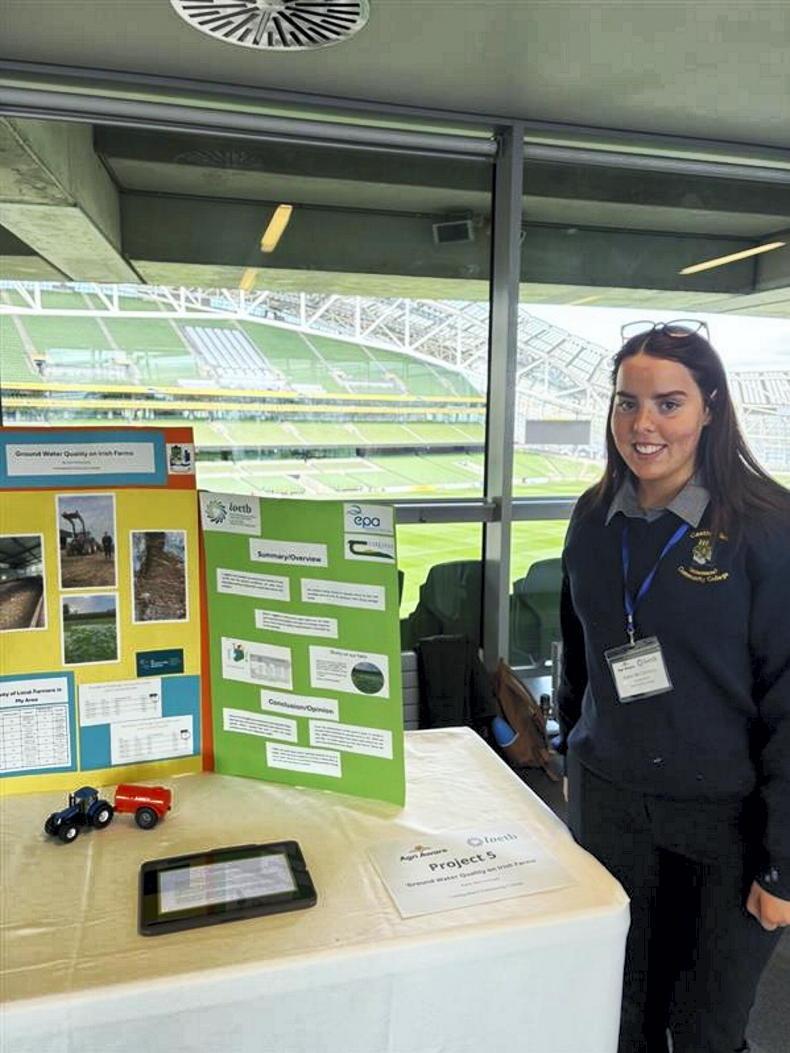
Katie McCormac from Castlepollard Community School, Co Westmeath.
Two years ago, Agri Aware and Laois Offaly Education and Training Board (LOETB) joined forces with a simple mission: to encourage more students to study agricultural science for their Leaving Certificate, while also introducing them to the wide variety of career opportunities within the agri food sector.
After a successful pilot programme with LOETB schools last year, the TY initiative entitled Intro to Ag was rolled out nationwide, with over 5,000 students taking part.
Each were taken on a journey of discovery which offered them a taste of Leaving Cert ag science. On finishing the coursework, students completed a research project focusing on an area of the programme that interests them.
A total of 14 finalists were chosen from all of the group projects countrywide, and were invited to the Aviva Stadium on 13 April for the Intro to Ag Transition Year Fair, hosted by Agri Aware and LOETB. This event showcased the learnings from the programme and the work being done across the educational sector to various stakeholders across the agri food sector.
Gráinne McGrath, contract training officer and agriculture SME at LOETB, emphasises how important the programme is to promote career opportunities for those from a farming and non-farming background.
“That’s the whole ethos around this programme, highlighting that the sector is for everybody, and that we need everybody in it. The event here today is to showcase some of the projects that the students have done around the country.
“The idea is, you’re getting students during TY at an influential part of their educational journey, where they get to take a little bit of a breath and actually think about their future and what they want to do as a career.
“I think it’s very important we’re getting them at the right time and then, hopefully, they take it [ag science] up as a Leaving Cert subject.
“Hopefully, they will go into higher and further education options, and then progress to working in the sector.”
Panel discussion
At the event, Katie Gleeson, known as Katie in the Country, from her substantial social media following, chaired an insightful panel discussion with Kaleb Cooper from the Amazon Prime hit TV show Clarkson’s Farm and Irish YouTuber and farmer Philip Stewart, aka Farmer Phil.
Kaleb spoke about how the farming TV programme improved the awareness of agriculture among the general public.
“It’s brought awareness to everyone, and a lot more youngsters are getting into the industry. I go out there all the time and say, actually it’s not a job, it’s a way of life,” said Kaleb.
Advising the students in the room, Kaleb added, “If you do choose farming as a job, amazing. If you don’t, it’s not the end of the world, it’s fine. But the good thing about farming is that there are so many different careers you can take down that road, many different types of agricultural jobs. Always keep this quote in your head: ‘dreams don’t work unless you do’.
“Whatever you want to do in life, just put the determination into it,” was the advice from Philip Stewart, aka Farmer Phil. “Determination will bring you wherever you need to go.”

Katie Gleeson interviewing Kaleb Cooper and Philip Stewart during the panel discussion./Finbarr O'Rourke.
Winning project
On the day, Sean Duffy from Virginia College in Co Cavan was crowned the national winner of Intro to Ag for his project on vacuum silage making. This was one of 14 projects presented across six schools. The judges were impressed by the project’s innovation, the model developed to demonstrate the idea, and the strong delivery of the overall presentation.
The theory for his project came from making silage in silage pits.
“The less air that is present in a silage pit when it is sealed, has a direct link to the quality of the silage; the less air, the higher the quality. This is because when silage is fermenting, there are aerobic and anaerobic phases,” explained Sean. “When the pit is closed, any remaining air will be used up through aerobic respiration.
“The problem with this is that it creates heat and water. These are both waste products in your silage. If we can remove that air in the first place, we can reduce the energy wasted through aerobic respiration and maximise the anaerobic respiration.
“The anaerobic respiration is very important because it’s what creates the lactic acid, which is the main preservative in your silage that stops it from rotting. By applying a vacuum to a silage pit, you can increase the silage quality,” adds Sean.
Agri Aware chair Shay Galvin paid tribute to Sean. “The winning project showed significant thought and effort in addressing an issue that many farmers face. It clearly reflected the core aim of the Intro to Ag programme which is to encourage students to explore and develop an interest in agriculture.”

Students Sean Walshe, Luke Kelly, Conor Keogh and James Miller from Portlaoise College, Co Laoise.
Other projects
Portlaoise College, Co Laois: Students Luke Kelly, Conor Keogh, Sean Walshe and James Miller completed a project entitled ‘Safety is key for the success of Irish Agriculture’.
“We believe it is very important to have good safety measures in place on farms to keep it not only a safe workplace but also to keep our food safe and ensure it is coming from safe sources,” said Conor.
“I think this year’s Intro to Ag programme has been seriously beneficial to me and my year. I am considering doing ag science now for the Leaving Certificate, even though I am not from a farm,” he added.
Castlepollard Community School, Co Westmeath: ‘Ground Water Quality on Irish Farms’, was the topic covered by Katie McCormack from Castlepollard Community College.
Hailing from a beef and suckler farm, she identified an issue with slurry management due to the increased rain.
“My project is on flexible dates instead of fixed dates for slurry spreading, because at home at the moment, we are trying to force it out, even though the ground isn’t as suitable.
“I looked at the last two years and 2026 had the most rainfall in January and February. We had two weeks in January before the dates of slurry spreading opened, when the weather was dry; if the dates were flexible, we could have spread it then.
See agriaware.ie
Katie McCormac from Castlepollard Community School, Co Westmeath.
SHARING OPTIONS