



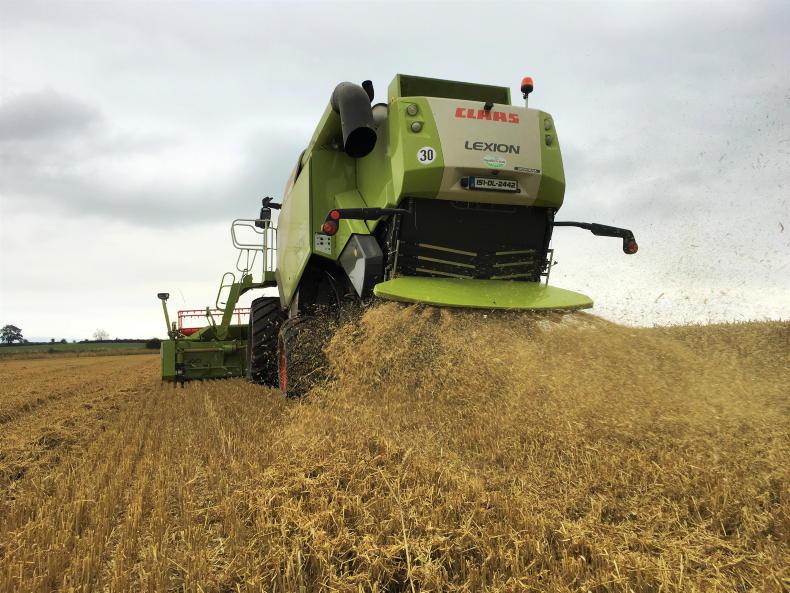
Footprint Farmer Andrew Mulhare from Balllybrittas Co Laois got the results of his soil samples last month and was surprised by some of the results, which showed decreases in P and K indexes in comparison to the 2021 soil sampling results.
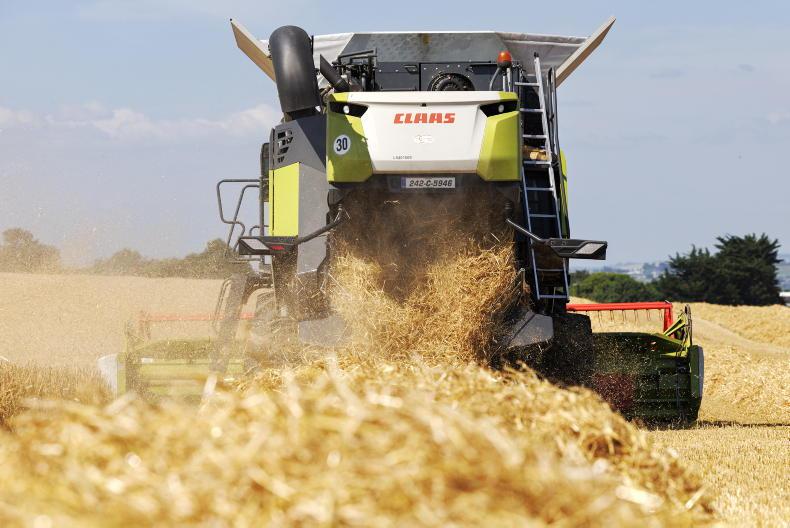
Some of Andrew’s tillage fields had dropped to Index 1 for P and K, and he plans to chop straw on these areas in the coming years in a bid to improve this.
Benefits of chopping straw:
Chopping straw is a great way to improve sustainability across tillage farms, as it can help reduce reliance on imported P and K. It has many benefits for the soil, including improving soil carbon levels and soil structure.
Chopping straw will also return significant amounts of potassium (K) to the ground. For example, 50% of total crop K returned in straw at harvest.
Straw contains mostly potassium (K), but also contains a small amount of Phosphorous (P). For a farm like Andrew’s, which has struggled with keeping K levels up, chopping straw is a great way to improve this.
Organic matter:
Chopping straw adds carbon and organic matter to the soil. Organic matter provides a food source for soil biology, and improves soil health function. However, building soil organic matter is a slow process and takes time to build soil organic carbon levels.
Research from Teagasc shows that a 10t/ha crop of winter wheat will return about 2.4/t C/ha, of which 15 to 20% of the carbon is retained in the soil. At the Teagasc site at Knockbeg, soil organic carbon levels increased from 1.63% to 1.75% in the top 15cm of soil after eight years.




SHARING OPTIONS