


Power company Energia has just announced a 4% increase in tariffs from 1 December, the latest in a long line of price increases for electricity and gas. Irish prices are rising sharply despite apparently plentiful worldwide supplies of oil, gas and coal. Ireland imports most of its energy, so prices should arguably be falling.
Moreover, Irish retail prices for both electricity and gas are higher than in the United Kingdom, where disquiet about prices has led the government to consider imposing a statutory cap on the big energy suppliers. A government report released last week argued that UK prices do not need to be so high and that policy mistakes are part of the problem. The 242-page report was prepared in just six months by Dieter Helm, a professor at Oxford and a well-known expert on the economics of the energy business.
Unnecessary costs
Helm accepts that climate change is a serious concern and that the UK government is right to be pursuing a sharp reduction in emissions. But he argues that UK policy has imposed unnecessary cost on consumers in pursuing this desirable objective. Helm’s arguments apply with even greater force in this country. The Irish Government could do worse than commission him to replicate his study for Ireland.
A fleet of fairly modern gas units is under-utilised while the Moneypoint coal station, and the even more carbon-polluting turf stations, are running full blast
The Helm report argues that the cheapest way to decarbonise electricity generation quickly in the UK is to replace coal-fired stations with gas and other technologies which produce far lower emissions. In Britain, the necessary gas stations do not exist, in contrast to Ireland, where a fleet of fairly modern gas units is under-utilised while the Moneypoint coal station, and the even more carbon-polluting turf stations, are running full blast. Meanwhile, expensive subsidies are paid to windfarms which deliver very low emissions but can offer only intermittent power.
Technology neutrality
Economists tend to favour technology neutrality in power generation, a policy regime which sets the right market structures and incentives but leaves the choice among existing and emerging technologies to the generation companies. A key component is the imposition of the appropriate carbon penalty on the various technologies, providing the low-carbon producers with the market edge.
Instead, the proliferation of state interventions, including technology-specific targets and subsidies, creates a bonanza for lobbyists and hides both the extent and the true cost of whatever emission reductions are actually achieved. The trouble is not that governments are poor at picking winners. The real problem is that losers will pick the government once the subsidy fiesta gets going.
The implication of the state determining almost all investments is that the state – and not the consumer – is now the major client
Professor Helm could almost have had Irish, rather than British, policy in mind when he wrote:
“A mass of interventions, and especially technology-specific contracts, in turn attracts vested interests. The implication of the state determining almost all investments is that the state – and not the consumer – is now the major client. Energy policy has been partly captured, with the result that our decarbonisation is slower and more costly than it need be; our security of supply is weaker than it should be; and households and industry pay too much for their energy.”
An important difference between Britain and Ireland is that security of supply is not a short-term headache in the generation sector here. So much capacity, including subsidised renewables, has been built, and so many gas units are under-utilised, that there is no need for concern until the coal and turf capacity is finally withdrawn. There is a concern though about gas supplies and it would be interesting to know if the Government has any plans to encourage the development of a liquefied natural gas (LNG) import terminal. Industry experts expect LNG cargoes to be readily available and inexpensive in the years ahead and the country is currently reliant on just one pipeline from Scotland.
Capacity
At the current rate of construction, Irish windfarm capacity will shortly begin to exceed the maximum that the system can deploy when the wind conditions are favourable. It is not possible to run the system exclusively, or even largely, on intermittent wind. New windfarms currently planned or under construction will create so much excess capacity that people will have to be paid compensation for being constrained not to produce. It is time for Government to acknowledge that Ireland has enough windfarms, that they cost too much in subsidies and that promising routes to cut emissions lie elsewhere.
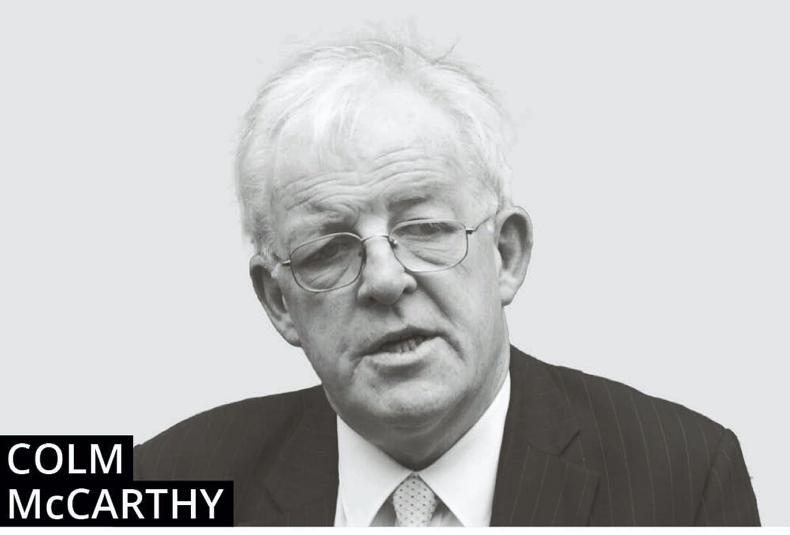
Colm McCarthy: Wind an expensive way of reducing carbon emissions


SHARING OPTIONS