



Fertiliser
The weather forecast for the next week is for a return to colder weather but still remaining very dry. Grass growth rates have been very good up to now, but this colder weather is likely to knock it back a bit.
It’s not a reason to take any action though. Ground conditions are perfect in most places and with little or no rain forecast that’s unlikely to change.
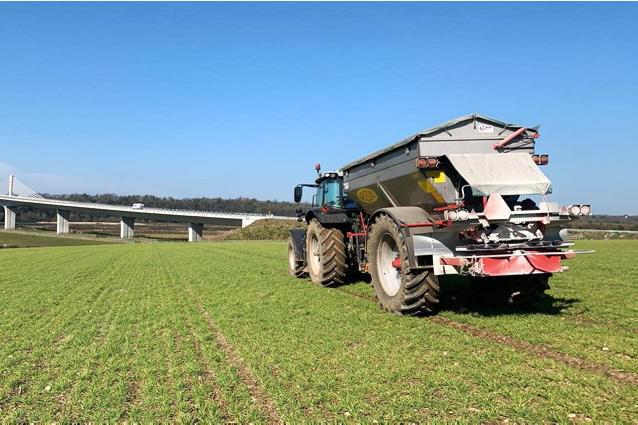
The question is though, should you spread nitrogen in cold weather? In my view, because urea is a very stable product in the soil it is worth spreading now when conditions are suitable.
This applies even if growth rates aren’t going to be amazing for the next week, and because there is no heavy rain forecast the nitrogen will remain stable and available for uptake whenever growth rates pick up.
The milder weather over the last month will have meant more background nitrogen was mobilised, and so there is more of a demand for nitrogen in the soil compared to other springs.
For those that spread nitrogen in late January, the next application will be due in or around mid-March, and given the lower outlook for growth it is fine to wait until then.
Some farmers have been asking about the best way to set up fertiliser spreaders for accurate performance. It’s covered in this week's special focus on fertiliser.
Calves
The demand for calves is pretty strong, as the export market is buoyant with smooth ferry crossings and strong demand from the veal units.
Remember, calves must be more than two weeks of age and less than six weeks of age to get on the boat, and they should be at least 50kg liveweight.
Jersey crossbreds are not wanted for export. The mart trade will start to ramp up over the coming weeks as we head towards peak calf sales.
Farmer buyers haven’t been that active yet – calf prices are relatively high and milk replacer costs are also relatively high, although cheaper than what they were.
In order to make money, dairy calf-to-beef farmers must keep both costs low. Milk replacer mixing rates can be reduced in order to lower costs, but in such cases additional meal is needed to get them to target weights.
It’s still a cheaper way of feeding calves than putting in a lot of expensive milk replacer.
Grazing targets
The target of grazing 30% of the farm by 1 February remains, although some farmers like Joe Deane in Cork are aiming to push that closer to 35% or higher.
Grazing conditions are perfect and the temptation is to push the area grazed higher than target but I would be slow to go too far.
OK, on heavier farms the principle is to graze as much as you can when you can. But on drier farms where it is unlikely that cows will be housed for a long period due to bad weather, there must be a plan in place to stretch the round out to early April.
Feeding silage at this time is not good from a cow nutrition point of view. It is essential farmers measure grass and fill in a grass budget on PastureBase or Agrinet.



SHARING OPTIONS