



Grazing
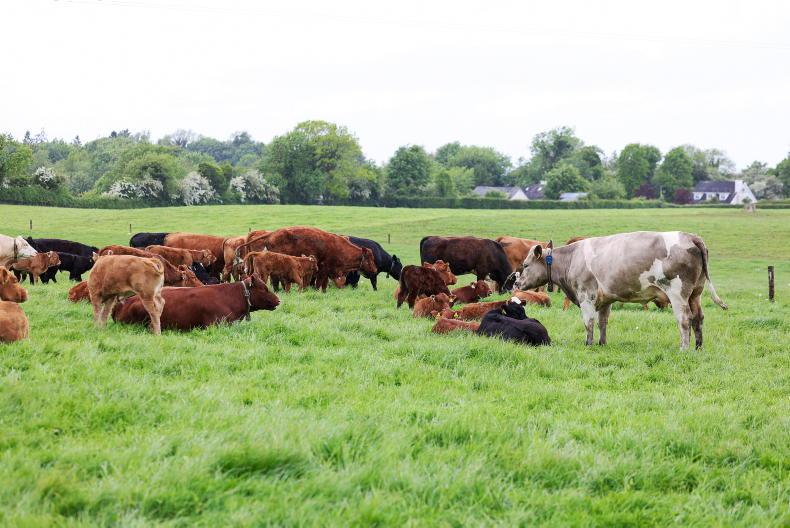
Driving across the country this week it was great to see so many freshly calved dairy herds out grazing. Ground conditions are superb in most places and farmers are making the most of it – the only gripe being that they haven’t more cows calved in order to make full use of the good conditions.
These conditions won’t be so good forever, and land will turn wet as soon as the rain comes back. It’s a good idea to use this opportunity to get some of the wetter paddocks grazed off, if possible. Prioritise the drier paddocks for grazing when the weather is more challenging.
The key thing is to use the opportunity to get as much of the farm grazed as possible. That means if it’s dry enough to have cows out by day, it’s dry enough to have them out by night.
Allocating
Correctly allocating grass is an important skill. We want cows to graze down tight in the first rotation, but we don’t want them to be hungry and to lose too much body condition score.
The good grassland farmers will count how many cows are going out, estimate what each cow is eating in dry matter terms and then estimate the cover of grass on the field before setting up the wire.
For example, 25 freshly calved cows eating 5kg DM of grass per milking is a total demand of 125kg of grass. If there is a cover of 1,300kg DM/ha in the field, divide this into the demand to work out how much area to give the cows.
So 125 divided by 1,300 is 0.0961 of a hectare. If you multiply this by 10,000 it will convert hectares to square meters.
Divide this into the width of the paddock to work out where the wire needs to go. The next and most important step is to analyse the results.
If too much grass is left behind, then either the cows are eating less grass than you think or there is a higher cover of grass on the field. The opposite is also true.
The process of early spring grazing involves constant readjustment but it is really worthwhile doing.
Milk withdrawal
A number of farmers have been asking about milk withdrawal periods for cows that didn’t get any antibiotic at drying off. Some farmers are wondering if they can send milk from these cows to the bulk tank as soon as they are finished producing colostrum i.e. two or three days after calving.
The answer is no, and the co-ops are very clear that they don’t want milk from cows calved less than four days or not having been milked at least eight times since calving.
The issues are colostrum and teat seal residues causing big problems when processing the milk and in the cleaning of the milk plant.
I would also be concerned that a mistake could be made and a cow that wasn’t recorded as having received antibiotics at drying off was accidentally given antibiotics.
If her milk goes into the tank before the withdrawal period is up it’ll probably cause the tank to fail.
It is just not worth it. Furthermore, where herds are being vaccinated against scour, feeding as much colostrum and transition milk as possible will ensure greater levels of antibody transfer to the calves.



SHARING OPTIONS