



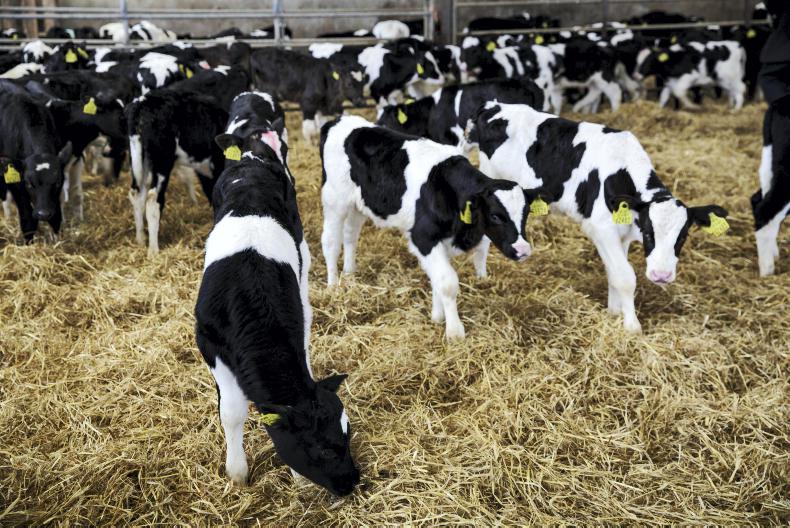
Managing milk: It’s that time of year again, when the first few milk collections will be taking place.
With more herds doing selective dry cow therapy, there will be less unsaleable milk as these cows’ milk can go to the tank a day or two before cows that were treated with antibiotics at drying off.
Make sure there are no traces of colostrum or teat sealer in the milk before it goes into the tank. It’s a good idea to test individual cows or the bulk tank where antibiotics were used.
Self-diagnosing test kits are available to purchase from most co-ops and they give good peace of mind.
Where more unsaleable milk is being produced than there are calves to drink it, it’s a good idea to store this milk for use later this month or next month. Yogurt treatment is less effective where antibiotic milk is being stored, as it won’t culture.
Milk acidifiers are commercially available, which allow milk to be stored for up to four weeks. These work out at about 10c/l of stored milk, which is good value if the alternative is to dump the milk now and then take milk out of the tank, or feed milk replacer later.
One such product is Stor-Milk Plus from Inform Nutrition. The milk can be stored in blue barrels or a clean IBC tank and should be well mixed before feeding out.
Youngstock: Early turnout for yearling or maiden heifers will help ensure they are all at target weight for breeding.
Average daily gain for these animals while eating silage and meal is low, at between 0.5kg-0.6kg per day.
While they won’t put on much weight for the first few weeks after turnout, thereafter they will thrive like mad and put on close to 1kg/head/day. It’s not easy to do where grass is scarce or land is wet. In such situations, prioritising the lowest liveweight heifers to go out first is wise.
Even grouping these in small numbers and leaving them over a big area will minimise damage and maximise liveweight gain.
Where grass is available and all the heifers can go out, treat them like the milking cows – small breaks, move them every day and use a backfence to avoid them walking back over previously grazed sections.
Where there is a lot of grass on milking platforms and farmers will struggle to get the desired area grazed in February, the heifers could graze a paddock or two and then go elsewhere, such as silage ground or heifer blocks.
They’re not an easy bunch to manage and will do more superficial damage than cows in wet weather because they do a lot more walking.
Grazing: Heavy rain over the last few days has made ground conditions more challenging, but in the main, they are still quite good on most farms.
Looking ahead, the weather forecast is reasonably good and there should be plenty of opportunities to get cows out to grass on free draining soils. It’s a lot more challenging on heavy soils and it’s really a case of making use of the facilities, such as roadways, gaps, spur roads and the cubicle shed.
There’s a time and a place for each, it’s knowing when to use them is the skill.




SHARING OPTIONS