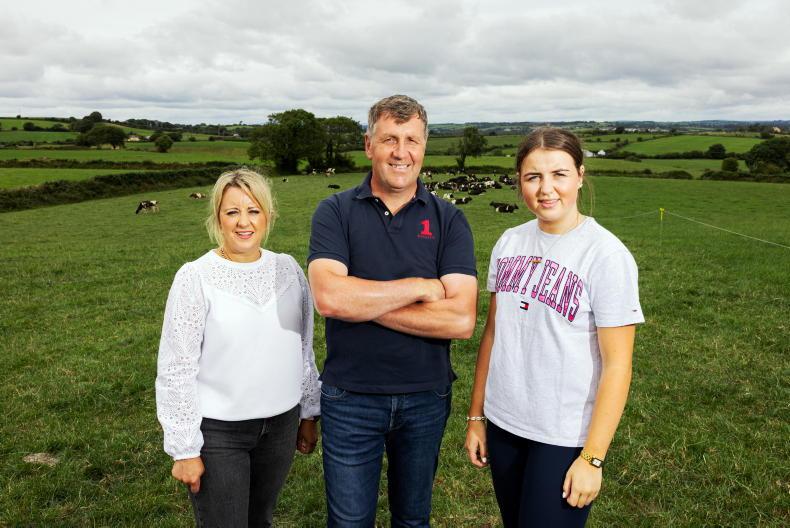
The case for Irish dairy farming begins before a word is spoken at Springpark. The drive into the Kelleher farm has that rare, immediate wow factor: ordered, welcoming and unmistakably cared for.
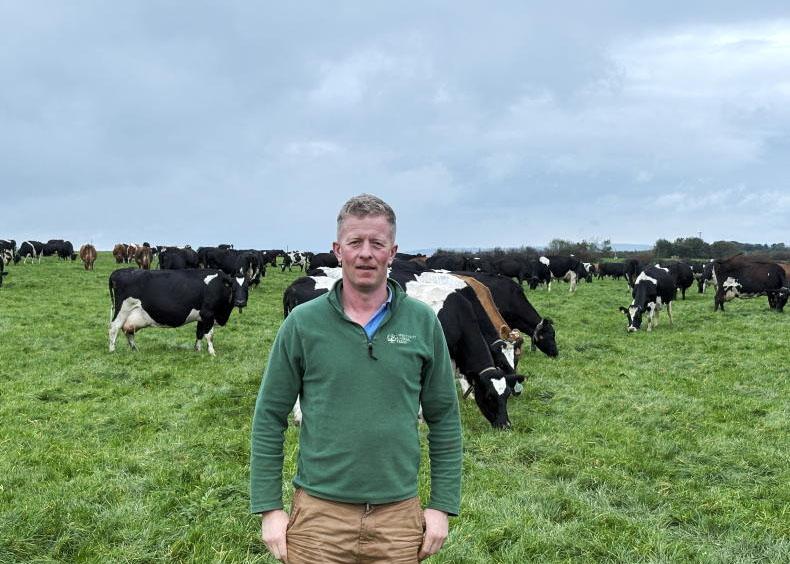
The Kelleher farm is run by Mark and Elmarie Kelleher, alongside their 15-year-old daughter Josephine. When Mark took over in 2008, Springpark was an outfarm carrying about 30 beef animals. He had never milked cows.
The opportunity provided by the new-entrant scheme allowed the Kellehers to convert to dairying in 2010.
Sixteen years later, 94 cows produced 573 kg of milk solids per cow in 2025 from 7,170 litres – placing the herd above Bandon Co-op’s top 10% benchmark for solids. This is not an inherited dairy system polished at the edges; but rather one conceived, learned and built from the ground up.
The clearest expression of that control is a number: two. Only two quarters required treatment for mastitis during all of 2025. Every cow is dry-wiped and visually checked before the cluster is attached. Health collars are a ‘game changer’ in Mark’s words, helping to identify an animal going off form, while milk-recording results are studied rather than merely filed.
Through much of the main 2025 season, the TBC remained in single figures, while the ICBF performance report recorded a weighted annual SCC of 108,000 cells/ml. Selective dry-cow therapy is equally targeted: 25% of cows received teat sealer only.
Mark’s breeding policy carries the same evidence-led stamp. The original herd included extreme Holstein genetics sourced from good herds, but fertility problems prompted a change of direction towards a more British Friesian type cow. The whole herd was genotyped three years ago, and Mark carries out his own AI. All dairy semen used is sexed, so that replacements come from the best cows.
The farm’s appearance is matched by caring for the landscape around it. Native trees and hedgerows have been planted or strengthened every year since the Kellehers took over. Waterways are fenced and buffered; rainwater is harvested for parlour washing; slurry is applied by low-emission equipment; protected urea and GPS-guided spreading reduce losses.
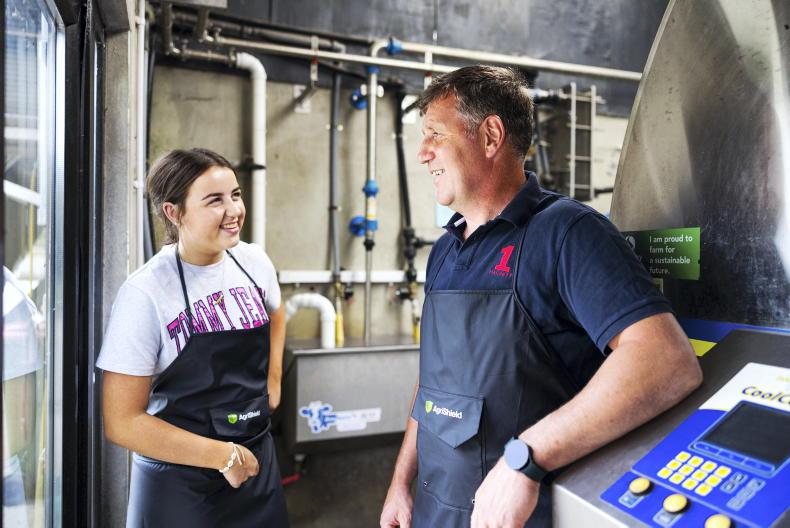
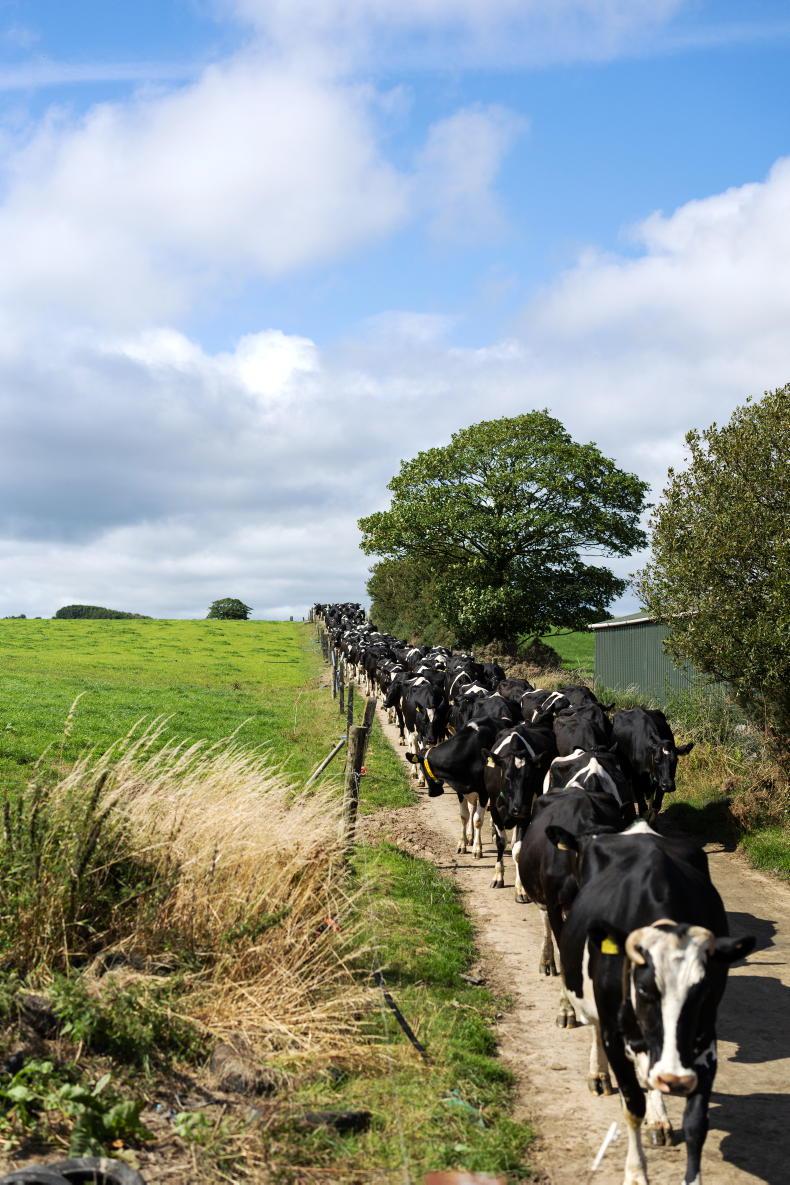
Clover is incorporated across 75% of the grazing platform; cows have a 270-day grazing season and participation in the Farming for Water EIP project and Carbery’s Biodiversity Mapping Initiative extends the focus from compliance to measurable improvement. The carbon footprint stands at 0.84kg CO2 equivalent per kg of fat and protein corrected milk.
Elmarie’s recent retirement as a bank manager opens a new chapter. Her professional eye is reflected in the farm records, paperwork and measured investment, while her contribution reaches far beyond the office: she is active in the Cork Holstein Friesian Club and co-ordinates local choirs. Mark, meanwhile, serves on the Bandon Co-op board and agricultural show committee and coaches two under-16 ladies’ football teams.
At 15, Josephine calls herself the farm ‘calf manager’ and the title is well earned. She milks, feeds and trains calves, contributes ideas on future genetics, serves with Cork YMA and has won the Cork Young Handler title. She hopes to study agricultural science.
Springpark’s first impression is powerful, but the lasting impression is deeper. Here is a farm created by a man who had never milked a cow, strengthened by a woman whose banking career brought rigour and perspective and enlivened by a daughter whose eye for cattle and horses links ambition with inheritance. It produces excellent milk, protects the place in which that milk is made and gives its family a life beyond the yard.