The new next generation herd trial at Moorepark has big aims, including validating the Economic Breeding Index (EBI), but also looking at the impacts of life without a nitrates derogation. The trial follows on from the first next generation herd trial which ran from 2013 to 2016, and while there are similar elements in the current trial, there are also big differences.
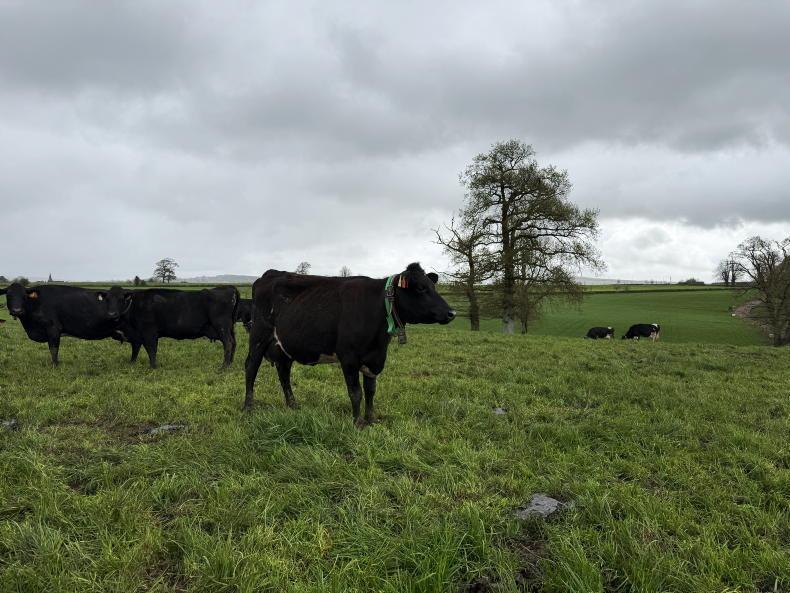
First things first, there are three genotypes or breeds being compared now: high EBI or elite EBI cows, cows with an average EBI known as national average and Jersey crossbred cows.
The current EBI of the national average cows is €139 with €35 for milk and €52 for fertility. This is slightly higher than the average EBI of the national population because the cows on the trial have a younger age profile than the national herd.
The EBI of the elite cows is €235 with €52 for milk and €109 for fertility while the Jersey crossbred cows are also high EBI, with an average of €221 with €61 for milk and €88 for fertility.
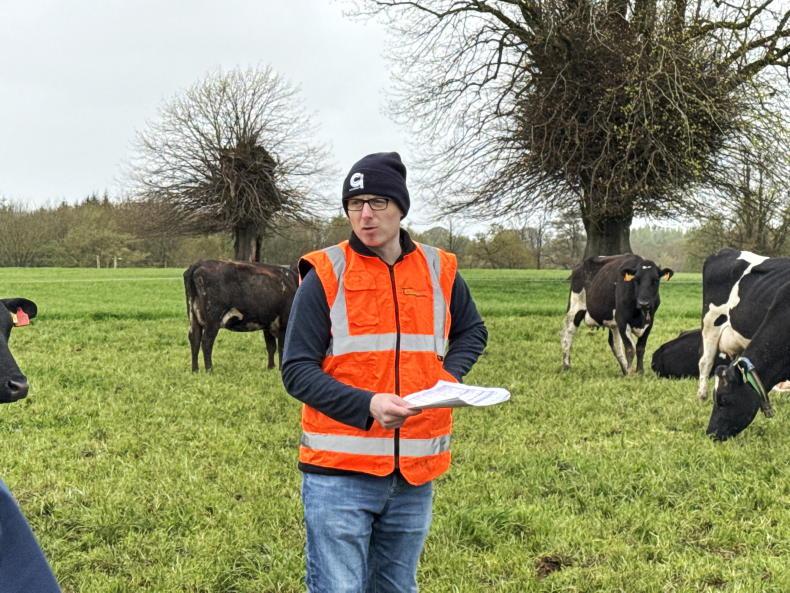
Brian McCarthy, researcher in charge of the next generation herd study at Moorepark
Researcher Brian McCarthy says the aim of the experiment is to match as closely as possible what is happening in the national herd – not just in raw EBI terms, but also in the sub-indices.
Essentially, the elite cows represent the top 5% of cows in the country, which is why they are called the next generation, because over time the national herd should become what the elite herd is today, if EBI keeps increasing.
This is why the study is described as validating EBI. In other words, if the elite cows in this experiment are not outperforming the national average herd, then something is going wrong. The Jersey crossbred cows are also elite, as their EBI reflects the EBI of the top 5% Jersey crossbred cows in the country.
Incidentally, the top 5% of crossbred cows in the country have an EBI of €234, which is just €5 behind the average EBI of the top 5% of Holstein Friesian cows.
The three different genotypes described above are assigned to three different farm systems based on stocking rates. The first system is a low stocking rate of 170kg N/ha of organic nitrogen which is the maximum stocking rate without a derogation.
At 90kg of organic nitrogen per cow (utilising the low crude protein option), this results in a stocking rate on the milking platform and overall of 1.89 cows/ha. The second system is in many ways the control system, with a stocking rate of 220kg N/ha or 2.44 cows/ha.
The third system is a higher stocking rate on the milking platform of 270kg N/ha or three cows/ha but with a lower overall stocking rate of 220kg N/ha or 2.44 cows/ha. This is achieved by having outside land, or non-milking platform land.
The cows are run in three groups based on system, 66 cows in the 170kg system, 66 cows in the 220kg system and 66 cows in the 270kg system. Importantly, the inputs in terms of meal and fertiliser are the same across all treatments and this is something which Brian acknowledges is not ideal but unavoidable.
Low stocking rate
“It could be argued that if you were running a low stocking rate you would feed less meal and apply less fertiliser because there is more grass available per cow so the extra inputs aren’t required. We are constrained in an experiment because we want to be able to identify the impacts of the different stocking rates on animal performance,” he said.
“If we fed different levels of meal or spread different amounts of nitrogen, then we wouldn’t know whether the differences in results were as a result of the different levels of feed, or due to the stocking rate differences,” he says.
The lower stocking rate treatment are allowed have higher post-grazing heights than the other treatments, which means that they will have lower grazing intensity. This mimics what generally happens in a low stocking rate scenario.
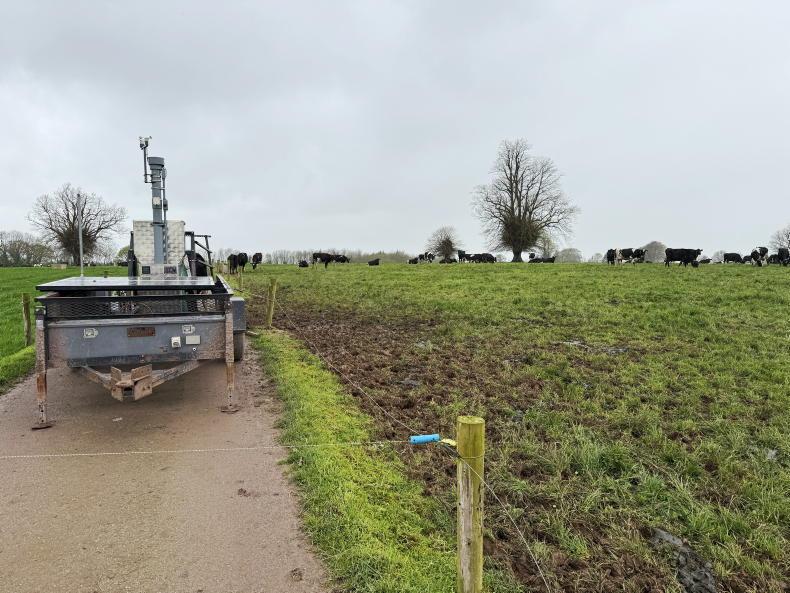
Cows are on GreenFeed machines that measure metane emissions.
In contrast, the highest stocked treatment has a lower target post grazing height of 4cm while the 220kg treatment has an in-between target residual height of 4.25cm.
Brian says that in practice, managing grass quality is much harder in the low stocking rate treatment as there are a lot more grass surpluses during the mid-season. The typical stocking rate during the summer months is 3.11 cows/ha in this treatment, with land out for reseeding and long-term silage.
“The result is that we make way more silage than we need. Last year, we made over 2.2t DM of silage per cow in the low stocking rate treatment, which is almost twice as much as we actually need,” he says.
In contrast, the other two systems made 1.02t DM in the 220kg treatment and just 0.81t DM in the high stocking rate system. Grass growth last year averaged between 13t and 13.7t DM/ha across the treatments.
Pre-grazing yield is the same for all treatments, but there are differences in grass allocations, with the lower stocked group having an allowance of 19kg DM/cow/day while the other treatments are at 18kg and 17kg DM/cow/day for the 220kg and 270kg treatments respectively.

The trial is taking place on the Dairygold farm at Kilworth, part of the Moorepark research centre.
Results
The experiment will run from 2025 to 2029 but Brian says that last year was very much about getting established and working through some of the challenges that emerge with any new large-scale experiment.
The herd had a young age profile in 2025, with 59% first calvers, 27% second calvers and 14% third calvers. There were also slight differences in age profile in the national average group for 2025 which may have impacted the results slightly.
In terms of the systems results, we can see that the milk solids yield was similar for both the 170kg and 220kg treatment at 471kg and 473kg respectively but the higher stocked group was numerically lower at 466kg MS/cow.
Brian says it would be expected that as stocking rate increases and demand for grass increases that milk yield would reduce. Concentrate feeding rate was the same across all treatments at around 815kg/cow.
The amount of nitrogen applied across all three treatments was the same at 200kg N/ha, but this is set to reduce to 185kg N/ha this year.
Table 2 outlines the results from the genotype element of the study. This shows that numerically, the highest milk solids yield was delivered by the Jersey crossbred cows at 490kg MS/cow, followed by the elite herd which produced 467kg MS/cow and the national average herd which produced 454kg MS/cow.
Milk yield and components are broadly in line with what the genetics or predicted transmitting ability (PTA) for each group would suggest. Interestingly, the PTA for milk volume is -226kg in the Jersey crossbreds and -115kg in the elite herd.
The only group with a positive PTA for milk volume is the national average herd at 15kg. Despite this, that group has the lowest level of milk solids production which really highlights the irrelevance of milk kg as a determinant of production ability.
In terms of fertility, the six week in-calf rate was highest in the Jersey crossbred group at 77.8% followed by the national average at 74.5% and the elites at 72.7%. The overall empty rate after 10 weeks of breeding was highest for the national average group at 16% followed by the elites at 14% and the Jersey crossbreds at 11%.
Brian is keen to point out that these are preliminary results from the setup year and no conclusions can be drawn from them yet.
Current performance
When the Irish Farmers Journal visited the trial at the Dairygold farm at Kilworth last week, like farmers everywhere else the big issue facing the management team was the weather and ground conditions. The low stocking rate group was grazing a field which was reseeded last year and they were doing some damage. Milk solids yield was similar among the three genotypes with the national average producing 2.16kg MS/day, the elites on 2.21kg MS/cow/day and the crossbreds on 2.22kg MS/cow/day. The similar levels of milk solids mask the fact that there are bigger differences in milk yield, with the national average herd producing 2.5l/cow/day more milk than the crossbreds. However, the higher fat and protein percent within the crossbreds and to a lesser extent the elites equalises the milk solids output. Looking ahead, with the breeding season set to commence in the coming week Brian explains that the plan is to use a mix of sexed and conventional semen across the herds. Cows will be mated based off the automated heat detection collars. Only dairy AI will be used for the first three weeks with beef AI used thereafter.
The new next generation herd trial at Moorepark has big aims, including validating the Economic Breeding Index (EBI), but also looking at the impacts of life without a nitrates derogation. The trial follows on from the first next generation herd trial which ran from 2013 to 2016, and while there are similar elements in the current trial, there are also big differences.
First things first, there are three genotypes or breeds being compared now: high EBI or elite EBI cows, cows with an average EBI known as national average and Jersey crossbred cows.
The current EBI of the national average cows is €139 with €35 for milk and €52 for fertility. This is slightly higher than the average EBI of the national population because the cows on the trial have a younger age profile than the national herd.
The EBI of the elite cows is €235 with €52 for milk and €109 for fertility while the Jersey crossbred cows are also high EBI, with an average of €221 with €61 for milk and €88 for fertility.

Brian McCarthy, researcher in charge of the next generation herd study at Moorepark
Researcher Brian McCarthy says the aim of the experiment is to match as closely as possible what is happening in the national herd – not just in raw EBI terms, but also in the sub-indices.
Essentially, the elite cows represent the top 5% of cows in the country, which is why they are called the next generation, because over time the national herd should become what the elite herd is today, if EBI keeps increasing.
This is why the study is described as validating EBI. In other words, if the elite cows in this experiment are not outperforming the national average herd, then something is going wrong. The Jersey crossbred cows are also elite, as their EBI reflects the EBI of the top 5% Jersey crossbred cows in the country.
Incidentally, the top 5% of crossbred cows in the country have an EBI of €234, which is just €5 behind the average EBI of the top 5% of Holstein Friesian cows.
The three different genotypes described above are assigned to three different farm systems based on stocking rates. The first system is a low stocking rate of 170kg N/ha of organic nitrogen which is the maximum stocking rate without a derogation.
At 90kg of organic nitrogen per cow (utilising the low crude protein option), this results in a stocking rate on the milking platform and overall of 1.89 cows/ha. The second system is in many ways the control system, with a stocking rate of 220kg N/ha or 2.44 cows/ha.
The third system is a higher stocking rate on the milking platform of 270kg N/ha or three cows/ha but with a lower overall stocking rate of 220kg N/ha or 2.44 cows/ha. This is achieved by having outside land, or non-milking platform land.
The cows are run in three groups based on system, 66 cows in the 170kg system, 66 cows in the 220kg system and 66 cows in the 270kg system. Importantly, the inputs in terms of meal and fertiliser are the same across all treatments and this is something which Brian acknowledges is not ideal but unavoidable.
Low stocking rate
“It could be argued that if you were running a low stocking rate you would feed less meal and apply less fertiliser because there is more grass available per cow so the extra inputs aren’t required. We are constrained in an experiment because we want to be able to identify the impacts of the different stocking rates on animal performance,” he said.
“If we fed different levels of meal or spread different amounts of nitrogen, then we wouldn’t know whether the differences in results were as a result of the different levels of feed, or due to the stocking rate differences,” he says.
The lower stocking rate treatment are allowed have higher post-grazing heights than the other treatments, which means that they will have lower grazing intensity. This mimics what generally happens in a low stocking rate scenario.

Cows are on GreenFeed machines that measure metane emissions.
In contrast, the highest stocked treatment has a lower target post grazing height of 4cm while the 220kg treatment has an in-between target residual height of 4.25cm.
Brian says that in practice, managing grass quality is much harder in the low stocking rate treatment as there are a lot more grass surpluses during the mid-season. The typical stocking rate during the summer months is 3.11 cows/ha in this treatment, with land out for reseeding and long-term silage.
“The result is that we make way more silage than we need. Last year, we made over 2.2t DM of silage per cow in the low stocking rate treatment, which is almost twice as much as we actually need,” he says.
In contrast, the other two systems made 1.02t DM in the 220kg treatment and just 0.81t DM in the high stocking rate system. Grass growth last year averaged between 13t and 13.7t DM/ha across the treatments.
Pre-grazing yield is the same for all treatments, but there are differences in grass allocations, with the lower stocked group having an allowance of 19kg DM/cow/day while the other treatments are at 18kg and 17kg DM/cow/day for the 220kg and 270kg treatments respectively.

The trial is taking place on the Dairygold farm at Kilworth, part of the Moorepark research centre.
Results
The experiment will run from 2025 to 2029 but Brian says that last year was very much about getting established and working through some of the challenges that emerge with any new large-scale experiment.
The herd had a young age profile in 2025, with 59% first calvers, 27% second calvers and 14% third calvers. There were also slight differences in age profile in the national average group for 2025 which may have impacted the results slightly.
In terms of the systems results, we can see that the milk solids yield was similar for both the 170kg and 220kg treatment at 471kg and 473kg respectively but the higher stocked group was numerically lower at 466kg MS/cow.
Brian says it would be expected that as stocking rate increases and demand for grass increases that milk yield would reduce. Concentrate feeding rate was the same across all treatments at around 815kg/cow.
The amount of nitrogen applied across all three treatments was the same at 200kg N/ha, but this is set to reduce to 185kg N/ha this year.
Table 2 outlines the results from the genotype element of the study. This shows that numerically, the highest milk solids yield was delivered by the Jersey crossbred cows at 490kg MS/cow, followed by the elite herd which produced 467kg MS/cow and the national average herd which produced 454kg MS/cow.
Milk yield and components are broadly in line with what the genetics or predicted transmitting ability (PTA) for each group would suggest. Interestingly, the PTA for milk volume is -226kg in the Jersey crossbreds and -115kg in the elite herd.
The only group with a positive PTA for milk volume is the national average herd at 15kg. Despite this, that group has the lowest level of milk solids production which really highlights the irrelevance of milk kg as a determinant of production ability.
In terms of fertility, the six week in-calf rate was highest in the Jersey crossbred group at 77.8% followed by the national average at 74.5% and the elites at 72.7%. The overall empty rate after 10 weeks of breeding was highest for the national average group at 16% followed by the elites at 14% and the Jersey crossbreds at 11%.
Brian is keen to point out that these are preliminary results from the setup year and no conclusions can be drawn from them yet.
Current performance
When the Irish Farmers Journal visited the trial at the Dairygold farm at Kilworth last week, like farmers everywhere else the big issue facing the management team was the weather and ground conditions. The low stocking rate group was grazing a field which was reseeded last year and they were doing some damage. Milk solids yield was similar among the three genotypes with the national average producing 2.16kg MS/day, the elites on 2.21kg MS/cow/day and the crossbreds on 2.22kg MS/cow/day. The similar levels of milk solids mask the fact that there are bigger differences in milk yield, with the national average herd producing 2.5l/cow/day more milk than the crossbreds. However, the higher fat and protein percent within the crossbreds and to a lesser extent the elites equalises the milk solids output. Looking ahead, with the breeding season set to commence in the coming week Brian explains that the plan is to use a mix of sexed and conventional semen across the herds. Cows will be mated based off the automated heat detection collars. Only dairy AI will be used for the first three weeks with beef AI used thereafter.
SHARING OPTIONS