On the face of it, running a dairy business is relatively straightforward. The milk gets delivered in one door, it’s pasteurised and processed into a product and it goes out another door in a carton or a crate.
The price that the co-op can sell the end product for, will largely determine how much they can pay for the milk that comes in the door. The bit in between is also a factor because if the processor can keep the processing costs low, then they can pass more of the end product price back to the farmer.
Co-ops also have to make a margin and this can vary between the different co-ops but is generally around the 2% mark.
This means that for example, 2% of total revenue is retained as margin with the rest paid out in running costs and milk price.
Usually, this margin is set in place by the co-op’s banks, who regularly ensure that as part of any loan agreement, a covenant is signed that the margin will be, for example, between 1.5% and 2.5% or tighter.
These banking covenants are in place to ensure that there will always be enough liquidity in the system to pay back the loan.
Co-ops with little or no debt probably won’t have margin covenants, but like any business will want to ensure a healthy margin in order to have capital available for re-investment, growth, or deal with any surprises.
They will also want to maintain a sufficient margin to ensure that if they do decide to borrow money in the future, they have a track record of achieving profit targets to point to.
In this simplistic view of a dairy business, there are factors both within and outside of the control of the co-op such as what product to make and the cost of making it.
The end product price is largely determined by the market at the time of sale, but, obviously the skill of the marketing and sales teams will have a part to play in that also.
Irish product mix
A key factor in the performance of any business, farm or dairy co-op is the price achieved for outputs.
For most dairy co-ops, the output price is largely determined by their product mix, with different products commanding different prices and these can often fluctuate and change over time.
Decisions around product mix are, what I would consider to be generational decisions, as in they are made once a generation.
The last 10 years has been transformative for the dairy sector in Ireland as a result of the removal of milk quotas in 2015.
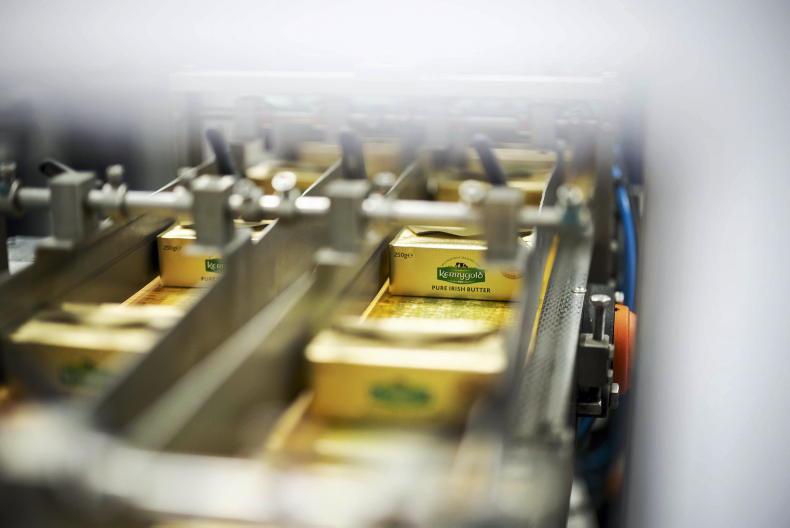
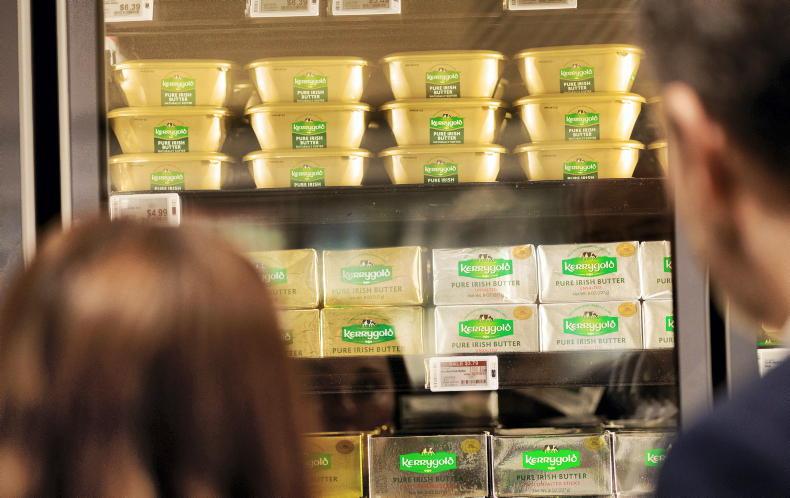
Kerrygold butter. / Ornua
As a result, individual co-ops have had to make major decisions around investment in production that may not be made again for another 30 or 40 years. The result is that co-op management are living with these decisions now, as they are with decisions made by previous generations of co-op leaders.
To be fair, product mix does evolve over time.
Cottage industry
For most of Ireland’s dairy history, butter was the main product. Up to the late 1800s, this was a true cottage industry as the butter was churned by farmers (usually the role of women) and sold to butter traders and the skim was used to feed the pigs or sold to the poor. For much of the 19th century, Cork was the butter trading capital of the world.
The Irish co-operative movement began in the 1890s under Horace Plunkett, it’s aim being to break the stranglehold of the butter traders and give farmers a fair price for their butter by working collectively to make and market their dairy produce.
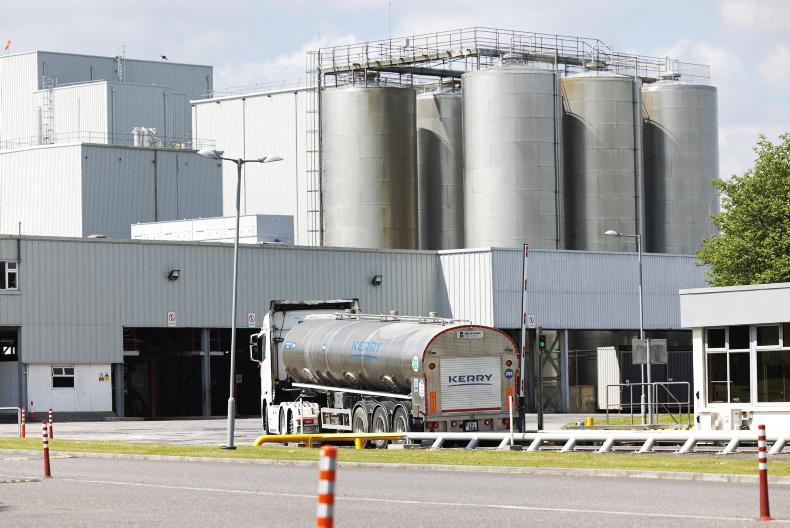
Kerry Dairy Ireland Plant in Charleville, Co Cork. \ Donal O'Leary
The 20th century saw the introduction of cheese making, notably cheddar which complemented butter in that it has a long shelf life.
By the mid-20th century, advances in technology leading to the introduction of spray driers was revolutionary in the sense that skim could now be dried and sold as a powder, increasing its value and market potential.
Table 1 highlights the trends in volume and value of key Irish dairy products over the last five years.
The data is sourced from Bord Bia and the CSO and it shows that on a value basis, butter and cheese remain Ireland’s largest value generating dairy products accounting for 47% of all export value in 2024.
Aside from branded products like Kerrygold butter and Dubliner or Kerrygold cheese, the majority of the butter and cheese manufactured in Ireland is commodity based and sold to global food companies for further processing or slicing.
The by-products of the manufacturing process of these core products make up the rest of the product mix. Skim has already been mentioned, but casein and whey are also significant products in the portfolio. Between them, they make up almost 20% of the product mix by volume and 18% by value in 2024.
Whole milk powder, fat filled milk powder and specialised powders including key ingredients for infant milk formula make up the majority of the other products produced by Irish co-ops.
Larger processors such as Tirlán, Lakeland, Kerry Dairy Ireland and Dairygold are highly diversified and manufacture a broad range of products.
Both Dairygold and more notably Tirlán have invested significantly in shorter shelf-life cheese, with the Dairygold and Tine joint venture in Mogeely and the Tirlán and Royal A-Ware joint venture in Belview.
Product mix
Other co-ops tend to be more specialist in their product mix. For example, Carbery Group, owned by the four west Cork co-ops, doesn’t make any butter and instead focusses on cheese.
The company has invested in processing the whey into the high value whey protein isolate.
Aurivo co-op doesn’t make any cheese and instead focusses on butter and powders.
Meanwhile, Kerry Dairy Ireland has a branded dairy business with strong brands particularly in cheese in both Ireland and the UK to accompany its dairy ingredients business.
Most other co-ops don’t have brands, with exception of liquid milk brands which are generally low margin businesses.
Changing fortunes
Specific ingredients go through periods of high and low prices depending on supply and demand. Butter is a really good example of this. For decades, butter was seen as a low value product with demand in terminal decline as consumers were told to eat less fats.
Over the last decade, the fortunes for butter have changed considerably. In the decade prior to 2016, butter prices in the EU ranged between lows and highs of €2,500/t and €4,000/t. Since then, butter prices have ranged between €4,000/t and €8,000/t.
What’s notable with butter is that while on average the prices are higher, so too are the swings which leads to greater volatility.
While butter prices have increased compared to where they were a decade ago, the real increase in demand is for high quality protein powders such as whey protein isolate (WPI) and 80% whey protein concentrate (WPC-80).
High-cost proteins
Once the preserve of body builders, these high-cost proteins manufactured from refined whey, are now part of mainstream diets. Not only that, but their consumption is growing, particularly among older people looking to maintain muscle mass into old age and among people using weight loss medications.
The latter cohort has led to a spike in WPI demand from food manufacturers looking to fortify their products with protein. This is because people on weight loss medication consume a lot less food, so what food they do eat needs to be high quality.
Because whey is a by-product of cheese, in order to have whey you must make cheese. However, simply having a whey stream does not guarantee a high price. The big money is for highly refined and highly concentrated whey which requires intensive processing and filtration to remove the solids and moisture.
There are only a handful of co-ops in Ireland with the capacity to do this at scale. Word on the ground is that Tirlán is due to announce a major expansion of its WPI plant based at Ballyragget. Without a WPI or WPC-80 plant to process a whey stream, the value of whey is low and a lot of whey actually ends up in anaerobic digestion plants.
As market prices for butter, cheese and powders have all fallen over the last few months, there is extra scrutiny on product mix and diverting milk to products that offer the best return. This is easier for some co-ops than others.
What is not easy is predicting future demand for certain products and being ahead of the competition. This is where the Venn diagram of good governance, good strategy and good execution all meet.
On the face of it, running a dairy business is relatively straightforward. The milk gets delivered in one door, it’s pasteurised and processed into a product and it goes out another door in a carton or a crate.
The price that the co-op can sell the end product for, will largely determine how much they can pay for the milk that comes in the door. The bit in between is also a factor because if the processor can keep the processing costs low, then they can pass more of the end product price back to the farmer.
Co-ops also have to make a margin and this can vary between the different co-ops but is generally around the 2% mark.
This means that for example, 2% of total revenue is retained as margin with the rest paid out in running costs and milk price.
Usually, this margin is set in place by the co-op’s banks, who regularly ensure that as part of any loan agreement, a covenant is signed that the margin will be, for example, between 1.5% and 2.5% or tighter.
These banking covenants are in place to ensure that there will always be enough liquidity in the system to pay back the loan.
Co-ops with little or no debt probably won’t have margin covenants, but like any business will want to ensure a healthy margin in order to have capital available for re-investment, growth, or deal with any surprises.
They will also want to maintain a sufficient margin to ensure that if they do decide to borrow money in the future, they have a track record of achieving profit targets to point to.
In this simplistic view of a dairy business, there are factors both within and outside of the control of the co-op such as what product to make and the cost of making it.
The end product price is largely determined by the market at the time of sale, but, obviously the skill of the marketing and sales teams will have a part to play in that also.
Irish product mix
A key factor in the performance of any business, farm or dairy co-op is the price achieved for outputs.
For most dairy co-ops, the output price is largely determined by their product mix, with different products commanding different prices and these can often fluctuate and change over time.
Decisions around product mix are, what I would consider to be generational decisions, as in they are made once a generation.
The last 10 years has been transformative for the dairy sector in Ireland as a result of the removal of milk quotas in 2015.

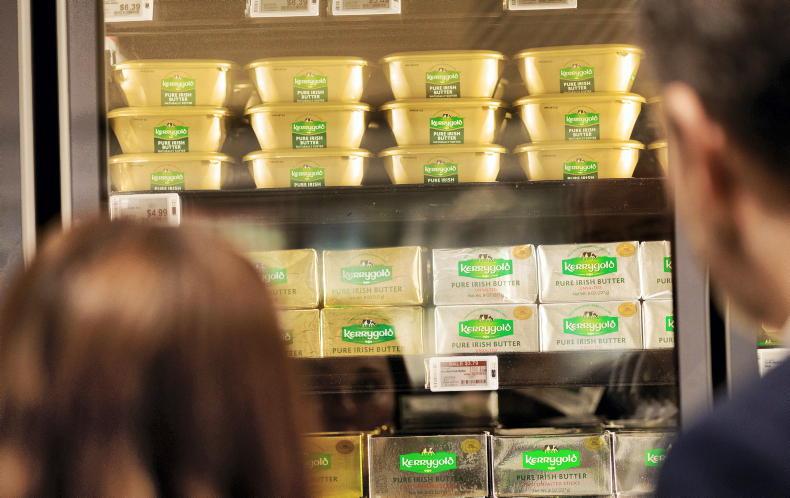
Kerrygold butter. / Ornua
As a result, individual co-ops have had to make major decisions around investment in production that may not be made again for another 30 or 40 years. The result is that co-op management are living with these decisions now, as they are with decisions made by previous generations of co-op leaders.
To be fair, product mix does evolve over time.
Cottage industry
For most of Ireland’s dairy history, butter was the main product. Up to the late 1800s, this was a true cottage industry as the butter was churned by farmers (usually the role of women) and sold to butter traders and the skim was used to feed the pigs or sold to the poor. For much of the 19th century, Cork was the butter trading capital of the world.
The Irish co-operative movement began in the 1890s under Horace Plunkett, it’s aim being to break the stranglehold of the butter traders and give farmers a fair price for their butter by working collectively to make and market their dairy produce.

Kerry Dairy Ireland Plant in Charleville, Co Cork. \ Donal O'Leary
The 20th century saw the introduction of cheese making, notably cheddar which complemented butter in that it has a long shelf life.
By the mid-20th century, advances in technology leading to the introduction of spray driers was revolutionary in the sense that skim could now be dried and sold as a powder, increasing its value and market potential.
Table 1 highlights the trends in volume and value of key Irish dairy products over the last five years.
The data is sourced from Bord Bia and the CSO and it shows that on a value basis, butter and cheese remain Ireland’s largest value generating dairy products accounting for 47% of all export value in 2024.
Aside from branded products like Kerrygold butter and Dubliner or Kerrygold cheese, the majority of the butter and cheese manufactured in Ireland is commodity based and sold to global food companies for further processing or slicing.
The by-products of the manufacturing process of these core products make up the rest of the product mix. Skim has already been mentioned, but casein and whey are also significant products in the portfolio. Between them, they make up almost 20% of the product mix by volume and 18% by value in 2024.
Whole milk powder, fat filled milk powder and specialised powders including key ingredients for infant milk formula make up the majority of the other products produced by Irish co-ops.
Larger processors such as Tirlán, Lakeland, Kerry Dairy Ireland and Dairygold are highly diversified and manufacture a broad range of products.
Both Dairygold and more notably Tirlán have invested significantly in shorter shelf-life cheese, with the Dairygold and Tine joint venture in Mogeely and the Tirlán and Royal A-Ware joint venture in Belview.
Product mix
Other co-ops tend to be more specialist in their product mix. For example, Carbery Group, owned by the four west Cork co-ops, doesn’t make any butter and instead focusses on cheese.
The company has invested in processing the whey into the high value whey protein isolate.
Aurivo co-op doesn’t make any cheese and instead focusses on butter and powders.
Meanwhile, Kerry Dairy Ireland has a branded dairy business with strong brands particularly in cheese in both Ireland and the UK to accompany its dairy ingredients business.
Most other co-ops don’t have brands, with exception of liquid milk brands which are generally low margin businesses.
Changing fortunes
Specific ingredients go through periods of high and low prices depending on supply and demand. Butter is a really good example of this. For decades, butter was seen as a low value product with demand in terminal decline as consumers were told to eat less fats.
Over the last decade, the fortunes for butter have changed considerably. In the decade prior to 2016, butter prices in the EU ranged between lows and highs of €2,500/t and €4,000/t. Since then, butter prices have ranged between €4,000/t and €8,000/t.
What’s notable with butter is that while on average the prices are higher, so too are the swings which leads to greater volatility.
While butter prices have increased compared to where they were a decade ago, the real increase in demand is for high quality protein powders such as whey protein isolate (WPI) and 80% whey protein concentrate (WPC-80).
High-cost proteins
Once the preserve of body builders, these high-cost proteins manufactured from refined whey, are now part of mainstream diets. Not only that, but their consumption is growing, particularly among older people looking to maintain muscle mass into old age and among people using weight loss medications.
The latter cohort has led to a spike in WPI demand from food manufacturers looking to fortify their products with protein. This is because people on weight loss medication consume a lot less food, so what food they do eat needs to be high quality.
Because whey is a by-product of cheese, in order to have whey you must make cheese. However, simply having a whey stream does not guarantee a high price. The big money is for highly refined and highly concentrated whey which requires intensive processing and filtration to remove the solids and moisture.
There are only a handful of co-ops in Ireland with the capacity to do this at scale. Word on the ground is that Tirlán is due to announce a major expansion of its WPI plant based at Ballyragget. Without a WPI or WPC-80 plant to process a whey stream, the value of whey is low and a lot of whey actually ends up in anaerobic digestion plants.
As market prices for butter, cheese and powders have all fallen over the last few months, there is extra scrutiny on product mix and diverting milk to products that offer the best return. This is easier for some co-ops than others.
What is not easy is predicting future demand for certain products and being ahead of the competition. This is where the Venn diagram of good governance, good strategy and good execution all meet.
SHARING OPTIONS