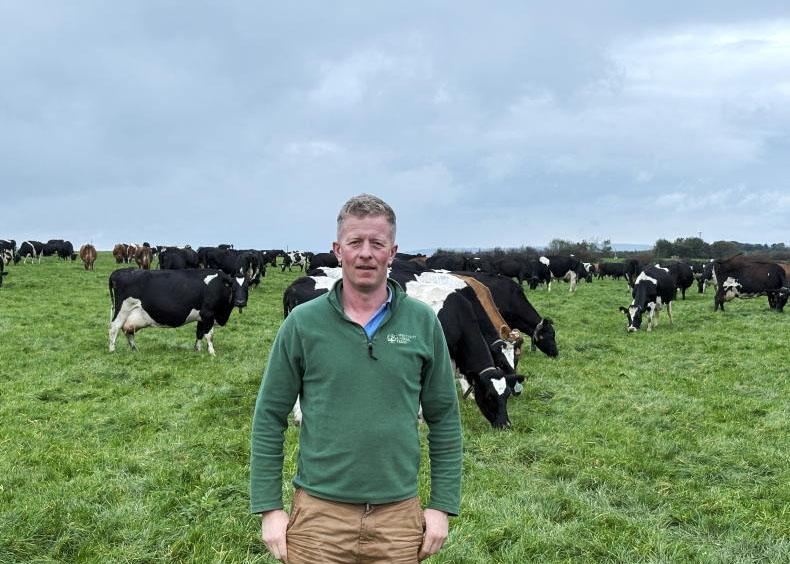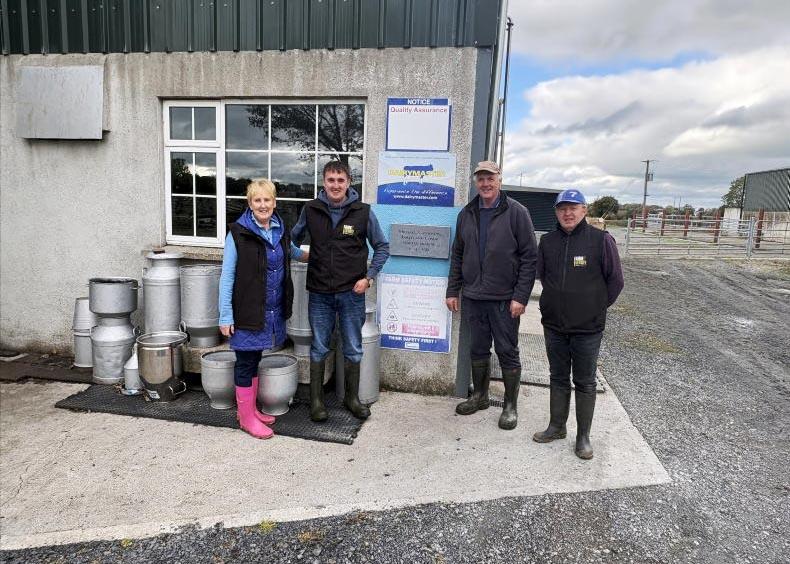
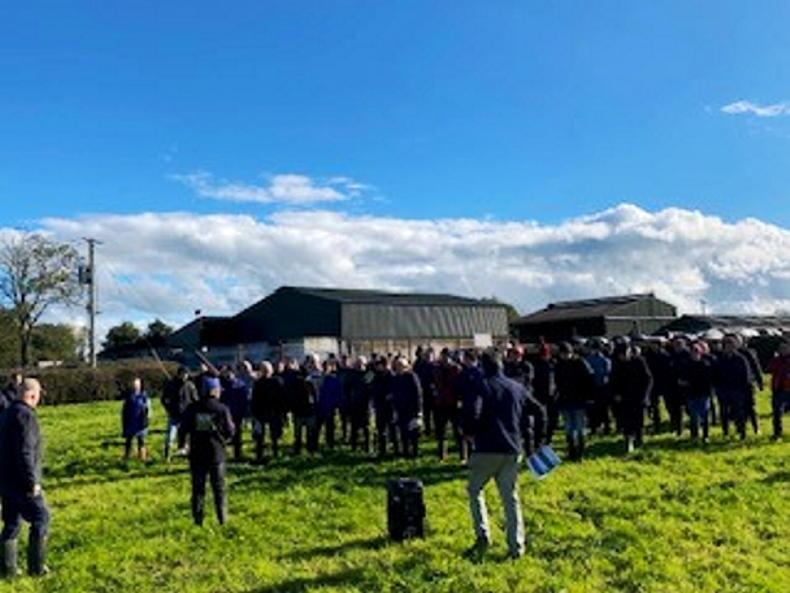
Over 150 farmers attended Tirlán’s FarmElevate farm walk in collaboration with Teagasc on the farm of Joe, Catherine and Michael Murphy in Bennettsbridge, Co Kilkenny on 20 October. The farm is a partnership between Joe Murphy and his parents, Michael and Catherine with a herd of 129 cows plus all replacements reared on the farm.
Historically, a beef and sheep farm, the Murphys converted to dairy in 2019, allowing Joe to return home to work alongside his parents.
Joe undertook the Professional Diploma in Dairy Farm Management with Teagasc in the years leading up to the conversion, working on leading dairy farms as part of the course to learn the basics of profitable grazing systems before embarking on the conversion.
Seamus Kearney, Teagasc Tirlán Joint Programme Co-ordinator, pointed out that the farm has been highly profitable in the initial years since conversion from beef, averaging €1,100 net profit per cow for the years 2022 to 2025.
Seamus noted that this overall level of profitability is €600/cow above the average Tirlán supplier during the same period.
At the same time, the farm has a very low carbon footprint (0.74 kg CO2 eq/kg fat and protein corrected milk) and Nitrogen balance (94kgN/ha), and is therefore leading the way in terms of meeting the sustainability targets for dairy farms within the programme.
The function of the event was to showcase the farm system and technologies involved in delivering this level of profitability hand in hand with improved environmental outcomes.
The Murphy family are farming 82 hectares (ha) with a milking platform of 43.5ha. The farm has an overall stocking rate of 2.0 LU/ha (177kg Organic N/ha), with the milking platform stocked at 3 cows/ha. The farm is well set up with an 18-unit milking parlour, a good roadway network and adequate cubicles and slurry storage.
There were 129 cows, 38 in-calf heifers and 30 calves on the farm this year. The family provide all the labour for the farm between Michael, Joe and Catherine. The key statistics delivering the high level of financial performance for the farm compared to the Tirlán co-op average are outlined in Table 1.
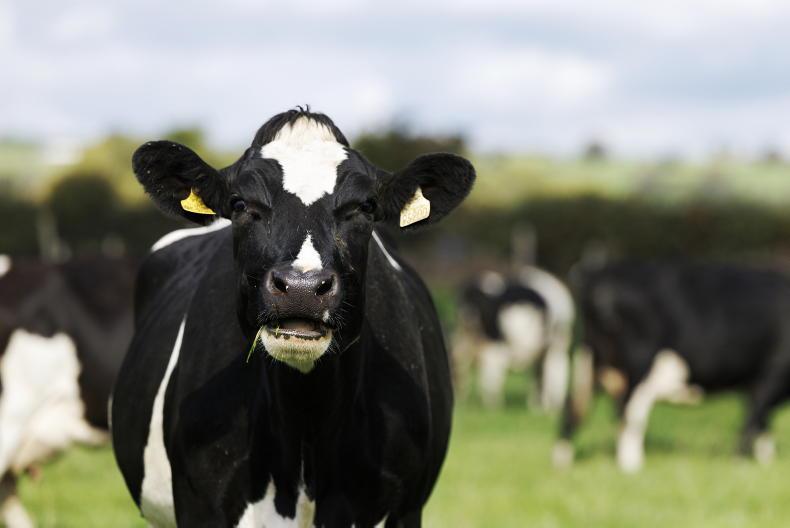
The high EBI herd is the main factor driving the higher profitability level of the farm.
The herd is calved compactly with a median calving date of 11 February and deliver high milk composition which is substantially ahead of the Co-op average.
The high milk composition increased milk price by 2.9c/l above the Co-op average and the herd are producing an additional 109kg MS during the last three years compared to the Co-op average.
With a milking platform stocking rate of 3.0 cows/ha, and growing 12.5-13 T DM/ha, the Murphys are getting 3.5 to 4 T grass DM into every cow to achieve high levels of animal performance.
Critically from a cost and profitability viewpoint, the additional herd performance was achieved while feeding 106kg less concentrate per cow than the average herd during 2025.
The additional performance was instead achieved by increasing grazed grass utilisation based on extending the grazing season by 47 days more than the average herd.
Despite the high level of performance, the family also value and protect work-life balance.
Contractors are used for all the main tractor work.
Milking starts every morning at 7am and each evening between 3.30 and 4pm. From August onwards each year, the herd are only milked once-a-day on Sundays to create more free time away from the farm.
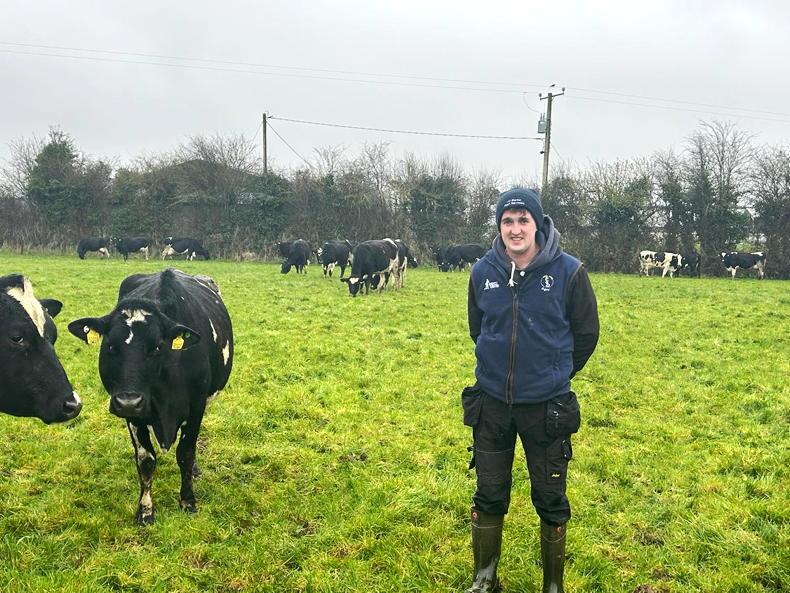
The Murphys are now dropping to 11 milkings per week for the remainder of this year by also milking once-a-day on Wednesdays and Fridays as well.
Michael said “We milk a little later on the days we’re milking once-a-day and a bit earlier on the following morning. We have noticed no loss in production by doing this during the last few years and it reduces the workload.”
Initially, the Murphys started the herd by buying high EBI Friesian cows from three farms which had been involved in previous monitor farm programmes. Seamus Kearney pointed out that this gave them a very good base to build from.
“The lads went out and bought high EBI cows from good herds and that has been the basis for the performance achieved here. They basically bought an intercounty cow,” said Seamus.
Since then, they have been using high EBI Holstein-Friesian and Jersey genetics and have been gaining an additional €10 per year in EBI.
Bull selection for replacements is based on picking the best cows from milk recording and using sexed dairy semen only.
The remaining cows are bred with Aberdeen Angus beef sires. All heifers on the farm are consequently AI bred and 100% calve between 22 and 26 months of age.
Although the herd is still young (3.5 lactations on average), they delivered over 530kg of milk solids per cow in 2025 within a low-cost grass-based system with a band 2 cow in terms of Organic N.
The milk subindex of the herd is €28 while the fertility subindex is €68. The herd has an average calving interval of 365 days and they have delayed the start of calving from 17 January to 24 January in the last two years. The six-week calving rate for the herd is 85% and average somatic cell count (SCC) was 120,000 cells/ml in 2025.
All the land has been reseeded with grass clover swards and the farm is now reaching optimum soil fertility to maximise grass growth.
Joe attributes a lot of the credit for the quality of grazing swards to his father Michael.
“Dad has always invested heavily in reseeding on the farm and that has given us a great start in terms of growing good quality grass and feeding dairy cows,” said Joe.
Joe walks the farm weekly during the main grazing season and sometimes more frequently when required.
He does a feed budget in autumn and makes sure there is an overall average farm cover of 1,000kgDM/ha available at the start of calving in late January. The herd are turned out to grass day and night as they calve, with 3-4kg of concentrate fed in spring.
The swards on the farm have a high clover content and this has allowed the Murphys to cut back chemical N use to 175kg/ha in 2025.
In addition to reseeding, paddocks on the farm are oversown in mid-April each year to increase clover content.
The farm is on a very free draining soil type and frequently suffers during dry summers in recent years.
While many farmers have found 2026 very challenging, Joe pointed out that the summer of 2025 was actually more difficult as the drought effect kicked in much earlier.
The herd were fed 1,200kg of concentrate per cow in 2025 and this will be lower this year (1,100kg/cow).
Seamus estimates that the farm lost at least 1.5 TDM/ha in grass growth during July and August and the outside blocks weren’t growing either.
As part of the FarmElevate programme, the Murphys completed a forage budget in August this year. Bryan Harte, Senior Technical Manager at Tirlán outlined the options explored by the Murphys to address the drought effect on the farm this summer.
Brian said that although this farm usually has an early turnout, dry summers mean that they want to have enough feed for five months between summer and winter as a contingency for all the animals.
“When we measured the silage and did the feed budget on PastureBase, we realised we only had 100 days feed in the yard, or 66% of what was required” said Bryan.
“Next they looked at a range of options to meet the deficit (Table 2).
Having looked at the various options, the Murphys decided to sell 20 cows in August to bring down their milking platform stocking rate and feed requirements. They also bought 50 bales of straw and 100 bales of hay.
They introduced palm kernel and soy hulls in addition to increasing parlour ration from early July onwards, putting the herd on a diet of 6.5kg meal, 6kg silage and 6kg of grass during the dry conditions.
“When you look at the results, no one thing solved the feed deficit and it was a mixture of solutions.
Selling the cows put extra feed onto the farm for the remaining animals and the purchase of the straw and hay helped as well” said Seamus.
As it transpired, the farm has seen excellent growth since September, which has allowed 150 extra silage bales to be produced.
They won’t now need to feed extra meal to the herd during the winter months.
By selling the cows early, they reduced the feed cost but probably lost approximately €12,000 in milk receipts for the year, so the total cost of the drought is still approximately €17,000 or €150/cow for the year.
Bryan suggested that a lot of other farms are still tight on winter feed and would benefit, even at this late stage, from completing a similar fodder planning exercise now.
To overcome summer drought, the Murphys have also put red clover silage reseeds on an out block and they hope to use this to produce affordable high-quality silage bales to buffer feed during spring and summer when required.
In addition to the low carbon footprint of the farm, there was a significant focus on water quality at the event.
The farm is part of the Nore catchment where nitrogen loss from agricultural land is a significant pressure.
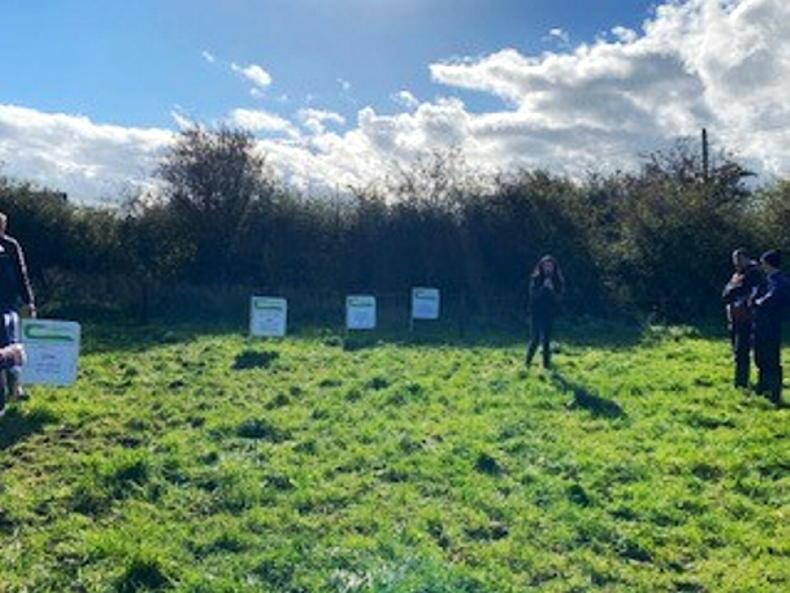
Kate Morrissey from Tirlán provided a demonstration of the buffer zone requirements for farms in derogation.
All streams on the farm have been fenced off to 1.5 metres back from the top of the riverbank.
During the year, chemical fertiliser is not spread within four metres of the stream and a buffer of eight metres is applied for slurry, soiled water and farmyard manure.
In the first and last two weeks of the closed period, a 10-metre buffer strip is used for slurry to reduce the risk of losses. With both white and red clover swards on the farm, chemical fertiliser use was reduced to 175kg N/ha last year.
The farm also has enough slurry storage to meet the increased slurry storage requirements for dairy farms which are due to begin in 2028.
This allows the Murphys to use slurry to replace chemical fertiliser during the year and improve overall nutrient use efficiency.
Low emission slurry spreading and protected urea fertiliser are also used all year to reduce nutrient losses from the farm.
This was an excellent event and was well attended by local farmers.
The Murphys have developed a very simple and profitable system since becoming dairy farmers and it is super to see two generations working so effectively together.
The farm clearly shows how small incremental improvements in grassland management, breeding and infrastructure and good cost control can strengthen both profitability and environmental performance on Irish dairy farms.
Well done to all involved.