



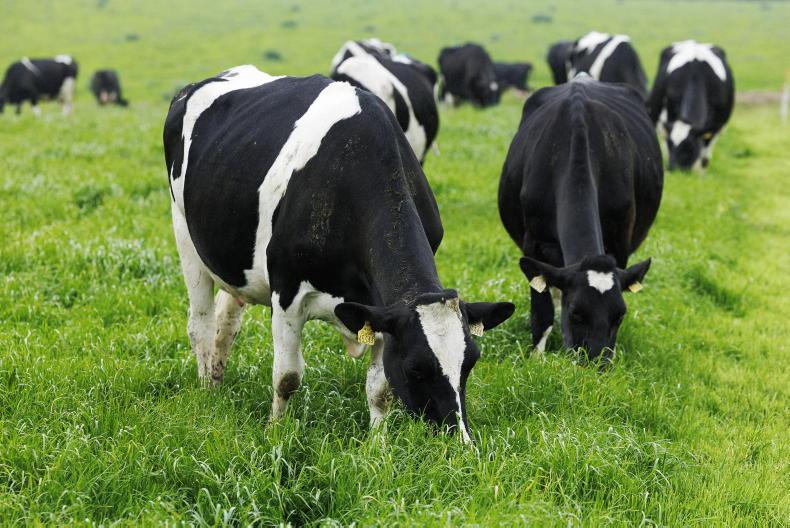
Grass quality at this time of year is always an uphill battle but the high growth rates over the last three weeks have made this task all the more challenging.
The level of sustained high growth rates was somewhat unexpected, as many had felt we had passed the normal cut-off point of late April or early May for this typical explosion of grass.
The majority of farmers were caught by surprise and as a result were slower to act in that first week of 100kg/day plus growth rates.
Paddocks that had covers of 1,300kg DM/ha were suddenly gone to 1,800kg DM/ha in the space of a few days and the quality of those swards dropped.
It’s been a matter of playing catch up ever since and with the good weather and high temperatures forecast for this weekend, growth is likely to remain high for at least another week or two.
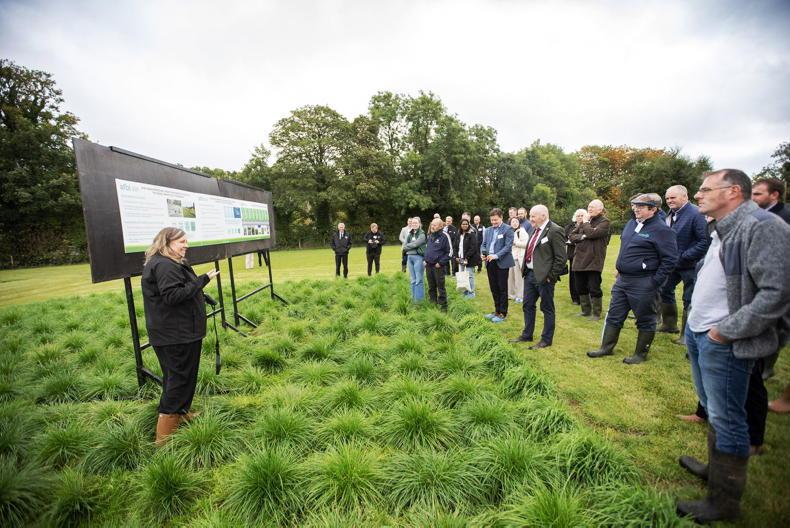
At a discussion group meeting in Tipperary earlier this week, staying on top of grass quality and high growth rates over the coming weeks was front and centre of the discussion.
Surpluses
Like the rest of the country, the farmers in attendance were surprised at how well growth had continued with some members of the group who are farming on drier ground, saying it was the best level of sustained growth they had seen in years.
The first port of call by all the farms when growth took off, was to drop meal feeding levels. If the cover per cow on the farm was anywhere close to 170kg/cow, meal feeding was dropped to a maximum of 2kg.
Demand on these farms was already high, as ground for reseeding had been taken out and as a result stocking rate was up. This meant the only way of managing quality was to take out surpluses as bales in order to keep cover per cow down.
As we look forward, it’s important to note the high growth rates we’re seeing now won’t last forever. It’s likely there will only be another one or two weeks of growth above 80kg/day.
Therefore, it’s important to get demand under control and start acting faster when it comes to surpluses.
On paddocks where covers have gone ahead of cows and the paddock has been marked for bales today, leaving the sward to ‘bulk up’ for a week will have a big impact on the rotation.
The paddock is left idle for a week while it bulks up; it will take another three to four days after baling to recover and another three weeks before cows are back into it.
In total, that paddock is essentially out of the rotation for almost four and a half weeks. Should growth rates fall back to the 50s or 60s in two weeks’ time, those paddocks taken out for bales will have put real pressure on the system.
The consensus from the meeting was to cut those paddocks as soon as they have been marked for bales.
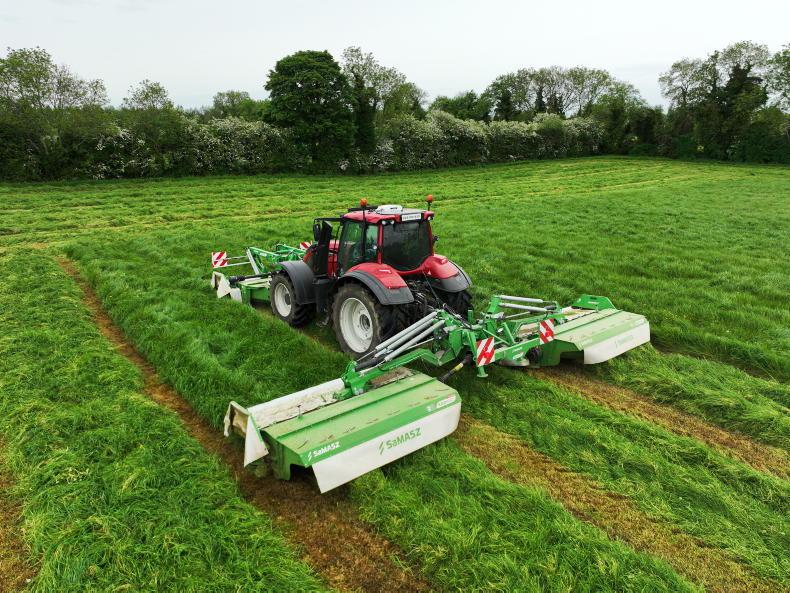
Mowing straight away, regardless of weather conditions or the cover in that paddock will mean the after grass is already in recovery mode and that paddock can be back in the rotation in just over three weeks.
Weather didn’t dictate if the paddock should be mowed or not as the grass can sit in the field for a day or two and then bale at the earliest opportunity.
In some cases, farms were making just one to two bales to the acre, but they felt the cost of not doing it was far greater to the system.
In terms of actual costs, getting the contractor in straight away is not going to have a major effect. By and large, the contractors are charging per bale and therefore, there won’t be any savings whether they cut 15 or 30 bales in that paddock.
The real cost will be felt by not taking out surpluses, letting grass quality suffer or else taking out surpluses too late and running into a grass deficit in two weeks’ time and having to supplement cows to fill the gap.
Cover/cow v farm cover
At this time of year cover per cow is the most commonly used metric of where the grass situation on the farm lies.
The reason for this is that cover per cow gives a clearer picture of how much grass is on the farm versus average farm cover when there are other variables like silage and reseeding at play.
Take a farm with a cover per cow of 140kg. That farm is under pressure for grass as the amount of feed available per cow cow is on the low side.
If this farm was stocked at 4.5 cows/ha with some silage ground and reseeded ground out of the rotation, the average farm cover would be 630kg DM/ha (140kg x 4.5 cows/ha).
That figure of 630kg DM/ha would make it look like the farm is in a good place in terms of grass when in reality it’s a week of poor growth away from having to supplement heavily.
It’s still worthwhile to keep an eye on average farm cover as another farm may have a cover per cow of 170kg for example, (which looks good) but stocked at 2.5 cows/ha, the average farm cover will be 425kg DM/ha.
This farm cover is very low; grass is needed to grow grass and at this level the farm will also find it difficult to grow enough grass quickly enough should growth drop.
Based on that average farm cover, the pre-grazing yields cows are going into would be 850kg DM/ha (425kg x 2). Cows will fly through the farm at these covers with round length back becoming very short. Production will also take a hit and the farm will be under real pressure for grass.
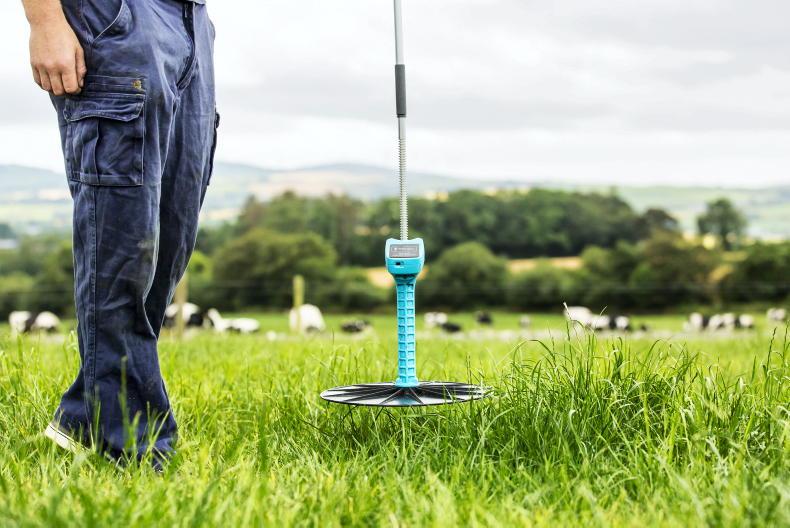
During the summer months, farmers should be closely watching cover per cow, aiming to have it somewhere between 160kg and 180kg/cow. If the farm is below this, they’ll be looking to see if demand is below growth.
If the answer is yes, the farm will likely grow itself out of the deficit. If the answer is no, demand needs to be reduced by feeding more meal or silage, or bringing back in fields intended for silage.
Farms should keep an eye on average farm cover and aim for somewhere between 550kg and 700kg DM/ha but it’s not the key signal for management decisions.
Rotation length and rotation back are also important. If the rotation length is short and the rotation back is getting short, the farm is moving through grass too quickly and cows may need to be slowed down.
Ultimately, setting pre-grazing yield at 1,300kg to 1,400kg DM/ha will keep quality right and if the target is being met, the farm will be in a decent place.
Meal feeding 2025 v 2026
Another interesting point of discussion at the meeting was meal feeding. Across the group there has been a significant effort made in 2026 to reduce the level of meal fed in order to bring costs down.
Before the meeting, members of the group had calculated the amount of meal fed to date in 2026 versus the same time in 2025. The result was an average reduction across the group of 25% per cow.
The group had also calculated the milk solids produced per cow year to date and astonishingly there had been just a 1% reduction in total milk solids sold compared to the same time in 2025.
One farmer in the group had actually cut meal fed by 57%, yet only lost 3% in terms of milk solids produced, while another farmer had cut meal fed by 23% and gained 6% extra milk solids
Essentially, this meant the group had fed 75% of the meal they had fed in 2025 for practically no difference in milk solids produced.
The comparison was based on meal fed and milk sold from the start of calving to 1 June.
When you consider last year was far superior to this spring in terms of weather and ease of management, it’s a shocking but very positive result.
The result would beg the question: why there is still a belief out there amongst farmers, that feeding more meal will mean more milk solids despite advice to the contrary?
It would also lead to asking how much money was left behind by farms last year who fed more meal under the pretence it would pay for itself in a higher milk price year.
One farmer in the group had actually cut meal fed by 57%, yet only lost 3% in terms of milk solids produced, while another farmer had cut meal fed by 23% and gained 6% extra milk solids.
The average figures of the group year to date, were 340kg of meal fed and 188kg milk solids/cow produced.




SHARING OPTIONS